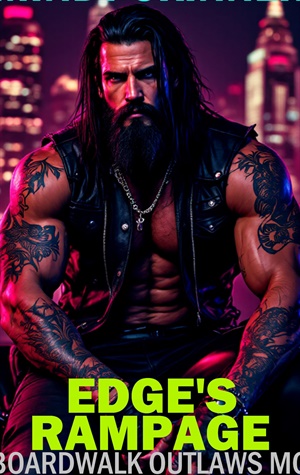
Edge's Rampage (Boardwalk Outlaws MC #7)
Chapter One
The vacation home sat dark at the end of Fredericksburg Avenue, three stories of weathered cedar shingles and wraparound porches that some Philadelphia lawyer paid two million for and visited maybe six weekends a year.
Tonight, a panel van idled in the driveway with its back doors hanging open while four men moved through the house like they owned it.
Edge cut his engine two blocks out and walked the rest of the way through Ventnor's empty winter streets.
Salt air off the Atlantic mixed with the smell of dead leaves rotting in gutters nobody had cleaned since October.
The shore towns went quiet after Labor Day, wealthy families retreating to their real lives while the locals who actually lived here year-round kept the lights on and the pipes from freezing.
These four didn't belong to either category.
He'd gotten word three days ago about the crew hitting empty properties down the shore—Margate first, then Longport, now working their way up through his territory like they thought nobody was watching. Like they thought downbeach was soft because it was quiet.
Edge moved through the side yard, past a swimming pool drained for winter and covered with a blue tarp that had collected a season's worth of debris.
The back door hung open, lock punched clean through the frame.
Amateur hour. These weren't professionals—they were opportunists who'd heard vacation homes sat empty for months and figured the shore towns were easy pickings.
They figured wrong.
He stepped through the door into a kitchen that cost more than most people made in a year.
Italian tile, commercial-grade appliances, a wine fridge built into the island.
Two of the crew were wrestling a seventy-inch television off the wall in the living room while a third hauled a box of electronics toward the front door.
The fourth spotted Edge first.
"The hell—"
Edge crossed the distance before the man could finish the sentence, driving a fist into his solar plexus that dropped him gasping to the imported hardwood. The television crashed as the other two released it, spinning toward the sound of their partner wheezing on the floor.
"Gentlemen." Edge's voice stayed low, conversational. "We need to talk about territory."
The bigger of the two—six-three, gym muscles, neck tattoo that screamed Pennsylvania state time—reached for something at his waistband.
Edge was faster, closing the gap and catching the man's wrist before his fingers found metal.
He twisted, felt the joint protest, kept twisting until the bone threatened to give.
"Bad idea."
The gun clattered to the floor. Edge kicked it under a couch that probably cost ten grand and drove his elbow into the big man's temple. He went down like someone had cut his strings.
Two down. The third dropped his box of stolen electronics and bolted for the back door.
Edge let him get three steps before catching him by the collar and introducing his face to the granite countertop.
The crack echoed through the empty kitchen.
Blood spread across the pale stone in a pattern that looked almost artistic.
"Stay down."
The fourth man—the one Edge had dropped first—was crawling toward the front door, still struggling to breathe. Edge planted a boot on his back and pressed.
"This is Outlaws territory. Every block from the boardwalk to Longport. Every vacation home, every fishing shack, every inch of sand. You understand what that means?"
The man wheezed something that might have been a yes.
"It means when someone breaks into these houses, steals from these people, they're stealing from us." Edge increased the pressure. "It means word gets back. Always. And then I show up."
He hauled the man up by his collar, dragged him to where the big one was starting to stir. The third was still out cold against the counter, blood pooling beneath his broken nose. Edge deposited the first man beside his partner and stood over them both.
"Here's how this works. You're going to put everything back. Every television, every laptop, every piece of jewelry you stuffed in your pockets. Then you're going to get in your van and drive back to whatever Philly shithole you crawled out of."
The big man was sitting up now, holding his head, blood trickling from his ear. "You don't know who we work for—"
"Don't care." Edge's boot caught him in the ribs, sent him sprawling back to the floor. "What I know is you don't work here. The shore towns have protection. The people who live here year-round, the people who actually matter—they're ours. Not yours. Not your boss's. Ours."
He let that sit while they calculated odds. Four of them, one of him—but one was unconscious, one couldn't breathe right, and the big one was realizing his ribs might be cracked. The math didn't work in their favor.
"Everything back," Edge repeated. "Then you disappear. I see your faces downbeach again, we're not having a conversation. Clear?"
The first man nodded frantically. The big one managed to grunt something that sounded like agreement.
Edge watched them work. They put the television back on its mount, returned the electronics to their shelves, emptied pockets of watches and cufflinks and a handful of cash they'd found in a drawer.
The third man came around eventually, nose at an angle that would need professional attention, and stumbled through helping his crew undo the damage.
It took forty minutes. Edge stood in the doorway the whole time, arms crossed, letting his presence do the work his fists had started.
When the van finally pulled out—slower than it had pulled in, driver hunching over the wheel like he expected a bullet through the window—Edge walked through the house one more time.
Everything back in its place. A lawyer in Philadelphia would never know his winter home had been violated, would never know an Outlaw had bled four men to keep his territory clean.
That was the point. The shore towns stayed quiet because someone made sure they stayed quiet. Because someone drew lines and held them.
Edge locked up as best he could with the busted frame, made a mental note to have a prospect fix it tomorrow. The homeowner would assume vandals, would upgrade his security, would never understand that the real security was already in place.
His bike waited where he'd left it, chrome catching the orange glow of a streetlight. The Harley rumbled to life, breaking the silence of the empty street, and Edge pointed it north toward Atlantic City. The compound sat in the marina district, twenty minutes up the shore road if he didn't push it.
Tonight, he didn't push it.
The ocean rolled dark on his left as he rode, winter waves crashing against beaches that wouldn't see tourists for months.
This was his territory—not the casinos, not the boardwalk glitter, but the quiet towns that hugged the shore south of AC's chaos.
Ventnor. Margate. Longport. Places where families had lived for generations, where his grandmother had raised him in a house three blocks from the water.
Before the developers came. Before the rent tripled. Before she died in an apartment that smelled like cardboard boxes and giving up.
Edge pushed that thought down where he kept the others. The compound lights appeared ahead, marina district warehouse converted to clubhouse, bay water black beyond the docks. Home. Or close enough.
He pulled through the gate, nodded at the prospect working security, and parked his bike beside a row of others.
Friday night meant brothers drinking at the bar, old ladies gathered in the corner booth, music playing loud enough to rattle the slot machine parts Jackpot had welded into the décor.
Edge bypassed the party, headed straight for the back hallway where the chapel door stood closed but unlocked.
Jackpot looked up from a stack of papers when Edge walked in. The President of the Boardwalk Outlaws filled his chair like he'd been born in it, scar across his jaw catching the overhead light. Behind him, bay windows showed nothing but darkness and the distant sparkle of casino towers.
"Ventnor?"
"Handled." Edge dropped into a chair across the table. "Crew from Philly, four guys, hitting vacation homes. They won't be back."
"Bodies?"
"Walking wounded. They're carrying a message—downbeach has teeth."
Jackpot nodded, that slow acknowledgment that meant he approved but wasn't going to waste words saying so. "Good. Pike picked up chatter about another crew moving through Longport. Might be connected."
"I'll check it out tomorrow. Tonight they're scared enough to spread the word."
"Fair enough." Jackpot shoved the papers aside—club business, accounts, the thousand details that came with running an organization that operated in the spaces between legal and otherwise. "Anything else?"
Edge thought about the dark house, the men who'd seen opportunity in empty streets. About a grandmother who'd been priced out of her home because the developers saw opportunity too.
"Nothing that won't keep."
Jackpot's eyes stayed on him a beat too long. Reading him. The man had run poker games for half his life before he'd built this club—he knew when someone was holding cards they didn't want to show.
But he let it go.
"Get a drink. Take the night. You've been running downbeach solo for three weeks straight."
"Someone's gotta watch it."
"Someone does. But that someone needs a beer once in a while."
Edge almost smiled. "One beer. Then I'm checking on a flower shop in Margate tomorrow. Owner's been getting pressure from suits that don't smell right."
Jackpot raised an eyebrow. "Flower shop?"
"Shore Blooms. Woman who runs it delivered arrangements to my grandmother's grave for two years, every week, never charged me a dime." Edge stood, rolled the tension out of his shoulders. "She's downbeach. She's mine to protect."
He left the chapel before Jackpot could ask more questions, questions that might have answers Edge wasn't ready to give. The bar was loud, bright, full of brothers and their women and the particular energy of a Friday night when the weather was cold but the compound was warm.
Edge grabbed a beer, found a spot along the wall where he could watch the room without being in the middle of it.
That was his way. Quiet. Watchful. The shore towns outside these walls needed him to be everywhere and nowhere at once—present enough to protect, invisible enough that the people living their lives never had to see how the sausage got made.
Tomorrow he'd ride down to Margate. Check on the florist. Make sure the suits giving her trouble understood they'd picked the wrong target.
Tonight, he drank his beer and watched his brothers and let the salt air blowing through the open dock doors remind him why he did any of this.
The shore towns deserved protection. And the Outlaws were the only ones offering.