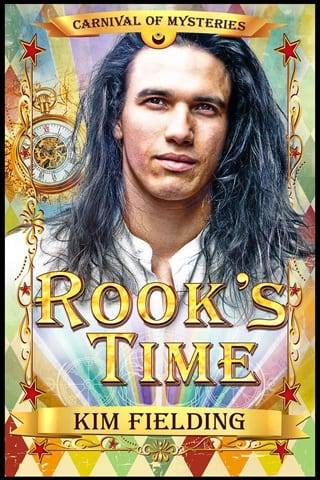
Rook’s Time (Carnival of Mysteries)
Prologue
PROLOGUE
L ondon, England
March 1870
The chimney fire was a bit of a disappointment to Simeon Bell. It had barely demolished one house and only partially damaged its two neighbors, the fire brigade having been especially prompt and efficient. Gas explosions were much more exciting—and drew larger crowds.
According to the milling spectators, nobody had died. The residents and servants in two of the houses had escaped mostly unscathed, and the third house had stood vacant for nearly a year, its owner having left for a sanitarium and never returned. Simeon was glad in the abstract that everyone had survived, although it made his work harder. While the crowd would have been captivated by corpses and hearses, they were only moderately engaged by smoldering timbers and the removal of furniture.
However, while he was slowly moving among the men, women, and children, two lucky happenstances occurred. A penny pieman appeared, set up his cart along the curb, and began calling out his wares. At the same time, a young woman emerged from one of the damaged houses and began to wail about her dresses, which had been ruined by smoke and water. Simeon wasn’t entirely sympathetic because, in his estimation, the dress she wore looked nice enough. He did just fine with a single set of clothes and believed she could as well.
But the pies and the crying woman provided exactly enough distraction for him to act.
He focused first on a tall, portly man in his thirties, who was explaining to proximate bystanders that he’d assisted in extinguishing three fires already this year, and the only reason he’d stood aside this time was that it was a rather small fire, and he’d thought it a good opportunity for those new to the endeavor to gain some experience. The man himself was not a good target, with his gesticulating arms and slightly shabby clothes. But several better-dressed gentlemen and ladies were listening to him with barely concealed amusement, and they were perfect.
Simeon slipped a hand into the coat pocket of one of the gentlemen, pulled out a handkerchief, and shoved it down his own shirt. He did the same with a second gentleman—although that time it took two pockets before he found the prize—followed by a delicate lace handkerchief tugged from a wealthy woman’s sleeve. None of them noticed the grubby boy common at every public spectacle, and he easily slipped away from them.
Fifteen feet ahead, he spied two toffs—very finely dressed indeed—standing side-by-side and speaking quietly as they watched the woman cry. They seemed amused by her distress. Simeon sidled closer and bumped into one of them quite hard.
“Blast it, you filthy mug! Get away from me. ”
“Beggin’ your pardon, guv’nor.” Simeon executed a deep and mocking bow, and when one of the toffs reached for him, Simeon laughed and darted away, almost immediately lost in the crowd.
Two blocks away, he ducked into a narrow space between buildings and looked over his prizes. Five fogles he’d come away with, all of them silk and quite nice, and also a tortoiseshell snuffbox with the initials GRW engraved on the top.
Now he had a decision to make. Should he go right off to the dolly shop on Shoreditch High Street, where old Mrs. Leonard would pay him enough for a hot potato with salt and butter, and perhaps even some pea soup besides? Or should he try instead at one of the pawnshops in a better neighborhood, where he might get more money… or might be unceremoniously booted out as a muck-snipe and thief? Or should he return to the fire to see if he could lift a bit more?
Simeon’s stomach growled, making his decision for him. Shoreditch it was. He wouldn’t get enough coin there for a shared bed in a lodging house, but the weather wouldn’t be too terrible for sleeping rough tonight, and he might not mind so long as he had a full belly.
He’d taken only a half dozen steps before someone grabbed him roughly from behind.
Screeching bloody murder—because making a fuss rarely hurt and sometimes helped—Simeon squirmed and fought for all he was worth. But he was far more nimble than he was strong, and his assailant grasped him firmly around one skinny forearm and boxed his ear hard enough to rattle Simeon’s brain. When Simeon twisted around, he wasn’t especially surprised to find himself in the grip of a stout, red-faced constable.
“Hold still with you, you grubby little flimp!” The constable punctuated this with a second, harder blow. This time, a dribble of blood followed, tickling as it made its way down Simeon’s neck.
Deciding that a struggle would only lead to more blows, Simeon relaxed. “Let me go, rozzer. I ain’t done nothing wrong.”
“Nothing aside from a bit of cly faking, huh?” The constable moved his free hand to Simeon’s shoulder and gave him a hard shake. “I saw you doing it. Buzzing respectable folk instead of— Hang on.”
Narrowing his eyes, the constable peered at Simeon’s face before tugging off the dirty cap. “What color’s your hair when it’s clean? Assuming it ever has been, that is.”
Unsure whether to be baffled by the odd question or insulted, Simeon sneered. “Blacker’n your shriveled heart.” Which was true enough. He rarely had a chance to wash it, and even more rarely had access to soap. But when he could care for it properly, comb and all, his hair was as dark and glossy as a raven’s wing.
“And your eyes, they’re black too.”
Not quite, but the irises were so dark that, except in very strong light, they couldn’t be distinguished from the pupils. Some of the other boys at the foundling home used to say they were devil’s eyes and beat Simeon for that, but he’d always figured that if his eyes had been any other hue, those boys would have found another excuse for violence.
“How old are you?” demanded the constable.
This was a tricky question. Simeon, who’d been undersized most of his life, used to claim a younger age than was accurate, because then the authorities tended to go easier on him. Lately, however, he’d gained some height, and although he was still all skin and bones, he was nearly as tall as most men. If the copper sensed he was lying about his age, things would go even worse.
Sullenly, he told the truth. “Thirteen. ”
“Right then.” Apparently reaching some sort of decision, the constable shifted his holds to Simeon’s wrist and the back of his neck and began to steer him quite firmly down the street.
Although Simeon gave in to the inevitable and allowed himself to be pushed along, he kept his eyes open for an opportunity to escape. Perhaps he could jostle the constable into the path of an omnibus. But the constable proved unshakable, and passersby jeered as Simeon was taken past Russell Square all the way to Theobalds Road, then down a few more streets to a handsome brick building. It housed the Holborn Police Station, and although he’d never been inside this particular one, he wasn’t exactly yearning for a tour.
A handful of constables lounged inside the entrance room, looking bored. “Whatcha got there?” called one of them.
“Thief.”
“Ah, they’re all thieves, ain’t they?”
The men laughed as Simeon’s captor propelled him down a narrow, arched hallway lined with closed doors. When they came to a stop, the constable yelled, “Oi, Brooks, come open up!”
Simeon made another attempt to shake free, even though he knew that, if he were successful, he’d be caught again before he made it to the door. But he couldn’t help trying. The constable held fast, however, bashing Simeon up against the wall hard enough to knock the wind out of him.
Brooks came along soon enough and unlocked the door, at which point the constable pushed Simeon roughly inside, making him fall. By the time he had scrambled to his feet and turned around, the door was shut and locked.
And here he was. A small high window with iron bars allowed a little light through, but there wasn’t much to look at. The cell was small enough that Simeon could stand in the center of the room, lift his arms to each side, and touch the brick walls. The only furnishings were a scarred wooden bench and a waste bucket that had been emptied since its last use, thankfully, but not cleaned.
Simeon sat on the bench and tried not to fret. There were two possible outcomes now. The first was a caning. That would bloody hurt, and he’d be bruised and sore for days, but they’d release him after. He could go find a spot under a bridge or in a brickyard and have a lie-down until he felt well enough to get around again.
The other possibility was prison. He’d been sent to Newgate twice now, each time for fourteen days. He’d been lucky enough both times to not come down ill, perhaps because he was young, and the food hadn’t been much worse than some that he ate while living free. The beds were an improvement over his usual. He hadn’t enjoyed the hard labor, but it was tolerable. The confinement, though…. Even the memory of it made him shudder.
And now here he was, caged again.
He shot to his feet and, screaming as if pursued by the Devil himself, threw his body against the door again and again. The rational part of him knew this was useless, but he couldn’t stop until he was exhausted and bruised, his throat raw. At that point, he collapsed onto the floor and tried very hard not to cry.
A few years earlier, when a lucky round of pickpocketing had left Simeon unexpectedly flush, he’d paid sixpence to visit the zoo in Regent’s Park. He’d heard from other boys who’d gone and who claimed to have seen the most astounding creatures. But the pacing lions and tigers had distressed him, and he couldn’t stand more than a glimpse of the elephant forced to give children rides. He’d turned away from the frantically screeching monkeys. The worst, though, had been a large bird— an exotic stork of some kind—housed by itself in a cage too small to allow flight. Which likely wouldn’t have been possible anyway due to the poor condition of its feathers. It huddled in a corner and stared at nothing, its long beak dry and scaly-looking. It had seemed to Simeon that it was waiting to die.
And that would be him, if he were imprisoned for too long. He knew it.
He was hunched on the bench, arms curled around his knees, when the door groaned open. His beefy constable was there again, along with another whom Simeon didn’t recognize. They eyed him appraisingly.
“Whatcha think?” asked the familiar man.
The other one, tall and thin, smoothed his moustache. “Dunno. Could be.”
“Twenty guineas if it’s him.”
“And nothing if it isn’t.”
Simeon, unsure whether to be alarmed by this discussion, remained silent. The policemen stared. Finally, the beefy one held out a paw. “Hand over the fogles and whatever else you nicked.”
“I didn’t nick nothing.”
“You can give ’em over or I can take ’em. You won’t like that.”
Imagining those hard hands pawing at him, Simeon shuddered. Wordlessly, he pulled the handkerchiefs and snuffbox from his pockets and dropped them on the bench. The constable shoved them into his own pocket; Simeon was willing to bet that the profits from his stolen items would be filling the constable’s belly that night. But while he was still considering whether to protest, he was hauled to his feet and dragged out of the cell.
They climbed two flights of creaky, well-worn stairs and went down a carpeted hallway. The closed doors here were wooden rather than iron, as they had been in the corridor of cells below. The thinner constable knocked before opening a door and allowing Simeon’s relentless captor to drag him inside.
The office contained a large, slightly shabby desk and an unbarred window giving a nice view of the gardens at Gray’s Inn. None of that was particularly remarkable. What made Simeon gasp were the man and woman sitting in wooden chairs, regarding him steadily.
They look like me . That was Simeon’s first thought, although it didn’t make much sense. They were older—forty or so, he guessed—and of a different social class, their clothing finely made. Both were dressed almost entirely in black, as if in mourning like the Queen, except the man had on a white shirt and the woman a white ribbon on her hat. Even though they were sitting, they were both obviously quite tall. Muscular too—even the woman.
But there was a resemblance. They had shiny hair as dark as their clothes, and their eyes were like polished obsidian. Simeon’s skin was the same milk-white as theirs, on those occasions when he was able to wash up properly.
Both of them were strikingly handsome.
Like many orphans, Simeon used to fantasize that his long-lost family members—whoever they might be—would appear at the foundling hospital one day, swoop him up, and carry him away to a comfortable, loving home. That bit of fancy fluttered through his head now, but he pushed it away. It was foolish, especially at his advanced age. Also, there was something… unsettling about these people. He wasn’t at all ce rtain he’d want to be given over to them. He might prefer a caning.
“Well,” said the thinner constable. “Here he is. Do you?—”
“Leave us.” The woman’s voice was quiet and inflectionless, but the two constables scampered out of the room as if terrified, closing the door behind them.
Simeon stood up straight, for the first time in his life truly ashamed of his tattered clothing and unwashed body. He didn’t know why, though. What should he care what these people thought of him?
“What do they call you?” asked the woman after several painful minutes of silence.
He saw no harm in telling the truth. “Simeon Bell, ma’am.”
“How old are you?”
“Thirteen.”
She exchanged a look with her companion before refocusing on Simeon. “And who are your parents?”
He couldn’t help a wince, even though this pain should have faded long ago. “I don’t know, ma’am. I was left outside the foundling home as an infant.” Naked and squalling in the foundling wheel, according to some of the nurses, but surprisingly healthy. Somebody had fed and cared for him for a few months before abandoning him, which in a way was more heartbreaking than if he’d been entirely neglected.
“Which foundling home?” asked the woman.
“Bethnal Green, ma’am.”
“And do you live there still?”
He was getting tired of the interrogation. “By now, they would be thinking of apprenticing me out or sending me into the military. But I ran away years ago and have cared for myself since. I live wherever I can. And if you’re here to reform me, you may as well save your time because there’s no use in it. I’ve been to Newgate twice already, and I reckon one of these days I’ll meet the gallows there, but until then I intend to do the best I can for myself since nobody else will do it for me.”
He drew in a long breath and let it out as something like a sigh.
“When did you last leave London?” she asked.
“Never, ma’am. I’ve been here my entire life.”
For the first time the man said something, his voice raspy, as if he’d injured his throat at some point. “Why do you speak like this?”
Confused, Simeon blinked at him. “Sir?”
“You say you come from the slums and you look it as well, yet you sound more like a boy from Mayfair. Why?”
“I… I….” Simeon had to think about this for a moment. He hadn’t consciously chosen his accent or vocabulary for this conversation, but he’d apparently been influenced by this couple’s obvious wealth. “I expect I’ve heard people speaking like that, sir. I’m a good mimic.” When he was very young, he used to amuse the staff members at the foundling home by copying their co-workers or the other children. Sometimes he’d earn an extra piece of bread or another potato for his performances.
Although Simeon couldn’t imagine why this would be significant, the man and woman looked at each other again. Their eyes seemed lit by a glow of excitement.
“Have you any other special skills?” the woman asked.
He shrugged. “I’m a tolerably good fogle-hunter.” No harm in admitting to being a pickpocket since they undoubtedly knew that bit already. They were in a police station, after all. “I used to make tuppence a day plus my supper as a costermonger’s boy. I could call in customers better than any of the others. But my voice changed last year and a man’s voice doesn’t carry as well. ”
He hadn’t minded that job. It was a fun challenge to be as enticing as possible, and if he was successful and the costermonger sold well that day, Simeon would be able to fall asleep with a very full stomach. He’d much preferred that to his other erstwhile occupations of polishing brass shop signs—which had earned him nothing more than a bit of bread—or collecting and delivering chickweed as feed for people’s pet songbirds. He’d hated seeing the canaries cooped up in cages, their songs mournful to his ears. One morning he’d snuck into a few of the houses, released the birds, and immediately after, abandoned the chickweed trade.
The woman stood. She was indeed very tall—taller than most men—and looked as if she could best most fellows in a fight. “Come here.”
With considerable trepidation, Simeon obeyed. But he obviously hadn’t come close enough for her satisfaction, because she crooked her finger to urge him nearer. When she was looming over him, she grasped his chin firmly, tilted his head up, and turned it slightly this way and that.
“Well?” her companion asked.
“Difficult to tell under the filth. But… perhaps. It might be the younger one.”
Simeon tried not to struggle in her grip. Even through her gloves, her fingers felt unreasonably warm, as if they might burn him if she pressed just a bit harder. “Possibility for what?” he asked, trying not to sound terrified.
She released him abruptly and rubbed her hands together as if wiping away dirt. “We shall try with this one.”
The man leapt to his feet more lightly than Simeon would have thought possible for a man his size. “Capital! The others will be delighted. Well, some will be, anyway.”
Other whats delighted how ?
The woman had a tightlipped smile. “We are Mr. and Mrs. Frugis. You will accompany us. ”
“Accompany you where, ma’am?” Suddenly Newgate didn’t sound so awful.
“Now is not the time for questions, young man. Come along.” She swept out of the office, clearly expecting Simeon to follow in her wake. Which he did, but only because Mr. Frugis came up behind and nearly pushed him along.
The constables were waiting in the corridor, looking anxious. But that was quickly replaced by broad grins when Mr. Frugis pulled some money out of his pocket and handed it to the beefy policeman. “Good day, gentlemen,” he said, with the strong implication that the constables should not accompany them.
Somehow being marched away from the police station wasn’t much more pleasant than being marched toward it, although at least this time nobody was gripping Simeon’s body. In fact, he more than once considered making a run for it, but the Frugises flanked him, and he was fairly certain they’d nab him if he tried to bolt. Besides, his fear was balanced with a healthy dose of curiosity. This wasn’t an adventure he’d expected when he woke up this morning.
After they’d walked only a few blocks, Mr. Frugis hailed a cab. Simeon’s heart sped with excitement when he realized he was going to ride in one—it would be his first time—and after grinning at the cabbie and climbing inside, he spent a certain amount of time bouncing on the seat and poking at the upholstery. But then Mrs. Frugis closed the curtains, which not only meant he couldn’t see where they were going but also that he was stuck in the tiny, dimly lit space under his guardians’ combined stares.
“What is it you want from me?” he asked in desperation. “Are you looking for a boy to work for you? I could do that. I’m strong and fast, I am. I can carry things, fetch things, run messages, keep an eye open at night for burglars. I could make an excellent footman.” In truth, he wasn’t exactly sure what a footman did, but he had a general sense that they were employed by the very wealthy, and even if their work was hard, they undoubtedly had decent clothes, a warm bed, and sufficient food.
Neither of the Frugises responded to his questions. They simply kept staring at him until Mr. Frugis wrinkled his nose. “He has an unpleasant odor.”
Simeon took offense at this statement, although the observation was undoubtedly accurate, and he was crafting an appropriate response when Mrs. Frugis unexpectedly came to his aid.
“You would have an unpleasant odor as well under his circumstances,” she said sternly. “And it’s no matter. Dirt washes off. Eventually.”
Mr. Frugis huffed, Mrs. Frugis scowled, and Simeon distracted himself with daydreams about being rich enough to go to the bathhouse weekly and have an extra set of clothes, washed and ready. He imagined mild-scented soap and warm water, and putting on a clean shirt and trousers, and having enough dosh for a good meal.
He was still considering this hypothetical feast when the cab rattled to a halt and the Frugises prodded him out the door.
They were on a quiet street in an unfamiliar neighborhood, considerably more posh than Simeon’s usual haunts. Possibly a neighborhood posh enough that the residents had footmen. The terrace houses were crowded up against each other, but they were three to five stories tall, faced in brick or stone, with large windows all the way up and pillars flanking the doors.
A better fate than Newgate, Simeon decided as he was led into the nearest house. A pair of servants hurried to greet them, both of them sturdy-looking women with sharp eyes. While one of them took coats and hats, the other received a flurry of instructions from Mrs. Frugis. “Take him upstairs and get him cleaned up, then have him fed. Mr. Frugis and I will be expecting visitors tomorrow—at least a dozen—so prepare for that.”
The maid looked unruffled. “Will the visitors be spending the night, ma’am?”
“Some of them. I don’t know how many.”
The maid nodded and gestured at Simeon to follow her, but Mrs. Frugis stopped him by grabbing his arm. “You’re to remain in the room until tomorrow. Do you understand?”
He pretended that her expression didn’t terrify him. “Why, ma’am? I don’t understand.”
“You don’t need to understand,” she replied coldly before releasing him and sweeping out of the room. Mr. Frugis joined her, muttering something about sending messages.
Simeon accompanied the maid up three flights of stairs, each successively narrower. Since they moved quickly, Simeon had little opportunity to examine his surroundings, but he had a general impression of quiet, dusty hallways with old paintings on the walls. She didn’t say a word until she opened a door and ushered him into what proved to be a cozy bedroom. “Stay here,” she said. “I’ll be back shortly.”
“But what?—”
She was gone before he had completed the question.
He heard a key in the lock, and although a moment later he tried the doorknob, the door stayed firmly closed. This would have distressed him—the second time today he’d been incarcerated—but the bedroom was considerably more fascinating than the cell at Holborn Station.
There was only a single window, round and quite small, with a view to a neglected garden and, beyond that, a mews and the back of another house. It didn’t look as if the window opened, and in any case, the long drop to the ground would discourage escape by that route. So he poked around the room instead.
The floor was covered in thick rugs, old and somewhat threadbare but probably once expensive. There was green-striped wallpaper—a bit faded—and two small paintings of trees, which he thought was odd. But then, what did he know about the wealth and their art? In addition to a narrow bed with a thick mattress, the room contained a wash stand, a small table and a chair, a wardrobe, and a wooden chest that proved to be empty. The fire wasn’t lit, but the room was warm enough. Although everything was clean, the room had a general aura of disuse, and Simeon concluded that nobody slept in here regularly.
He was just finishing his explorations when the maid returned with another servant, this one younger and wide-eyed, as if Simeon’s presence was startling. They set out a washbasin, towels, and soap, along with a comb and a black ribbon that, Simeon was instructed, he should use to tie back his hair after he’d washed it. They also put piles of clothing and blankets on the bed.
“Put on the clean things after you bathe,” instructed the older maid, as if Simeon were too dim to know that otherwise. “I’ll be back with your dinner soon. Behave yourself, now.”
“How long am I meant to stay here?” He knew he sounded plaintive.
She shrugged. “Until the others arrive tomorrow, I expect.”
That sounded alarming. “What others?”
But again she left without answering, shooing her younger companion ahead of her and then locking the door behind them.
Simeon sighed. “Well, at least I have the chance to wash up.” He stripped, soaped, and scrubbed himself as thoroughly as possible and combed all the snarls out of his long hair. He put on the new clothes, which were patched here and there but were generally well-made. A lot nicer than his old outfit. Whatever fate awaited him, at least he’d face it looking presentable and smelling faintly of roses.
The maid came back, this time by herself and carrying a tray. Simeon nearly swooned at the trace of aromas coming from the covered dishes, and when she set the tray on the table, he smiled broadly at her. “Thank you, ma’am.”
Her expression softened a little. “Well, you’ve manners, anyway. And you’re pretty enough with the dirt gone. Look like one of them, you do.”
“One of who, ma’am?”
She ignored his question and instead removed the dish covers, releasing wonderful scents and little clouds of steam. “Sit and eat, then.”
He hurried to obey, exclaiming happily to himself over the bowl of thick soup, the plate piled high with meat and potatoes, and the large piece of still-warm bread. There was even a pudding dotted with what he thought might be currants, a thick layer of yellow custard flowing in rivulets from the top and collecting on the plate like a small, delicious lake.
Although he wanted to gobble it all, he took a moment to just look and admire. He’d never had a feast like this before. “It’s all for me?”
The maid almost smiled. “Who else would it be for? I’ll be back later to take the dishes away.”
Much of his current situation was lovely, but he couldn’t resist trying to figure out what was going on. “And I’m meant to stay locked up in here like a prisoner? Nobody will tell me why.”
She gave him a long, shrewd look. “I expect a boy like you could find a way out. It’s not that difficult. But I wouldn’t advise it. It’s only one night in any case, and you’ll get a good breakfast in the morning.”
He wasn’t sure what she meant by wouldn’t advise it . Was that an outright threat? Or simply a hint that things would be better for him if he remained? He didn’t like the uncertainty, and he was definitely not fond of being captive, even if the cage was gilded. But… a night in a real bed followed by a morning meal? That was tempting. Besides, if he did run, he’d spend the rest of his life wondering what these odd people wanted from him. In his experience, unsatisfied curiosity could be as painful as hunger or a beating.
“I’ll stay,” he said.
She nodded, walked to the closed door, and reached for the knob but paused before turning it. “Can you read, boy?”
“Yes.” That was mostly true. He’d been taught his letters, and he’d practiced them when he could, struggling his way through newspapers he’d found or nicked. He was slow at reading, which frustrated him because he was rarely slow at anything. But he wasn’t about to admit that now.
The maid nodded as if she’d reached a decision. She paused to gather the wash basin and towels, and then she left, the lock clicking into place.
Simeon dug into his dinner at once. The dishes and cutlery were fancier than he was accustomed to, but the food itself was the real star. He hadn’t imagined anything could taste so wonderful. He wondered if toffs were accustomed to eating like this and thereby took it for granted. If so, he was almost glad he’d grown up as he had, because that meant he got to fully enjoy this meal.
He ate every bit of it, using the bread to sop all of the gravy and his fingers to get every bit of custard. By the time he was finished, his belly was round and uncomfortably tight, and he’d be unable to run away even if he wanted to. But it was worth it. He lay on the bed for a time, digesting contentedly.
The maid returned shortly before sunset. She seemed pleased that he’d cleaned his plate. She pulled a pair of candles and some matches from her apron pocket and left them on the washstand. And then, after another of her long, thoughtful stares, she set a book down as well. “Take care with it,” she warned.
“I will. Thank you, ma’am.”
She gathered the dishes and tray, along with his old clothing, and left him alone in the room. The lock clicked again, but he was too content to find it threatening. His belly was full, he was clean and warm, and he had a book!
The russet-hued cover included a gilt drawing of a girl holding… was that a pig in a bonnet? Fascinated, he lit a candle and began to labor over the text, whispering the words out loud as he deciphered them. “Alice was be… beginning to get very tired of sitting by her sister on the bank….”
Simeon slept well and awoke with pleasure to another mountain of food and a fresh opportunity to wash up. But after he’d attended to both of those matters, he began to feel restless, and the book, although interesting, didn’t help. He wasn’t accustomed to so much idleness. When he wasn’t working a regular job, he generally prowled the city in search of any opportunity to earn—or steal—enough to buy his next meal or a bed for the night.
This morning, though, he gazed out the little round window at the gray sky and the garden below, feeling exactly like a bird stuffed into a tiny cage. He couldn’t hear anything through the glass, and to break the weight of the silent house, he hummed to himself: hymns he’d been taught in the foundling home, songs he’d heard women singing while they worked, ballads belted out by men in the public houses, tunes he’d caught while loitering outside music halls. He was midway through a bawdy number about an oyster-seller when the door to the room was unlocked and opened.
“They’re ready for you downstairs,” said the maid. She looked nervous.
“The Frugises?”
“Yes.”
Although she again refused to give him more information, he supposed he’d find out as soon as he went down. He took a moment to make sure his hair was neatly tied back and his jacket straight, and then he followed her down the stairs.
He heard the sound almost immediately, first as a soft cloud of whispers like pigeons rustling in an attic, then louder as he descended, like a high wind rushing past buildings. What they never sounded like was voices, but that was what they must have been, because the maid took him to the open doorway of a large parlor stuffed with twenty or more people. They all turned to stare at Simeon.
He wasn’t normally a shy person, and his years in the foundling home had accustomed him to crowds. But this group made him pause and gnaw on his lip.
There were both men and women, and they all resembled the Frugises: tall, muscular, and handsome, with pale skin, dark hair, and dark eyes that shone in the lamplight. Every one of them wore black clothing with a touch of white: a ribbon, a lace edging, a shirt cuff, or a cravat. They weren’t smiling, but they appeared more curious than hostile.
“Come here, boy.” Mrs. Frugis gestured to him from a small open space near the unlit fireplace .
Hoping that he looked more courageous than he felt, Simeon made his way to her and then stood as the crowd scrutinized him.
Finally, an older man standing close to Simeon cleared his throat. “He has the right look to him.”
“And he’s the right age,” added Mrs. Frugis.
But this didn’t seem to settle whatever matter was in question, because the staring continued. Sometimes someone would resettle their arms a bit or someone would cock their head, so that the entire assemblage reminded Simeon of a flock of very large, intelligent birds.
Simeon was at the end of his patience. “Would someone please explain? What is it you’re looking for?”
The older man came a step closer, and now he was near enough for Simeon to realize that he smelled of fresh grass, as if he’d just stepped in from the countryside. “Have you any skills, boy?”
So was this, in fact, about a position? “I can do all the usual sorts of things that boys do. I can read as well.”
The man shook his head. “Not what I meant. Do you possess unusual talents?”
Simeon blinked. He was quite good at nicking things and talking his way out of—and, yes, sometimes into—trouble, but he didn’t want to share that with this crowd. He could also scale a wall or a fence and creep around silently when he was in places he oughtn’t be, and when he liked the looks of a boy or girl, he could charm them prettily. “I can sing. A bit.”
That caused a stir in the audience, with people leaning close to whisper to each other, but the man shook his head. “Proves nothing. I could find singers in every music hall and opera house in London, but none of them are whom we seek. I do not believe this is anything but an ordinary boy.”
Well, what else did they expect him to be? Simeon was going to ask this—indignantly—but Mrs. Frugis spoke first. “ He was not raised among us and might not be aware of his capabilities. We could test him to see if they manifest.” She turned to her husband, who’d been silent beside her this whole time. “Edwin, take him to the kitchen while we discuss this.”
As uncomfortable as Simeon felt among this crowd, he had no desire to be absent and discussed . He tried to protest but nobody listened, and Mr. Frugis gripped his arm tightly and dragged him out of the parlor, through a dining room, and into the kitchen.
A great deal of food sat on the tables there, and enormous pots steamed on the stove. The scents were enticing, and he would have asked for something to eat if he hadn’t already had a large breakfast—and if he weren’t nervous about whatever was being said in the parlor.
“Please, sir. If you would only tell me what’s happening.”
Mr. Frugis scowled at him, probably displeased at being left out of the discussion. “You’ll find out soon enough.”
It was already well past soon enough , as far as Simeon was concerned. He didn’t understand why these people had to be so mysterious. Unless they were planning something nefarious. There were gangs that recruited boys to do some of their work, mostly because children could fit into spaces that adults could not. These people didn’t seem like criminals, however. They were simply very odd.
While Mr. Frugis sat on a creaky wooden chair with his arms crossed, Simeon prowled the room. He noticed that if he remained very still near the door to the dining room, he could catch a few words from the parlor. His hearing had always been sharp. Now he breathed shallowly and strained his ears, hoping Mr. Frugis wouldn’t notice what he was up to.
Most of what he heard made little sense, just random words and short phrases that had been spoken a bit more loudly than the rest. One of those words was mother and another was father , which was very interesting indeed, but he couldn’t gather the context. There was also something about a fire.
But what he heard next made his blood feel like ice. Roof , said Mrs. Frugis, and fly and fall . And sometimes out of necessity . He didn’t know what she meant by this—there was no way he could know—yet he had a clear vision of being pushed off a tall building. He could see the pavement rushing up to meet him, could hear screams of people down below, could even feel the cold air rushing past his face.
No , he said to himself, but silently because Mr. Frugis was there.
As nonchalantly as he could manage, Simeon resumed walking. His knees wanted to wobble, and he was certain that he could almost feel the agony of a broken body, very much like a person could almost recall a word they’d forgotten. Death was at the tip of his tongue.
Simeon had been in houses similar to this one during his short career selling chickweed, and most often he’d been in the kitchens. That experience, thin as it was, helped him assess this particular room. Aside from the passageway to the dining room, the kitchen had three additional doors. One likely led to the cellar, one to the servants’ stairway, and one—he most fervently hoped—would take him outside.
The question was which door was which. He wasn’t going to get more than one chance. And even that chance was about to disappear: footsteps were approaching through the dining room.
Simeon had never found much use for prayer; it had never done him any good. But now he sent a desperate, silent plea to whichever deity might be listening— please! —and he ran for the door in the corner.
Mr. Frugis made an inhuman screeching noise and knocked over his chair with a clatter. Raised voices came from the direction of the dining room. But Simeon made it to the door and flung it open, nearly sobbing with relief when he found himself in the garden.
Of course he wasn’t free yet. The people were chasing him. However, among the skills he hadn’t mentioned a few minutes earlier was his ability to run very fast, and now he pushed himself hard. He thundered past bushes still brown from winter and an herb garden just beginning to show hints of green. Statuary looked on. Birds in the surrounding trees called harshly. He reached a gate and, when it wouldn’t open, climbed it as easily as a monkey might, fell to the soft ground outside, and then resumed his race.
More shouting, but it was increasingly distant.
He didn’t know where he was, so he simply ran as far as he could, until the buildings were shabbier, the large houses replaced by teetering piles of bricks with shops at street level. Horses, wagons, and pedestrians clogged the lanes; vendors with carts or baskets called out their wares; grubby children darted among tired-looking adults. Simeon’s type of neighborhood.
Gasping for air, his leg muscles burning, Simeon ducked into a narrow, stinking alley. For several minutes he bent with his hands on his thighs, returning upright only when his lungs and heart had returned to their normal rhythms. There was no sign of the Frugises or their friends.
He took stock of his situation. He’d had two good meals, a washup, and a good night’s sleep. He’d lost his clothes but gained better ones. He was free, and once again the city was his.
Smiling, he reached into his pockets and pulled out two items. The silver spoon would bring good money at a pawnshop, enough to keep him fed and housed for a week or longer if he was careful. And as for the book, well, he’d get a lot of money for it as well. But first he’d finish reading it. He wanted to see what happened to Alice.
“Curiouser and curiouser,” Simeon said out loud. He returned the nicked items to his pockets and left the alley at a gentle stroll. He couldn’t stop himself from grinning.