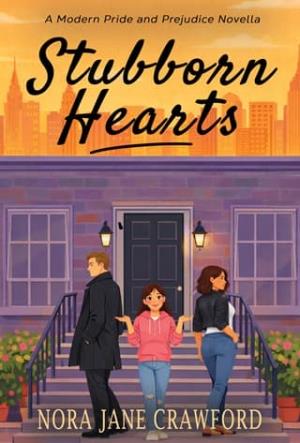
Stubborn Hearts (Modern Pride & Prejudice: The Darcy and Elizabeth What If #2)
PROLOGUE
ELIZABETH BENNET stared at the phone on the table as though it were a long-forgotten object that had suddenly developed the ability to demand attention.
It rang again.
The sound was intrusive in a way that felt personal—sharp, insistent, entirely out of proportion to the quiet hum of the space around her. A character on the television laughed, bright and canned, and she glanced up for half a second before returning to the problem at hand.
October light pressed against the windows, thin and colourless, like the day had already decided not to improve.
Elizabeth did not move.
She was halfway through a turkey sandwich she no longer wanted and three paragraphs into the fourth version of an article she had been certain—certain—was finished the night before.
The Cost of Taste: Who Decides What’s Worth It.
At midnight, she had liked it.
At eleven-thirty the next morning, she was prepared to delete the entire thing and begin again out of spite.
The phone continued to ring.
Elizabeth rubbed at her eyes with the heel of her hand, as though she could press the sound out of existence. The call did not respond to this strategy. It rang again. Louder, somehow, for being ignored.
She looked at the number.
Unknown. New York area code.
She almost let it go to voicemail.
She had developed a disciplined relationship with unknown numbers over the years. They were, in her experience, rarely associated with anything she wanted. They offered extended warranties, vague opportunities, and occasionally people who insisted she had filled out forms she had never seen.
The phone rang again.
Elizabeth exhaled, long and slow, like someone agreeing to a minor inconvenience she fully intended to resent.
Then she reached for it.
“Hello?”
“Hello, is this Elizabeth Bennet?”
The voice on the other end was calm. Professional. Practiced in the particular art of sounding steady for other people.
“Yes.”
“I’m calling from Brooklyn Methodist Hospital. You’re listed as the emergency contact for Charlotte Fitzwilliam.”
Elizabeth sat up.
“Yes.”
She said it before the woman had finished the sentence.
“I’m very sorry to tell you this, but Charlotte Fitzwilliam has been in an accident.”
Elizabeth sat up.
“Yes.”
She said it before the woman had finished the sentence.
There was a pause. Not hesitation—never hesitation—but the kind of pause that exists to make space for what comes next.
“I’m very sorry to tell you that there’s been an accident.”
Something in Elizabeth’s chest shifted. Not pain. Not yet. Just…movement. Like furniture being rearranged in a room she had thought she understood.
“She’s been brought in with serious injuries. We are doing everything we can, but—”
Elizabeth was already standing.
She did not remember standing.
“You should come as soon as possible.”
“I’m coming,” Elizabeth said. “I—yes. I’m coming now.”
She ended the call without remembering doing that either.
Her chair was pushed back at an angle that suggested urgency. Her laptop was still open, cursor blinking patiently in the middle of a sentence that would never be finished the way she had intended.
She did not take her coat.
The elevator took too long. She pressed the button twice, then a third time, knowing it would not help, pressing it anyway because she needed something to do with her hands.
The lobby was too bright. The air outside hit her like something unexpected and uninvited, cold and sharp in a way that felt personal.
Charlotte had told her two nights ago, over voice notes sent between meetings, that they were leaving the city for a few days.
No calls, she had said. No interruptions.
Just her and her husband, Colonel Fitzwilliam, and a car and too much coffee.
A proper break, Lizzie. Don't text unless it's urgent.
Elizabeth had laughed. Told her she was incapable of not texting.
Charlotte had sent back a single voice note. Twelve seconds. Just laughter.
An accident?
Her mind shifted, fast and unfocused, trying to place it inside something that made sense. A nurse had called. A nurse, not Charlotte. Not Fitzwilliam. A professional stranger using the careful, levelled voice of someone trained to say difficult things without saying too much.
If they were calling her, it meant Charlotte was not in a position to talk and Fitzwilliam was not available too.
The thought landed and stayed, heavy and specific, and Elizabeth pushed it back hard.
Mia.
The next thought followed instantly, sharp and clarifying.
Mia, Charlotte and Richard’s fifteen-year-old daughter, was on a school trip.
She had left the same week as her parents’ romantic getaway, brimming with restless enthusiasm and hauling two separate bags for reasons Elizabeth hadn't fully understood.
She wasn't with them.
Elizabeth held onto that. Let it steady her for a moment.
Mia was not in the car.
She let out a breath she had not realised she was holding, sharp and uneven, somewhere between relief and the particular guilt of feeling relieved when there was still so much she did not know. She forced her thoughts into something like order.
An accident did not mean the worst. People had accidents every day.
Roads were unpredictable. Weather changed.
Cars skidded and people walked away shaken and whole and grateful and called their friends that same evening from a hospital waiting room with nothing more than stiches and a story to tell.
Charlotte or Fitzwilliam not calling her directly did not have to mean the worst. It could mean they lost their phones in the crash, or that the hospital had simply found her number first and called, or —
Elizabeth did not allow herself to complete the thought.
It was too painful. She stood on the sidewalk, her mind reaching, grasping for the version of the day that still existed ten minutes ago, the one where her biggest problem was an article she had stopped believing in and a turkey sandwich going cold on her desk.
It did not return.
She pressed her lips together, hard, as though she could contain something that had already started to move through her chest, something that did not yet have a name but was gathering weight with every second she stood still.
It's just an accident.
Nothing else.
It has to be.
Then she was moving again, one hand raised for a cab.