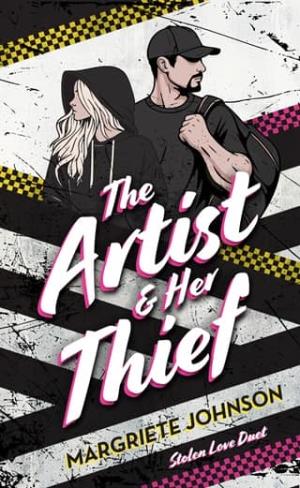
The Artist and Her Thief (Stolen Love Duology #1)
CHAPTER 1
Nash
My gloved fingers danced across the keypad as I punched in the access code. It beeped once and flashed green. When I turned the knob, it twisted with ease on silent, well-oiled gears—I’d made sure of that.
In my daytime role as a modern art specialist at Beaumont Antiquities contributing to the revitalization of our streets.
Spectators and critics marveled at the mystery and logistics of such a feat. What always started as a run-down storefront one day, would transform into a gallery the next. After the show, and by the third day, they were gone again, and a new tenant could move in to a fresh and inviting space.
It was clear PERL did not operate alone; how could they? You’d figure after all this time someone would have spilled the truth, but nothing. PERL’s fans were loyal; the identity protected.
Collectors clamored to be part of the PERL story and mission. The philanthropy of revitalizing the city in such an attractive and selfless way was hard to resist. Meticulously, the PERL name grew into a titan—something the art community ate up.
PERL, having only ever shown 19 artworks, became infamous overnight. This was a feat not easily accomplished by a living artist.
The style of the PERL pop-up show was iconic to the brand. Everything was black—from the ceiling to the floor to the bathroom—zero color of any kind.
They catered the events with full bars, security, bouncers, a full staff—also dressed in black—and always offered free entry.
PERL only showed one piece at a time with a single sentence explaining their ocular condition—a fact I always found cocky, bold, and admirable.
I’d surmised that despite their ambiguity, this was someone who wanted to be seen.
Possibly, they were someone already seen, perhaps a celebrity wanting a second identity to hide behind.
The first piece ever exhibited, titled Red, showed a handful of times until its sale in 2015. Since then, each piece—named after either a color or emotion—only showed once before selling the same night to private collectors.
The only reason Blue was here now was that this collector, a rather pompous man by the name of Henry Barns, loved to show off his rare art.
The museum held several of Henry’s rare pieces in this very room, all rich displays of secondhand philanthropy—not that he ever used his money for any original ideas of his own—but it was something.
As I stood there, transfixed by the swirling depths of Blue, I felt a familiar thrill of admiration mixed with intrigue. I’ll admit I saw the allure of the entire story. I was caught up in it myself, and that’s why I was here.
The red overhead lights distorted the colors, and I felt for a moment the way the artist must feel—frustrated that I couldn’t see it in its full glory of color—transported to their universe where only monochromatic shades existed, rendering the color blue an enigmatic unknown.
The steady thud of my heart increased. The surrounding walls whispered tales of secrets hidden and mysteries to solve. This was my first move in solving that mystery. Nothing brought attention to a story more than a good heist. It was my intention that through this I’d flush PERL out of obscurity.
Removing my gloved hands from my black joggers, I lifted the piece away from the wall.
Art key in hand, I slid it into the wire mechanism that attached the art to a triggered alarm if removed.
I’d duplicated the art key, since I handled it so often, which was forged from another kept in the museum safe.
The decorum of my daily visits to the museum was a mask, a rehearsal for this very moment.
In my tired life as a modern art specialist, I’d studied the intricate hallways of the museum on every visit.
My planning of the heist was precise and simple.
Duplicating the key was almost too easy, and my day job concealed my true intentions.
With a satisfying click, the wire retracted from the piece with a snap. It was time to move. While the art key bought me moments, it wasn’t much. In 5 minutes, if not reattached, the alarm would sound.
With the piece cradled in my deft grasp, a surge of exhilaration coursed through me.
I would not squander this head start. Stepping out of the aisle, my feet moved with a dancer’s grace despite my bulk.
I was careful to avoid the swath of red lighting that could betray my outline on the cameras.
Knowing the surveillance in this section and how it operated, it was easy to evade.
Heat signatures were the biggest hurdle, but I’d handled it by adjusting the air under my clothes. Small devices helped me achieve a body temperature membrane as close to room temperature as possible. It rendered me ghost-like on the screen.
The devices were my own design, using small, quiet computer fans, nitrogen, and temperature regulators close to my body. They fed air through tubing that wove across my skin like a web. It wasn’t comfortable, but it was effective, easy to dispose of, and easy to build.
Making my way through the red-lit corridors of the archives, with the palpable energy of the art pulsing through me, I couldn’t help but bathe in the dopamine. The thrill of the heist mixed with the thrill of escape fed my addiction to life itself. I didn’t know how to quell it any other way.
I slid out the final archive door, snicking it shut behind me. Avoiding cameras, I climbed the stairs with practiced steps, weaving in a pattern I’d rehearsed every time I walked these halls.
Just as the alarms blared, I glanced at my watch. Picking up my pace, I raced to where my escape rope hung, the end dangling inside the air shaft. I clasped it to my harness with my free hand.
Once secured, I slid a long microfiber towel from around my neck, threw it over the PERL and flipped it onto my back. I knotted the corners of the towel together across my chest, turning it into a makeshift backpack.
Stepping into the air shaft, I refastened the shaft door and ascended to ground level using my ratchet device.
My arms screamed as I pulled myself up one length at a time, counting in my head the seconds since the alarm sounded.
Just as the burn settled in my biceps and shoulders, with the vibrations of the alarm echoing through the museum, I reached the main access hatch.
Propping myself inside the shaft, I paused, taking a breath to steady my racing heart. This allowed my heat-regulating suit a chance to cool.
I peered through the grate. The dim light from the hallway illuminated two security guards rushing past, radios crackling with urgent orders. I could hear the faint shuffling of footsteps and the clattering of equipment as they worked to unlock the doors leading down to the archives.
After they passed through, I left the grate and went to the security office door. I knew John and Pedro were the only two on duty tonight. Their office was camera-free. I slipped in. A quick glance at the surveillance feed showed them reaching the basement floor via elevator.
Rounding the corner, I entered the loading dock.
Jogging to the door and untying the parcel from my back as I went, I flipped the art around me and held it to my chest. With practiced efficiency, my knee bent, and I used my momentum to slide out the crack I’d left open.
It was elegant—dare I say sexy—the way I slid under and out, landing on my feet at the bottom of the loading dock.
The PERL was mine.
The cool night air touched my face, and I switched off the airflow against my body. I dropped the small painting into the gym bag waiting in the alley, never missing a beat. The busy street allowed me to merge into the crowd, tipping my black baseball hat down and avoiding the streetlights.
Sirens whizzed past, sounding from all directions. Once I’d made it several blocks, I paused, taking a moment to gather myself and relish the delicious rush of adrenaline still surging through my veins. I removed my hat and unbuttoned my outer coat, tossing it in the gutter and replacing the hat.
The night streets of New York glowed with life. The familiar hum of cars, scream of sirens and distant eager chatter of passersby was a rich accompaniment to my emotions. Catching my breath, I slung the bag over my shoulder and headed home.
I didn’t take the most straightforward route, hopping park fences and leaving a confusing trail of discarded clothes behind me. I figured the homeless would find them before the night was over, further covering my tracks.
A few blocks away from my West Village townhouse, now clad in a black T-shirt, hat and track shorts, I began removing the web of tubing from my legs and arms. Collecting them into a ball, I discarded them into the trash that was scheduled to get picked up in just a few brief hours.
Step one accomplished.