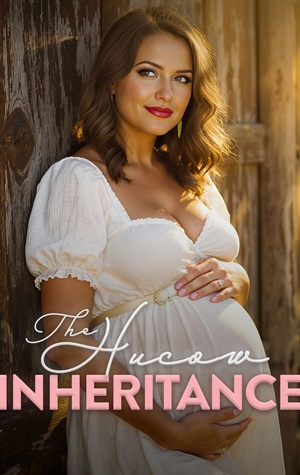
The Hucow Inheritance (Creamy Hucow Fantasies #7)
1. The Unexpected Will
The Unexpected Will
Iremember the day the letter arrived as if it were etched into my skin, a permanent mark that shifted the trajectory of my carefully constructed life.
It was a Tuesday morning in the heart of the city, the kind where the air hung heavy with exhaust fumes and the relentless honking of taxis below my high-rise apartment window.
I, Yvette Chastain, had just finished my third espresso of the day, the bitter liquid scorching my throat as I scrolled through endless emails on my laptop.
My office was a sleek glass box overlooking the sprawling metropolis, filled with the hum of printers and the murmur of colleagues negotiating multimillion-dollar deals.
At thirty-two, I was a senior associate at one of the top law firms in the city, my days a blur of courtrooms, depositions, and late-night strategy sessions.
Success, they called it, but to me, it felt like a gilded cage—beautiful from afar, but suffocating up close.
The thrill of winning cases had long faded into a dull ache of exhaustion, my personal life reduced to sporadic dates with men who talked more about stock portfolios than shared dreams.
I hadn't spoken to my father in over a decade, not since the bitter argument that drove a wedge between us after my mother's death.
He had retreated to his rural estate, Willowbrook, burying himself in whatever eccentric pursuits kept him isolated from the world.
I had buried the pain under layers of ambition, convincing myself that family ties were luxuries I couldn't afford.
The envelope stood out amid the stack of bills and junk mail on my kitchen counter, its cream-colored paper thick and embossed with the seal of a small-town notary. My fingers trembled slightly as I slit it open, the sharp edge of the letter opener catching the light from the pendant lamp above.
The words inside blurred at first, my eyes scanning the formal language: "Dear Ms. Chastain, It is with deep regret that we inform you of the passing of your father, Reginald Chastain, on the 15th of this month.
As his sole heir, you are entitled to his entire estate, including Willowbrook Farm and all associated assets. "
A wave of emotion crashed over me—grief, yes, but laced with something sharper, like regret or unresolved anger. My father, gone. The man who had raised me with stories of open fields and the simple joys of rural life, only to push me away when I chose the city's lights over his quiet traditions.
I sank onto the barstool, the cool leather pressing against my thighs through my silk robe, and let the tears come.
They were hot and silent, tracing paths down my cheeks as memories flooded in: childhood summers chasing fireflies in the meadows, the scent of hay and earth clinging to my clothes, my father's deep laugh echoing across the barn.
But those memories soured with time, tainted by his disapproval of my urban ambitions.
"The city will chew you up, Yvette," he'd said the last time we spoke, his voice rough with disappointment.
"Real life is out here, in the soil and the seasons.
" I had laughed it off, but now, with him gone, those words echoed like a prophecy unfulfilled.
The notary's letter included instructions for a reading of the will at Willowbrook itself, scheduled for the following week. I debated ignoring it, letting some distant relative or the state handle the mess, but curiosity gnawed at me. What had my father built in his isolation?
Willowbrook had always been more than a farm; it was a sprawling estate with acres of rolling hills, a grand manor house, and outbuildings that hinted at secrets I was too young to understand.
My mother had loved it there, her gentle hands tending to the gardens while my father managed the "dairy operations," as he vaguely called them.
After her passing from cancer when I was eighteen, the place became a ghost to me, a reminder of loss.
Yet here I was, booking a flight and arranging time off from the firm, my boss raising an eyebrow at my sudden request for leave.
"Family emergency," I muttered, the words tasting foreign on my tongue.
As I packed my suitcase that evening, the city's neon glow filtering through my blinds, I felt a strange pull—a mix of dread and anticipation.
The suitcase was filled with practical city clothes: tailored suits, high heels that clicked authoritatively on marble floors, and a few casual outfits for what I assumed would be a quick trip.
Little did I know, those heels would soon gather dust, replaced by something far more primal.
The journey to Willowbrook was a descent into another world, the airplane's hum giving way to a rental car's rumble over increasingly rural roads.
Leaving the airport, the skyscrapers receded in my rearview mirror, replaced by endless stretches of highway flanked by billboards advertising farm equipment and local diners.
I stopped once for gas at a dusty station, the attendant—an older man with weathered skin—eyeing my sleek sedan curiously. "Headed out to the country, miss?" he asked, his drawl thick as molasses.
I nodded, forcing a smile, the scent of gasoline mixing with the faint aroma of fried food from the attached convenience store. My stomach churned, not from hunger but from the building anxiety.
What if the estate was in ruins? What if there were debts I couldn't imagine?
By the time I turned onto the winding gravel drive leading to Willowbrook, the sun was dipping low, casting long shadows over the fields.
The manor house loomed ahead, a Victorian behemoth with wraparound porches and ivy climbing its stone walls.
It looked well-maintained, surprisingly so, the lawns manicured and the fences sturdy.
As I parked and stepped out, the air hit me like a forgotten embrace—crisp, laced with the earthy tang of soil and a subtle sweetness I couldn't place.
Birds chirped in the distance, and somewhere, a cow lowed softly.
No, not a cow—something about the sound felt off, more melodic, almost human.
I shook off the thought, attributing it to fatigue.
The front door creaked open before I could knock, revealing a man who could only be the estate's manager.
He was tall, broad-shouldered, with a rugged handsomeness that spoke of years spent outdoors.
His flannel shirt stretched over a muscular chest, and his jeans were worn but clean, dusted with hay.
Dark hair tousled by the wind framed a face with piercing blue eyes and a jawline shadowed by stubble.
"You must be Yvette," he said, his voice deep and resonant, carrying an authority that made my pulse quicken unexpectedly.
"I'm Marcus Hale, your father's right-hand man. Come in, please."
He extended a hand, his grip firm and warm, calluses brushing against my smooth palm in a way that sent an inexplicable shiver down my spine.
The house inside was a time capsule of elegance: polished hardwood floors, antique furniture, and walls lined with bookshelves groaning under leather-bound volumes. The air smelled of aged wood and faint lavender, a scent that tugged at buried memories of my mother.
Marcus led me to the study, where the notary—a prim woman in her fifties named Ms. Harlow—waited with a stack of documents. We exchanged pleasantries, her condolences mechanical, before diving into the will.
As Ms. Harlow read aloud, the details unfolded like a puzzle I hadn't known existed.
Willowbrook wasn't just a farm; it was a thriving operation with significant assets—land, equipment, and a "specialized dairy program" that generated substantial income.
My father had left it all to me, with one peculiar clause: to claim the inheritance tax-free, I had to reside on the estate for a ninety-day probate period and actively participate in its management.
"Your father was adamant about preserving the traditions here," Ms. Harlow explained, her glasses perched on the end of her nose. "He believed only someone immersed in the life could truly appreciate it."
I frowned, the words stirring unease. What traditions? My father had always been vague about the dairy side, dismissing my questions with a wave. Marcus watched me intently, his expression unreadable, but there was a spark in his eyes that hinted at depths unspoken.
After the reading, Ms. Harlow departed, leaving Marcus and me alone in the study. The fire in the hearth crackled, casting flickering shadows that danced across his features.
"There's more to Willowbrook than meets the eye, Yvette," he said softly, leaning against the desk. "Your father wanted you to discover it for yourself. Stay the night, at least. We can discuss the details tomorrow."
I agreed, exhaustion and curiosity winning out. Marcus showed me to a guest room upstairs, the bed plush with down comforters and pillows that smelled faintly of fresh linen.
As I settled in, the silence of the countryside enveloped me, broken only by distant sounds from the stables—soft murmurs and what sounded like contented sighs.
Lying in bed that night, the sheets cool against my skin, I tossed and turned.
Grief mingled with a restless energy, my body alive with sensations I'd long ignored: the whisper of fabric against my breasts, the ache in my core from the day's tensions.
In the city, I suppressed such feelings, channeling them into work.
Here, in the quiet, they surfaced unbidden, hinting at desires I'd buried deep.
Little did I know, Willowbrook held the key to unlocking them, a legacy far more intimate than land or money.
As sleep finally claimed me, dreams of open fields and strong hands guided me into the unknown.