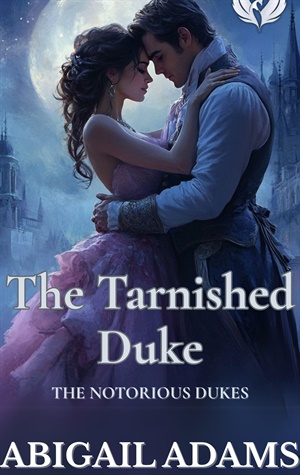
The Tarnished Duke (The Notorious Dukes #3)
Prologue
Don't forget, your exclusive free book awaits on the previous pages. ?
The first cry of Damon Alexander Jameson, heir to the Dukedom of Ravenshire, echoed through the grand halls of Jameson Manor one crisp November evening.
The child, with his head of dark hair and piercing blue eyes, was declared by the midwives to be a blessing from the heavens.
As he grew, that blessing took shape in ways no one could ignore.
He stood apart from all his peers from an incredibly young age.
The first stroke of fate came when Damon was ten, when the house grew quiet. Not silent—quiet in the way things go quiet after a storm. A stillness that did not soothe, but stung.
His mother, Evelyn Jameson, the Duchess of Ravenshire, died in the spring.
A slow, wasting illness they never named in front of him.
The sort that made doctors look away and servants speak in half-sentences.
Damon remembered the scent of lavender water, the way she clutched his hand even when her own had grown paper-thin, and the way her smile—always soft, never sharp—flickered like a candle against the wind.
She was an artist at heart. Everyone said so with a dismissive air, as though her talent were a charming little indulgence instead of the anchor of the home.
But Damon saw her differently. Her paintings were not distractions—they were declarations.
Fields of gold. Light cutting through storm clouds.
Faces that captured feeling, not just likeness.
"They say women ought not waste time with paints and dreams," she once told him with a mischievous smile. "But if something brings beauty into the world, why on earth should it be shameful?"
She never taught him to paint. She taught him to see.
After she passed, the halls of Jameson Manor lost their warmth. His father stopped speaking of her. The portraits remained, but the colors seemed duller. The piano was never played again.
Sometimes, when no one was looking, Damon would slip into the parlor where she kept her easels. He would sit on the floor, legs crossed, and stare at the last canvas she never finished—a sunlit field under a storm-heavy sky. His name was scrawled in the corner. Just a whisper of it.
He never touched the brushes. But he never let the room gather dust.
And though he never said it aloud, he carried her voice with him. Especially when his father tried to make him someone colder. Someone harder.
◆◆◆
Damon was fifteen the summer his name began to echo louder than his father's.
It was the annual Ravenshire Invitational—a cricket match held on the Jameson estate grounds between the sons of Dukes, Viscounts, and Barons. The sort of leisurely spectacle meant to show camaraderie among England's elite. Gentle competition. Chilled lemonade. Crisp whites on manicured grass.
But Damon did not treat it like pageantry. He treated it like war.
He bowled fast—far too fast for a schoolboy match—with a precision that startled even the hired umpires.
Three wickets in six overs. Clean. Unrelenting.
He moved as though he were made of muscle and angles and control, and when he was not bowling, he was at bat, cutting through the air as though he owned it.
And in a way, he did.
The crowd was delighted. Ladies in parasols whispered his name. Gentlemen muttered with tight smiles. His father, standing at the edge of the pitch in a gray summer coat, gave only the smallest of nods.
But not everyone was clapping.
Thomas Hensley—a Baron's son with a hunger to impress—was next to bat. His face was already red. Too flushed for the summer heat.
"Keep your eyes open," someone joked from the sidelines.
Thomas did not laugh.
He squared up. Damon was already at the far end of the pitch, turning the ball in his fingers. When he looked up, his eyes met Thomas's.
No expression. No mercy.
The next bowl came fast—faster than it should have. Thomas swung too early, missed, and stumbled off balance.
Then came the pop. A sharp, sick sound. The moment seemed to stretch and slow as Thomas crumpled with a cry, clutching his leg.
Silence fell.
Within seconds, men rushed the field. His father shouted for a physician. Thomas sobbed as he was carried off, pale and shaking.
Damon stood still on the pitch, the ball clutched in his hand, the world suddenly too quiet. A line of sweat rolled down his neck.
He had not meant for it to happen. But it had.
And later that evening, when the guests were gone and the lawn was cleared, Damon was summoned to the study.
His father sat in a high-backed leather chair, nursing a glass of port. The fire was unseasonably high.
"Close the door," the Duke said.
Damon obeyed.
"You were remarkable today," his father said. "But unwise."
"I did not—he misstepped."
"Of course he did. Because you pushed him to."
Damon's jaw clenched. "I did not tell him to be reckless."
"No," the Duke said, swirling his glass, "but you showed him what brilliance looks like. And when boys like Thomas see brilliance, they rush to catch it. That is what lesser men do. And that is how they break."
Damon did not speak.
His father set the glass down. "You are going to be a Duke, Damon. Which means more than excelling. It means being seen. Carefully. Intentionally."
"I do not want to be less," Damon muttered. "I do not want to dull myself just to make others comfortable."
"You mistake my meaning. I am not asking you to be lesser. I am telling you that sometimes—only sometimes—it is in a Duke's interest to seem human."
Damon's shoulders stiffened. "That sounds like deceit."
"It is survival," his father said. "No man rises without enemies. But no man stays risen if he mocks the ground everyone else is standing on."
Damon stared at him, eyes burning.
"You are asking me to become worse," he said, low and tight. "Why?"
His father held his gaze. "Because being the best means nothing if no one stands with you."
Damon left the room in silence, fists clenched at his sides.
That night, in the quiet hush of his bedroom, he sat at the window, looking down at the moonlit cricket pitch below. The grass still bore the faint scuff marks of the match. The place where Thomas fell was just a dark patch now.
He did not cry. He did not rage.
He simply made a vow.
Fine. If I must dim myself to be accepted, then I shall shine so brightly they will need to build new rules just to reach me.
◆◆◆
As he grew, Damon learned to smile through discomfort. To speak when silence was easier. To carry his father's name like a blade in a world of velvet gloves and hidden daggers.
He was in his twenties when it became clear his charm was as dangerous as any weapon.
It was a garden party at the Earl of Winterbourne's estate—a sun-soaked affair of parasols, chilled wine, and polite gossip disguised as conversation.
Damon, barely out of university, found himself cornered near the wisteria by the Dowager Lady Pembroke, a woman of forty with a fan she wielded like a magistrate's gavel and a reputation for ending careers between courses.
He did not like her. She had buried two husbands and most of their fortunes, and she spoke of the dead the way other women spoke of the weather.
It did not matter. He gave her his whole attention as though she were the only soul in the garden—leaning in at the right moment, lowering his voice, letting his smile arrive slowly, as though she had earned it. She bloomed under it like a girl of seventeen.
"You wicked thing," she said, tapping his sleeve with the fan.
"You will be the ruin of half the mothers in this country, and they will thank you for it.
" She studied him then, and her voice turned to something almost tender.
"Your parents would be proud. The very image of the late Duchess, God rest her—and your father's mind behind those eyes.
There is not a finer young man in England.
They broke the mold, my boy. They simply broke it. "
"You flatter a man past saving, my lady," Damon said, and pressed her gloved hand to his lips.
She laughed, delighted, and drifted away to repeat the encounter to anyone who would listen.
Damon held his smile until she was gone.
Then it cost him nothing to let it fall, because there had been nothing beneath it to begin with.
He had said the right words. He always said the right words.
The praise landed on him the way rain lands on a rooftop—loud, constant, and entirely unable to get in.
The finest young man in England. They adored the picture of him.
Not one of them had ever asked what the picture was hiding.
Across the lawn, Thomas Hensley watched the whole performance with his jaw tight and his wine untouched.
"He thinks he is better than the rest of us," Thomas said to the two young men beside him, sons of minor lords. "Because he knows which fork to use and how to tilt his head when he smirks."
"He is only talking," one of them offered.
"That is not talking. That is performance.
It is always a performance with him." Thomas nodded toward Damon, who now offered his arm to a young woman and led her toward the shade of the orangeries.
"You do not see it because you are looking at him.
Everyone is. That is his trick. He makes you forget there is nothing underneath. "
The two young men wandered off, bored. Thomas did not move. He went on watching, the resentment plain on his face for anyone with the patience to read it.
One man had the patience.
Near the stone balustrade, a little apart from the crowd, an older gentleman stood with a glass he had not touched.
General Harwood was past fifty, silver and spare, with the still, unhurried gaze of a man who had outlived most of his rivals and intended to outlive the rest. He had known the elder Duke of Ravenshire for twenty years—known him, fought him in committee and in private, and never once forgiven him for winning.
He watched the boy charm the dowager, charm the girl, charm the very air, and something in his expression did not move at all.
Then his eyes shifted—away from Damon, to the red-faced young man glaring at him from across the lawn.
Harwood considered Thomas Hensley for a long moment, the way a man considers a tool he has no use for yet, but might.
He filed the face away, finished surveying the garden, and said nothing to anyone.
The shadows had begun to gather around Damon Jameson before he was old enough to know they had names. And even the brightest star can fall. Especially when others are there to give it a helpful push.
◆◆◆
The fall began with a death—his father's. A sudden failure of the heart. One moment Damon was sipping port at a luncheon. The next, he was being summoned to a drawing room full of quiet servants and stilled clocks.
The old Duke had looked smaller in death. Damon had not expected that.
He had not expected the suffocating weight of what came next, either.
The bells of St. Aldwyn's tolled twelve times for the twelfth Duke of Ravenshire.
London's sky was draped in cloud that day, gray and low, as though mourning had soaked into the bones of the city.
A sea of black coats and black veils lined the cathedral steps.
Damon stood at the front of it, unmoving, drowning in his father's shadow, hearing none of the flawless eulogy.
He stood beside the oak casket and felt as though he were looking at a sealed door—one he had just been shoved through, and which would never open again.
Afterward, they came to him in their dozens. Lords, ministers, old schoolmates, even men his father had debated bitterly in Parliament. They all said the same things. He was a giant. The country owes him a debt. He raised you well, Your Grace.
Damon smiled. Nodded. Thanked them.
Inside, he could not breathe.
The next morning, the world changed. There were no horns, no proclamations. Only a new title inked on every envelope, a new key in his pocket, a hundred letters on the desk, and a thousand decisions no one else would make.
And everyone watched.
His father’s most trusted advisor, Paul, stood ramrod-straight in the manor’s study as he began listing estate holdings, pending court matters, foreign correspondences, tenant issues, and several urgent financial items.
By the time he reached “grain tariffs,” Damon had stopped hearing him.
He sat in his father’s chair—a high-backed monolith of dark wood—and looked out the window.
The estate stretched for miles. Land his family had owned for generations. Land he now controlled. Land he was expected to defend, grow, honor.
His hands were perfectly still in his lap.
But his lungs ached. He couldn’t seem to fill them properly.
The estate. The council. The tenants. The Court. Every hour of his day began and ended with decisions. Land disputes, political alliances, rumors in the papers, debts to be resolved, reputations to protect.
He was not ready. So he did not act—not truly. He let the advisors carry the weight, signed what needed signing, appeared where he was needed, charmed where he could. He told himself it was temporary. Grief. A phase.
But the longer he waited, the louder the whispers grew. He inherited the title, not the strength. His father would never have allowed this. Soft. Spoiled. Hollow.
Damon heard them all.
And he smiled.
And he waited.
What he did not know—what none of them knew—was that someone else was waiting too.
Waiting for him to slip.
Waiting for the golden boy to fall.