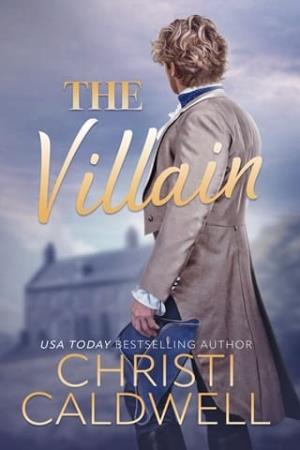
The Villain (McQuoid Family Saga #2)
Chapter 1
London, England
The McQuoid clan had not always been hopeless romantics.
They’d once been a surly, violent lot given to fighting—with enemies and one another.
Descendants of clan McQuoid’s romantic roots traced the familial vines to Lady Dorothea’s forbidden love affair with John Wemyss of Pittencrieff of a rival Scottish clan.
The young lovers met by chance at the Fairy Pools dividing their clans’ ancestral homes in a relationship destined for doom.
Though blood and clan allegiance made them enemies, Lady Dorothea and Lord John insisted their hearts and fates were written in the stars.
One cool summer’s day, lass and her love met at Loch Coruisk at the foot of Black Cuillin to join in a handfasting.
Only to discover themselves surrounded with stubborn—and enraged—McQuoids.
In large part because Laird John was a Pittencrieff, but also in large part due to their propensity for a good brawl.
His fate sealed, poor Pittencrieff was carted back to Dunmorin Castle—his McQuoid almost-bride cursing her kin to perdition—and imprisoned within a castle tower, where he’d await a painful death.
Too stubborn to allow either man or castle walls to defeat their love, Lady Dorothea leapt from her tower to John Wemyss’s.
Some said the lass jumped three meters. Others four. Accounts written of the McQuoid history had the distance as long as five!
Either way, Lady Dorothea’s feat that day, as great as her defiance, was met with begrudging admiration and a softening of previously hardened hearts.
Their love proved greater than hate, and from that John made free to marry his lass and the McQuoid motto sprung.
The cantankerous McQuoids became a whimsical lot.
The previous clan motto, Buaidh no bàs—Victory or Death—which was stitched upon all tapestries and hangings, was replaced.
Thig crìoch air an t-saoghal, ach mairidh gaol is ceòl—The end of the world will come, but love and music will endure—became the new motto.
From then on, every marriage a McQuoid entered into was driven not by titles and power and wealth, but by love.
The same held true all the many years later for Miss Meghan McQuoid Smith’s own family.
Her late da, God rest his soul, had faced an even greater hurdle in his courtship of Meghan’s ma—he possessed a healthy amount of English blood. Their union, cut short not long ago, had yielded six healthy, happy—and stubborn, of course, since they were McQuoids—children.
Meghan’s eccentric Scot uncle, the Earl of Abington, landed another unlikely pairing with an English lady of the most distinguished member of the ton.
From his long-ago marriage to Aunt Catherine, six children were born.
And the history of love matches continued through Meghan’s siblings and cousins alike.
Meghan’s elder brother fell in love in the same romantic and fraught way as the others before him.
Brone, a mere mister, had fallen for a duke’s daughter, who also had the bad fortune of being betrothed to a duke.
In the end, Brone eloped with his Lady Cora and lived in love and joy.
Cousin Dallin, Viscount Crichton and future Earl of Abington, in his attempts to stop Brone’s elopement, partnered with the lady’s sister, a woman he despised, to stop the wedding.
Naturally, they fell in love on the road to Gretna Green.
The eldest daughter, Meghan’s cousin, Cassia, fell for a powerful shipping captain—who was expected to marry another.
The middle daughter, Meghan’s younger cousin, Myrtle, got left behind in London one Christmastide season and fell for a brooding duke—who no longer brooded.
At least not for his wife and children.
The rest of them were fair game.
Even her other elder cousin, Captain Arran McQuoid, who’d been married to the seas for years, recently found himself swept into a whirlwind romance with a lovely, local—and to the family’s secret happiness, Scottish—innkeeper.
Obviously, a McQuoid falling for a woman innkeeper continued the lore and legend and was met with approval for it.
And then there was Meghan’s exquisitely beautiful, clever-witted sister.
Linnie.
Unlike all the other McQuoids who captured the hearts of their true love, Linnie caught two.
That of Captain Jeremy Tremaine, whom Linnie ultimately chose for her husband. (For reasons Meghan would never understand.)
And Lord August Archdale, the Earl of Culross.
Linnie rejected Lord Culross—but before that, she’d entertained his suit. Well, in a half-hearted way.
Most of their outings ended with Meghan being forced to distract the gentleman while Linnie slipped off with Captain Tremaine.
At first, Meghan bristled at her sister’s capriciousness.
But Meghan’s irritation swiftly gave way to something else entirely—gratitude. For born of Linnie’s deceit, Meghan gained something unexpected in the Earl of Culross: a companion. A confidant. A friend who tromped through the snow at her side and traded barbs as easily as laughter.
Meghan had no moral superiority over Linnie. For so many reasons.
Somewhere between Meghan’s snow-laden walks with her sister’s sweetheart and all the easy banter with him, Meghan fell.
Hard.
The Earl of Culross became “just August.”
And naturally given that insistence, she’d likewise become “just Meghan.”
Then Linnie chose Captain Tremaine.
Meghan, ever possessed of the steadfast McQuoid belief in happily-ever-afters, decided her sister’s choice meant something.
Linnie’s marriage freed August from the arrangement he had once sought with her family.
Surely, if he had been destined for one McQuoid sister, it was only because he had not yet realized he loved the other?
She waited breathlessly in the wings.
Of course, he had once been intended for another. That was how these stories began. But he would fall in love with Meghan. No, he had fallen in love with her. And theirs would not be a calculated alliance, but an all-consuming love match.
It was, after all, the most logical next chapter in a McQuoid love story.
Instead, he’d chased Linnie across the high seas to fight for her heart.
Naturally, Linnie chose her husband and heart.
And Meghan and August, friends and partners at McQuoid-Smith family functions, became…nothing.
Worse.
They’d become less than nothing.
That realization broke Meghan’s heart and, in her moments of weakness, led her to make a decision she oughtn’t to have made.
Which brought Meghan to this very spot—a black square of the harlequined tile floor in the middle of Lord and Lady Rutland’s soaring, statuary marble grand entrance foyer. Her entry had been assured, on account of the invitation she’d secreted some weeks back from her sister.
Foremostly, Linnie hadn’t intended to go anyway. As a new mother to twin babes, Meghan’s sister hardly left her young family’s side.
What harm was there in Meghan going in Linnie’s stead? Didn’t she deserve the same fun Linnie had before she married? Of course she did. In a world that increasingly denied women the freedoms men enjoyed, Meghan should be able to have one last grand adventure before her wedding.
Fueled by that sense of rightness, she fast cooked up a plan and even included her younger sister, Andromena, and cousin, Fleur. The last of the unmarried McQuoid lasses would go. Andromena took Helia’s invitation. Fleur availed herself to Cassia’s.
They would meet at midnight in Lord and Lady Rutland’s ballroom.
But Meghan lied to her partners in crime. She couldn’t, however, lie to herself.
Her being here wasn’t just about one forbidden night out.
What you are doing here is far, far, far more egregious.
“My lady…”
No, Meghan was worse than her sister.
In less than a fortnight, she’d be married to the dashing Duke of Hartwell. Their union would further strengthen the McQuoid-Smith ties to the Tremaine family. Even with all that, Meghan stood on the cusp of entering Lord and Lady Rutland’s ballroom.
Nor would her family of the greatest romantics ever condone what she intended to do here.
To find August Archdale, the Earl of Culross and now enemy to her family, and profess her love.
Because if she did not, if she did not stand before him and tell him once and for all, she would never be at peace. She’d spend a lifetime living in regret and wondering what if?
This would not be the first betrothal broken by a McQuoid. Granted, they were the ones in the habit of doing the breaking and not being the breakers.
But surely her family would understand? Surely, they would let true love stand.
Ending her betrothal to the duke marked her a villain. Even thinking about it did.
But she was not even sorry. She’d resisted the idea of a match between them from the onset. It hadn’t mattered. Everyone from cousin to sister to aunt, uncle, and mother reminded her of all the benefits.
What a stunning match she, a wallflower, who had also enjoyed a number of Seasons, could make and with a man so good and so kind.
They hadn’t said the wallflower part, but it had been implied.
And he had been. Kind.
All through the courtship.
Worn down, questioning her own ability to be loved, she came to believe there was no other recourse. Certainly, she didn’t want to be the lone unloved, unmarried McQuoid amidst dozens of happily wed and desperately in love ones. Plus, there was also the matter of Lord Culross being lost to her.
She said yes. Her decision was greeted with joy and celebration from the other McQuoid-Smith’s.
Then slowly, it changed. Bit by bit. Not her family’s satisfaction at her impending union, but the duke.
While deliberately seated beside one another at every event, dinner, and parlor game, he’d been exceedingly charming and attentive. Complimenting of her looks and dress.
Not that she’d ever wanted to be lauded for empty accomplishments.
He’d also laughed at the jokes she told and praised her for her wit.
And if August rejects you, will that make it easier for you to enter into marriage with a pleasant, but aloof gentleman hand selected by your family?
“My lady?”