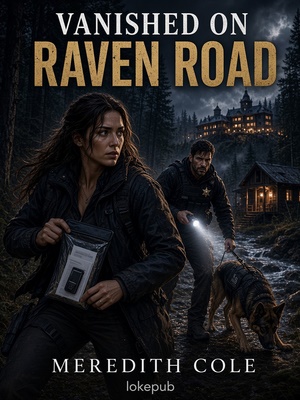
Vanished on Raven Road
Chapter 1. The Woman Who Came Back
The rain fell on Raven Ridge like a memory refusing to fade, hard enough to turn the windows of the converted fire station into black mirrors.
Sheriff Grant Hollis stood alone in front of the investigation wall with one hand resting against the edge of the map board.
The room behind him smelled of wet rescue gear, stale coffee, printer toner, and the faint animal warmth that drifted in from the kennel corridor whenever the interior door opened.
Most of the team had gone home hours ago, though home had become a flexible concept since Whiteout Ridge.
Federal interviews, evidence transfers, old route analysis, and arguments over warrants had kept the base lit past midnight more often than not.
The wall had changed too. What had once been twenty years of guesses centered on one missing nineteen-year-old woman had become something much larger and much uglier: Vehicle Two, Whiteout Ridge, Hawthorne Lodge, Crowe Timber, Victor Hale, old transfer codes, hidden service roads, and medical records altered after the fact.
Most damning were the photographs proving that a young woman officially lost in the mountains had actually been alive long after the search was declared unsuccessful.
At the center remained Maren Vale. The photograph was the same one Grant had looked at for years: dark hair, serious eyes, the hint of impatience in her expression because she had hated having her picture taken.
Nineteen forever, preserved by the same bureaucracy that had failed to preserve the truth of what happened to her.
He had once believed the worst thing a missing-person file could contain was uncertainty.
He knew better now. Certainty could be manufactured, signed, stamped, and filed until everyone stopped asking the question powerful people needed forgotten.
His personal phone vibrated against the metal table behind him.
Grant ignored it at first. His sheriff’s handset sat beside the radio charger, and anyone who needed him officially knew how to reach him.
The personal number belonged mostly to family, a handful of people he trusted, and telemarketers who somehow considered nine-thirty at night an excellent time to discuss roofing. The phone vibrated again.
He turned. Unknown number. No preview beyond the first four words. Grant crossed the room and picked it up.
Count the ravens before you cross. Mile Eleven. Alone.
Every muscle in his body went still. Rain continued hammering the roof.
A radio murmured somewhere in the operations room, too low for him to understand the transmission.
Nothing in the building changed, yet for one disorienting instant Grant was twenty-two again, wearing a deputy’s jacket that still felt too stiff across the shoulders while a nineteen-year-old woman leaned against the guardrail above Raven River and pretended she had not noticed him watching her.
Count the ravens before you cross, Hollis.
He had laughed because he thought she was inventing another piece of mountain folklore just to see whether he would believe her.
Maren had pointed into the trees where three black birds sat above the old road, then informed him with absolute seriousness that three ravens meant the road was lying.
When he asked what that was supposed to mean, she had smiled and told him most useful things made no sense until someone desperately needed them.
No report contained that conversation, no witness had heard it, and Grant had never repeated it to anyone in the years afterward. He read the message again, slower this time, but the words did not rearrange themselves into something safer. A second message appeared.
No county radio. No deputies. If you bring anyone, I leave.
Grant lowered the phone. His pulse felt strangely slow, every beat distinct.
The obvious answer was trap. Celeste Hawthorne still held the mayor’s office while federal investigators dismantled pieces of the system her family had protected for decades.
Silas Crowe still had employees, equipment, private roads, and enough lawyers to turn every accusation into an argument over jurisdiction.
Victor Hale was in custody, but Grant had spent too long in law enforcement to mistake one arrested operator for the death of an organization.
Someone could have found the phrase. Someone could have found an old journal, intercepted correspondence, threatened the right person. Except there had been no journal. There had only been rain, ravens, Maren, and him. Grant became aware of someone standing in the doorway.
Declan Vale had changed into a dark sweater after the evening briefing, but exhaustion still showed in the careful way he held one shoulder.
Whiteout Ridge had left bruises that faded faster than the truths uncovered there.
He looked first at Grant, then at the phone in his hand, and whatever he saw made his expression tighten.
“You look like you just got a call from the dead,” Declan said.
Grant glanced at Maren’s photograph before he could stop himself.
Declan saw that too. For several seconds neither man spoke.
There had been a time when Grant might have invented something procedural and walked away.
The past month had made lies of omission harder to tolerate, especially in this room.
Declan had nearly lost Mara because he believed withholding truth was protection, and Grant had watched the lesson carve itself into him deeply enough that repeating it now felt almost obscene.
Still, the instruction remained. Alone.
Grant slipped the phone into his pocket. “I received a message connected to an old personal matter. I need to verify it before I pull the team into anything.”
Declan leaned one shoulder against the frame. “Connected to that wall?”
Grant did not answer quickly enough.
“That’s an answer,” Declan said.
“She specifically said alone.”
Declan’s gaze sharpened at the pronoun, but he did not seize on it.
Instead he looked past Grant toward the wall, where his cousin’s missing-person photograph remained pinned beside evidence proving she had survived the original search.
“I’m not going to order the sheriff around.
I am going to remind him that almost everyone tied to this case has spent twenty years deciding other people were safer with less information. ”
“I know.”
“Knowing and acting like you know are different things.”
Grant almost told him. The impulse was strong enough that his hand moved toward the phone.
He could show Declan the message, bring Mara into the room, call Miles, build a perimeter, turn one impossible text into an operation before he drove a single mile.
Then another memory arrived, unwanted and exact.
Maren at nineteen, furious because an adult had made a choice for her “own good.” Maren asking why men always called control protection when they wanted the argument to end.
If she was alive, the first thing she had asked of him in twenty years was a choice. Come alone. Grant would not take that choice away before she even knew whether she could trust him.
“I’m going,” he said. “I’ll check in within the hour. If I don’t, treat it as a problem.”
Declan’s mouth flattened. “That is not remotely enough information.”
“It’s what I can give you.”
The silence between them carried disagreement without turning theatrical.
Finally Declan pushed away from the door and stepped aside, though there was no approval in the movement.
“Then remember something before you leave. If this is her, whatever she wants from you tonight is not the same thing as forgiveness.”
Grant looked at him.
“I know that too.”
Declan’s expression said he hoped so. Grant took his rain jacket and left the base.
The storm had swallowed Raven Ridge by the time he reached the western county road.
Water sheeted across the pavement in silver bands beneath his headlights, and fog gathered low between the pines, thickening wherever the land dipped toward Raven River.
He drove without emergency lights, without the county radio, and without contacting dispatch.
His service weapon remained holstered beneath his jacket because agreeing to meet alone did not require abandoning common sense.
Mile Eleven lay past the last occupied house, where the county-maintained road narrowed beside old Crowe Timber land before climbing toward the ridge.
The official map showed two abandoned spurs in that section; the recovered Raven Road overlays showed five.
Once Grant had seen the differences laid over one another, he had understood how easily geography could be erased without moving a single tree: relabel a gate, recast a service road as drainage access, drop a bridge from maintenance records.
Twenty years later, everyone assumed the map had always told the truth.
Grant slowed beside a leaning cedar. The old mile marker had vanished years ago, but the turnout remained: a narrow gravel cut disappearing between black pines and alder.
He almost passed it before his headlights found a weathered survey post beside the ditch.
Three ravens had been carved into the wood. Not painted.
Carved. Grant turned onto the spur. Mud pulled at the tires as the SUV climbed away from the paved road.
Branches brushed the doors and scraped along the roof.
He killed the headlights before reaching the old equipment turnout at the end, using only the low running lamps for the final yards.
The clearing overlooked a steep drainage that fell toward the river, though tonight the valley existed mostly as darkness and the low, distant violence of swollen water.
No vehicle waited. Grant parked with the nose facing back toward the road. He left the county phone powered off in the console and stepped into the rain.