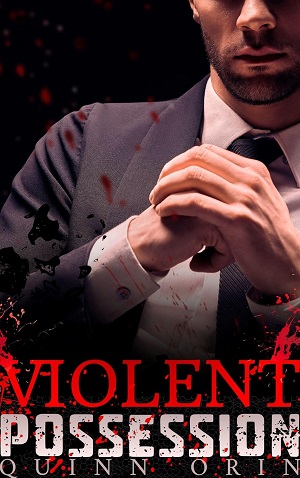
Violent Possession (Tsars of Transgression #2)
Alexei
That’s why I drink it in front of him.
“It’s a done deal!” he says, slamming his palm on the polished office desk.
It’s the same triumphant tone he used at twelve, after breaking a rival kid’s arm and running to hide behind his grandmother’s skirts.
I don’t move. “Karpov controls the drone logistics from Fresno to the border. He’s the key to the south. The deal’s on the table, Leshy.”
What a clever name. A small imp who lurks in the murky corners of a forest and tricks wandering souls. Ivan has never missed an opportunity to deliver backhanded compliments that belittle his subject.
My brother beside him, suppressing a smirk, obviously loves the joke.
Behind them, the silent shadow of Vladimir stares at me.
He waits, because he understands the offense—understanding my cousin is synonymous with it.
Built with the same lack of subtlety as a sledgehammer, his only function in life is to translate my brother’s growls into broken bones; he, too, waits for the order to leap at my throat.
He knows that, at some point, it will come.
We all do. It’s an unspoken thing that will happen sooner or later.
“The deal of a man whose security network is so robust that he schedules business meetings at a glorified dog fight,” I say.
His name alone—Karpov—makes me sick. He has the IQ of a brick wall and the self-confidence of an armed micro-influencer.
A clinical case of performative noise masking incompetence. “Karpov is a walking security risk.”
Ivan lets out a crooked laugh. “I know you’re not used to it, here with your air conditioning and polished wood, but this is how real men do business. With a handshake, watching a brawl, having a drink. Or do you think you’ll faint if you see a little blood?”
Ivan is an arrogant little shit. The eternal second place, always resentful, always seeking the approval of the loudest primate in the room. His alliance with Vasily is as predictable as it is pathetic. Always two against one.
“You and your friend Karpov are a waste of oxygen and time,” I say. “The only blood I’m worried about is what the family will lose when your stupidity inevitably blows up in our faces.”
“But Alyosha,” my brother says, taking on a singsong tone. He must think I’m an idiot. “The world out there is more visceral than your numbers. Karpov respects strength. It’s the language the Malakovs—the rest of the family—speak.”
The language of cheap intimidation is the one he himself used to convince me to approve the investment in the Odessa dock. He conveniently omitted that the main contact was a federal informant. The operation cost us control of the port. Vasily apologized afterward, of course. He always does.
An apology doesn’t cover a nine-figure loss or the humiliation of being outplayed.
The numbers Vasily presented on the Odessa fuck-up don’t add up.
No one has explained the reason for the failure of the only operation I didn’t participate in, and no one talks about the port manager who supposedly died with no body to be found, a loose end their incompetence left behind.
A loose end that I will, eventually, have to tie off.
Vasily always makes a point of drawing this line in the sand.
Ivan, the brute. He, a conniving little son of a bitch, with his ability to feign innocence being the only thing that saved him in Istanbul years before.
And all the other cousins, brothers, and uncles who understand the world through the sights of a gun or the bottom of a glass.
And me. The bean counter. The black sheep who happens to be the fucking brain that keeps all the wolves fed.
This mutual contempt is the only thing that still binds us.
“It will cost us millions when Karpov’s network is inevitably compromised by his own stupidity,” I say. “I’m out.”
Ivan leans over the table. He usually reacts to everything with anger, but not this time. That’s how I know he has one last card to play.
“What a shame,” he says, a victorious smile spreading across his face.
“Because I spoke with the old man this morning. He agrees the alliance is vital. And he thinks your caution is... admirable. That’s why he wants you to go to the meeting.
To ensure the intelligent part of the business is taken care of. ”
Of course, he did. When logic fails, he runs to the old man’s throne, whining about tradition and honor. Ivan appeals to a higher, sentimental authority. Pathetic.
Vasily looks at me with false compassion. Ivan looks at me with pure triumph.
I drink the last of my whiskey. The liquid burns as it flows down.
Fuck it.
“As you wish,” I say.
I stand, buttoning the middle button of my suit.
“That’s how it’s done, Leshy. Sometimes you just need to have balls.” Ivan gives me two condescending pats on the shoulder as I walk past him. Vladimir glares at me, a veiled threat, his eyebrow split by an old scar, perpetually furrowed. “Try not to fall asleep during the show.”
“This kind of place... it’s not for you,” says Vasily. “If it gets too loud, you can call us.”
His fake concern is more insulting than Ivan’s arrogance.
I don’t answer. Words are a waste on animals. The only language they understand is extinction.
Odessa never left my desk.
I could be in Monaco, New York, or the back of some bar in Sacramento—Odessa would still be with me, echoing in the alleys behind the bar, on the downtown streets at night, and in the casinos driving Europe’s luxury tourism sector.
This shit follows me, dirties my shoes, and ruins any sense of security I might have.
The port seemed harmless: cranes, containers, the smell of salt and rust. The kind of scene any idiot would call a “solid business”. Ivan did. Vasily signed off on it. I wasn’t there. That was the difference.
Afterward, just wrong numbers. Invoices that didn’t add up.
A “reliable” contact who vanished. A logistics manager who died before he could talk, and an entire operation compromised, with the feds on our tail right alongside the Volkovs, who took over the port for their own operations the first chance they got.
No one ever properly explained what happened. They prefer to say it was bad luck, that the police moved too fast, that there was no way to predict it.
But I look at the spreadsheet and see the holes. Something was never right about Vasily, and while I may have my disagreements with him, I know he isn’t stupid enough to confuse a reliable contact with a federal agent.
I haven’t known what goes on in his head for a long time. But before, there was no reason for me to try and force it open as long as he didn’t compromise any of our businesses.
Ivan is either too stupid to see it or he’s in on whatever Vasily is planning.
Before me, a file that won’t open. The screen flickers with broken symbols, visual garbage.
“The file is corrupted.” Anton sounds more nervous than he should. Sweat drips down his temple. It shouldn’t bother me, but it does. He’s in my office, using my keyboard, breathing my air. Too many people in here is already a mistake.
“I pay you for solutions. Work.”
He hesitates. A tiny, almost invisible reflex. I’ve learned to measure men in that interval—the second between wanting to resist and remembering they can’t. Anton has a gambling debt. And a sister at Stanford. I own both.
“...What exactly am I looking for?”
“An accounting error,” I lie.
He doesn’t believe me, but he types. It’s not his job to believe, in the first place.
“A seven-figure payment. Signed by Vasily. Recipient Kirill Denisov, deceased in an accident.”
“Show me.”
The photo appears. A patchy mustache, rat-like eyes. More convenient dead than alive. The official story, the convenient details. Vasily has never paid off an employee’s widow before, and he certainly wouldn’t start his philanthropy now. A million is the price for someone’s silence.
Anton waits for further instruction.
“Trace it.”
While he digs, I scan the list of the port’s security guards. Dead. Dead. Loyal to Ivan. Dead. With every name, a body that may or may not be where they say it is, a shadow that could be at my door tomorrow.
“Cayman Islands account,” Anton says. “Single withdrawal, three weeks ago.”
“Where?”
The map shrinks, then dives to a red pin. Sacramento, California.
Of course. Always the same place. Always the irony of falling into the same hole I’m trying to avoid.
“Erase the tracks. All of them.”
He cleans what needs to be cleaned and stands up too quickly.
“Anton.”
He freezes.
“And your sister? Still in architecture?” I don’t raise my tone. “Stanford is expensive. But worth it. Education is an investment.”
His shoulder sags half a centimeter. He leaves.
It’s always like this. There is no loyalty, only ballast. Love for family becomes debt. Ambition becomes a chain. Fear is the only contract that never fails, because it’s simple, mechanical, and requires no faith.
And yet, I find myself coming back to that word. It has no value beyond what I drag to it.
Trust. It’s religious. This family swears it’s indispensable, that without it, there are no relationships, no life. They look at each other and believe it’s possible to let their guard down. As if the world were some kind of clean bed where you can lie down without waking up with your throat slit.
I only see cracks. Always. The more you look, the more they appear. A small lie, a calculated silence, an omitted detail. Trust is only useful as long as you don’t look too closely.
Sometimes I wonder if there’s anyone who truly doesn’t see it. Who lives life believing in promises and handshakes, like Ivan, when he calls it “honor”. Perhaps people like that exist. People naive enough to sleep soundly, with lives less fucked up than mine.
My head never stops. It trembles at the wrong times with an arithmetic that never ends.
I don’t accept errors. I prefer to be the sole auditor of my own life.