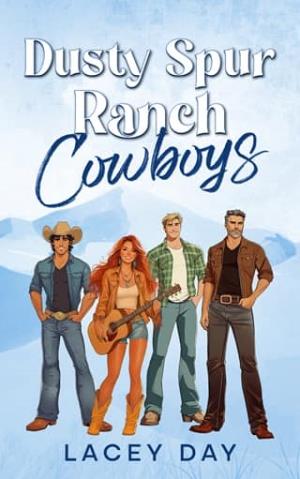
Dusty Spur Ranch Cowboys (Colter Creek #4)
1. Arizona
CHAPTER ONE
Arizona
The second I pass the faded wooden sign welcoming me to Colter Creek, I get a bad feeling.
Not the kind that makes me check the rearview mirror or lock my doors. The kind that sneaks up on people like me and convinces them to unpack their bags.
Towns like this are dangerous because they make staying look easy.
I’ve spent years making sure easy never becomes an option.
My truck rattles down Main Street, tires kicking dust across sun-bleached storefronts. Mountains stretch across the horizon, dark against the bright afternoon sky, while pine trees crowd the edges of town as if they’re trying to keep the whole place tucked away from the rest of the world.
The scent of warm dirt, wood smoke, leather, and summer hangs in the open window. Somewhere nearby, country music spills from a speaker that’s seen better days.
A pair of cowboys stand outside a feed store arguing over something important enough to make them wave their arms about but not important enough to make them stop laughing.
A woman carrying a pie pauses on the sidewalk and stares directly at me through the windshield without the slightest bit of embarrassment. Two kids tear past on bicycles, nearly colliding with a dog hanging out in the bed of a pickup parked beside the diner.
Everyone looks connected, like they’ve spent years collecting inside jokes and shared history.
Then there’s me.
Arizona McCay.
Professional runaway with a guitar and commitment issues.
I glance at the passenger seat where everything I own is wedged beside my guitar case. A duffel bag containing some clothes and enough cash to keep moving. The usual.
That’s how I like it.
New towns means new songs and stories. Then I leave before anybody starts expecting me to stay.
The Silver Bit Tavern sits near the end of the street beneath a flickering horseshoe-shaped neon sign. Rodeo posters cover the windows so completely that only scraps of glass peek through.
Every available surface advertises live music, whiskey specials, ranch rodeos, and upcoming events involving livestock that probably weigh more than my truck.
I can’t help smiling.
This place looks exactly like the kind of trouble I enjoy.
I pull into a parking spot near the entrance and cut the engine. The truck groans in relief.
A burst of laughter explodes through the tavern doors as a man stumbles outside carrying a metal beer bucket, saving me from sitting there too long, overthinking my life choices.
The smell of beer, cigarette smoke, and grilled meat drifts across the lot.
Yeah, I can work with this.
I grab my guitar, sling the strap over my shoulder, and climb out.
Heads turn almost immediately. I’m used to it.
Maybe it’s the hair or the fringed jacket. Perhaps it’s because I look less like a country singer and more like somebody who got lost on her way to a photoshoot in the 1970s.
An older cowboy sitting in a rocking chair outside the entrance tips his hat when I walk past. “Afternoon, sweetheart.”
I flash him a grin. “Careful. You don’t know me well enough to be using cutesy nicknames.”
The old man lets out a booming laugh. “Well, hell, she’s got teeth.”
“I keep them sharpened.”
Still chuckling, he waves me toward the door.
Inside, The Silver Bit feels exactly how a proper saloon should.
The floorboards creak beneath my boots. Music rolls from a battered jukebox near the back wall while locals crowd around scratched wooden tables drinking beer and debating rodeo rankings with the intensity of people discussing international diplomacy.
Every wall is covered with old photographs, championship buckles, mounted antlers, and enough framed rodeo posters for an exhibit. A cowboy in the corner is putting an impressive amount of confidence behind a karaoke performance that should’ve been stopped three verses ago.
Nobody seems concerned about the fact he’s murdering a classic country song. In fact, a couple people are singing along badly enough to make him sound talented.
I can’t help grinning as I make my way farther inside. A blonde waitress balancing a tray full of beers lets out an appreciative whistle.
“Well, there she is.”
A man at one of the tables nudges his friend. “The singer finally showed up.”
News travels fast around here.
I offer a smile even though my stomach twists a little. It’s funny how performing never rattles me, but walking into a room full of strangers always does.
A crowd only wants a good show. A small town wants to know who you are, where you’ve been, and whether you’re worth talking about over breakfast tomorrow.
Before I can decide whether that’s charming or terrifying, the bartender spots me.
He’s leaning against the polished bar with the relaxed confidence of a man who’s spent years talking people into ordering one more drink. Dark hair falls across his forehead, and the grin he sends my way could probably qualify as a public safety hazard.
His name tag reads RILEY.
“Well, it’s about time,” he says as I approach.
I set my guitar case beside the bar. “Excuse me?”
He laughs. “We’ve all been waiting for the mysterious singer to show up.”
I laugh. “That’s your opening line?”
“No, my opening line is usually better. I got nervous and panicked.”
“You seem devastated.”
“It’s been difficult.” He presses a hand to his chest. “Please respect my struggle.”
I shake my head, already entertained.
His grin widens. “You’re Arizona.”
“That obvious?”
“This town spent three days discussing a loose goat that broke into the pharmacy.” He gestures toward the room. “You arriving is the biggest thing that’s happened all month.”
“I feel like that says more about the town than it does about me.”
“It absolutely does.”
The waitress passes behind him and calls out, “Tell her about the goat stealing cough drops.”
Riley points at her. “See? Historic event.”
A few people laugh nearby. Riley studies me for a beat. “You’re not what I expected.”
I raise an eyebrow. “Should I be offended?”
“Nah. I figured you’d look tougher.”
“Tougher?”
“Most traveling musicians I’ve met either look like they’ve survived three divorces or they’re one parking ticket away from writing an angry folk album.”
I laugh harder than I mean to. “That’s rude.”
“There we go.” He points at me like I’ve proven his argument. “That’s the face of a woman who’s definitely written songs about terrible decisions.”
“Some of them weren’t terrible at the time.”
“That’s usually how terrible decisions work.”
More laughter erupts from the nearest table. By now, people aren’t even pretending not to listen. The whole room seems curious about me. Interested in seeing whether I’m worth the stories that’ll get passed around town later.
Riley notices me glancing around. “Nervous?”
The question catches me off guard because it’s genuine. “Always.”
Before I can answer, he points toward the small stage near the fireplace.
A microphone waits beneath the lights.
The sight of it catches me right in the chest.
No matter how many towns I pass through, stages never feel ordinary. They’re the one place where I stop editing myself.
Every song I’ve ever written carries the name of a place I’ve left behind. Amarillo, Tulsa, Santa Fe. Little pieces of my life scattered across highways, motel rooms, and people I cared about more than I admitted.
Places are easier to write about than people. Places don’t ask you to stay, and they never look disappointed when you leave.
Before I can say anything else, a shadow stretches across the bar beside me.
“Careful,” a man says. “Spend another five minutes talking to Riley and he’ll have you believing he’s the most eligible bachelor in three counties.”
The comment earns a groan from behind the bar.
“Oh, look,” Riley says. “My biggest critic arrived.”
I turn toward the newcomer and start to understand why half the room seems aware of him.
He’s older than most of the cowboys scattered around the tavern, probably in his early forties, and he carries himself with the easy confidence of somebody who doesn’t need attention to get it.
A faded red button down stretches across broad shoulders, the sleeves rolled to his forearms. Time and hard work have left their mark on him in a way that’s difficult to ignore.
Then I make the mistake of looking into his eyes. The kind of green that belongs in old forests and mountain country.
For reasons I’d rather not examine, I forget what Riley and I were talking about.
“Great,” Riley mutters. “Now she’s staring at you too.”
The man doesn’t even look at him. “That’s because she’s trying to figure out why you haven’t been fired yet.”
“I own the bar.”
“That explains the lack of management.”
A nearby table erupts with laughter.
I find myself smiling, too, as I hold out my hand. “Arizona.”
His gaze drops to my hand before returning to my face. When his hand closes around mine, warmth shoots straight up my arm.
Ridiculous.
It’s a handshake. People survive those every day.
“Red,” he says.
“Red,” I repeat. “Like the color?”
One side of his mouth lifts. “Depends who’s asking.”
Riley points toward him. “See? This is why talking to him is exhausting.”
I laugh.
Red finally releases my hand, though not before I notice he’s looking at me with the same curiosity I’ve been getting from everyone else in town. The difference is that his attention feels focused instead of casual.
“Nice to meet you, Red,” I say. “Should I assume you’re the sheriff?”
His expression barely changes. “No.”
“Mayor?”
“Absolutely not.”
I pretend to consider him. “Wealthy cattle baron hiding from society?”
“I drive a truck with two hundred thousand miles on it.”
“Outlaw, then.”
That earns an actual laugh. “I’m a rancher.”
Riley chokes on his own drink.
I raise an eyebrow. “That bad, huh?”
“That’s like saying Yellowstone is a decent camping spot,” Riley says. “Technically true. Missing a lot of information.”
Red levels a look at him.
Riley raises both hands. “Fine. I’ll stop helping.”
“You’ve never helped a day in your life.”
Watching them together, I get the feeling this argument didn’t start today and probably won’t end anytime this decade.