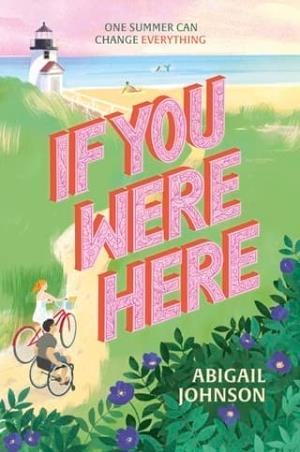
If You Were Here
Chapter 1 Lili
One
Lili
The briny air takes on a suddenly sweet note as I step off the ferry. Not that my stomach pays any attention, choosing instead
to clench as that final swell of sea lurches the gangway beneath my feet. Sweat slicks down my neck as I battle with what’s
left of my breakfast, urging it to stay put. It’s touch and go as descending tourists jostle my shoulders on the left and
right. I push my damp, blonde curtain bangs to the sides, and lift my face to a sun so bright it looks white against the watercolor-blue
sky. I don’t care if it costs me a few extra freckles, I just need to see anything that is not the Atlantic Ocean.
I don’t get seasick in a cute, movie-montage way. There’s no dramatic moment of leaning over the railing, wind in my hair,
staring mournfully at the horizon. The past two hours have been a nauseous, sweaty, miserable ordeal, punctuated with more
than one bout of public vomiting.
Throwing up in public: 0/10, do not recommend.
I clutch at the railing as we disembark, we being me, the vomit queen—an actual name given to me by an evil little boy with curly brown hair on the ferry with us—along with my ten-year-old sister, Goldie, who chased said evil little boy off by threatening to have me aim at him the next time I threw up, and our mom, whose olive complexion hadn’t been as green tinged as mine, but who felt seasick enough that all she’d said in response was “Lili, don’t get sick on any kids, okay? ”
I think she was kidding. I’d been too nauseated to really tell.
More people pour past me, so many, and even more crowd around the pier. I forgot what it’s like on Nantucket during this time
of year.
Off-season the island has a population of around twelve thousand people, but that number swells to over fifty thousand during
the summer. For an island only fourteen miles long and less than a third of that wide, it’s a lot of people.
And after seven years away, I get to be one of them again.
That thought is a sliver of sunshine piercing through my cloud of nausea.
Seagulls cry overhead and a wooden dock far older than my seventeen years creaks underfoot. In the distance, the familiar
clang of the harbor bell sounds, and my fingers stretch automatically, searching for the hand that used to hold mine all those
years ago.
A hand does find mine, not the one my memory longed for, but a familiar, comforting one all the same. Mom gives it a squeeze
and me a knowing glance before letting go.
“Feels the same, doesn’t it?”
It really does, and though we both sigh, we couldn’t sound more different.
Despite the unpleasant journey here, when I inhale, a mix of sweet honeysuckle, fresh bread, and salty kiss of ocean in the air makes me smile.
Mom’s expression turns resigned as she focuses on the burnt French fry scent of diesel coming from the ferry and the fishy seaweed wrapping around the wooden pilings of the dock.
I reach for her hand now and squeeze. “It’s just us this time. And whatever we want this summer to be.”
She gives me a resolute nod, patting our joined hands with her free one before striding forward to catch up with Goldie.
That nagging sense of guilt pricks at me before I can shove it away. I had promised Mom over and over again that we would
make brand-new memories here to chase away the old ones that clung to her. So as much as I’d like to linger by the harbor,
hopping along the cobblestones with my sister and doing more than window-shop in all the picture book–esque stores with names
like Faraway Chocolate, the Petticoat Café, and the Sunken Ship, I become the one marching Goldie straight past the wooden
placards hanging above colorful awnings as we walk the couple blocks to our car rental.
“Later.” I gently steer her by the shoulders. “Don’t you want to see the house?”
Mom brightens at this. “Oh, I hope it has roses climbing all over it.”
The picture we’d seen had indeed shown beautiful pink and white roses all but swallowing the tiny gray shingled house, but
I bite my lip, remembering the words of caution from the property manager that the house had been somewhat neglected since
that rather idyllic photo was taken.
“We can plant more if it doesn’t. It’s ours now so we can do whatever we want.”
Mom usually renovates and stages houses to appeal to current market trends rather than any personal preferences we might have, but unlike the houses she flips, we won’t be selling this one. It’s ours, or at least Goldie’s and mine, and I don’t ever intend to let it go.
My still-hesitant stomach is thankful for the smooth drive outside Nantucket Town to the house, no starts and stops since
there aren’t any traffic lights on the island. I find myself gripping the seatbelt as the tires crunch over the pea-graveled
driveway, curving around huge silver maple trees that nearly block out the sky in places, until the branches thin and the
sunlight pours down over a single house up ahead.
When Mom puts the car in park, we all stare at the house that I’d begged, pleaded, and implored them both to spend our summer
at.
No one gets out of the car.
Goldie scrunches her nose. “All in favor of going back to Arizona right now, raise your hand.”
She’s being dramatic; the house is just old. There are about eight hundred pre–Civil War homes on the island, and while this
one isn’t reaching the level of the 1687 Jethro Coffin House in terms of hauntability, it’s going to need more than a few
new rose bushes to make it look inviting to the living.
“Is this why Dad died? He found out he was gonna have to live here?”
I suck in a breath at my sister’s careless words.
She’d been only four when Mom and Dad divorced and he moved back permanently to his childhood home of Nantucket.
He never did get the hang of consistent calls or visits, so while I pored over the postcards he sent, being so young, Goldie always cared more about the pictures on the front than the words on the back.
She never went through the kind of grief that I did when he died six months ago.
“That’s not funny, Goldie,” Mom says with a weary reprimand in her voice. “This house has been in the Gardner family for generations,
and Dad couldn’t say no when the opportunity came to buy it back.”
“Well, Lili and I are the only Gardners left, so can we say no?”
I get out of the car, hugging my bare elbows against a sudden breeze and the sound of Goldie continuing to argue with Mom.
One of his last postcards to me was the day he got the keys.
A Gardner house, Lili! A family house. And one day, it’ll be yours and Goldie’s house, your legacy to continue. Let me fix
it up first and then you can both come visit next summer.
It’s summer now, and I’m here, but he isn’t.
It probably looked much the same back then. I’m sure he had plans for it, but Dad’s plans had a way of never quite making
it out into the real world. But I know he would have seen this house and instantly understood its worth, and with a not-unpleasant
ache in my chest, I see it too.
An older woman with short, spiky gray hair and tan skin kissed by years of salt and sun walks out of the front door. “Hello,
Gardner family!” she calls out in a warm voice as she carefully navigates the porch steps while holding a huge furry cat in
her arms.
Mom and Goldie step onto the patchy grass with me, the late-afternoon sun catching Goldie’s pale hair and turning it nearly white. The woman doesn’t hesitate—she walks right up to Mom and gives her a one-armed hug, deftly avoiding squashing the enormous Maine coon cat in her other arm.
“You must be Mia,” she says, pulling back. Her smile sweeps over the rest of us, wide and bright enough to make me feel immediately
at ease. “And these are your girls, of course. All that blonde hair!”
“Mrs. Mayhew?”
The woman laughs. “That’s me. And this”—she lifts the cat slightly—“is Ollie. Or maybe Stan? I never can tell the difference.
Anyway, come on in, and let me show you the house.”
She waves us toward the small saltbox home without waiting for an answer, her energy more inviting than demanding. The cat
stays perfectly docile in her arms, its thick fur rippling in the breeze as we follow her inside.
The house is dim, the light filtering through wavy glass windows that distort the view of the garden. It smells faintly of
lemon polish and something older, deeper—like wood warmed by the sun for decades. Mrs. Mayhew leads us through the narrow
rooms, her voice lively as she talks about the house’s history.
“No renovations or improvements since your late husband bought it last year,” she says cheerfully, her heels clicking on the
wood floor.
I glance at Mom, waiting for the inevitable flared nostrils or the tightening of her mouth. But there’s nothing—her expression
is perfectly neutral, her lips pressed into a polite line. I can’t tell if she’s doing it for my sake or Mrs. Mayhew’s.
“Too busy chasing the past to worry about the present, hmm?” Mrs. Mayhew shakes her head and adjusts the cat in her arms. “My Henry was the same way. Kept a whole attic full of his collectibles—refused to show a single soul. A friend offered to assess it after he passed, but I’m quite sure it only had value to Henry. So there it sits.”
“Maybe you could sell some of it online,” Mom suggests, her hand landing lightly on Goldie’s shoulder. “Goldie is great with
eBay, aren’t you, sweetie? How many items did you sell last year? Two hundred?”
“Two hundred sixty-one.” Goldie shrugs, but there’s pride in her expression. As part of her homeschool math curriculum, Mom
had her start a business for a mini-entrepreneurship unit. So far, she’s already made enough money flipping thrift store finds
to buy her own gaming laptop.
Mrs. Mayhew brightens. “Come by anytime if you want to make a little money this summer.”
She doesn’t wait for a reply, plunging right back into the history of the house. It was lovingly restored in the 1920s, she