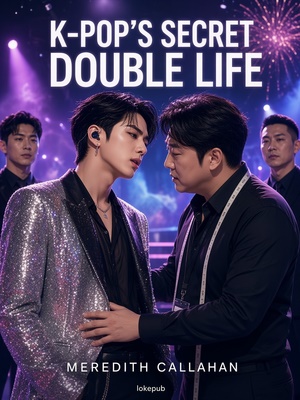
K-Pop's Secret Double Life
1. Cannes Heat
CANNES HEAT
AIDAN — CANNES
Flashbulbs flared like artillery along the Croisette, and I thought about how close glamour sits to chaos. The barricades quivered under the pressure of hundreds of screaming fans, and every few seconds a wave of noise rolled down the boulevard like surf breaking against glass.
“Audience controlled behind the barricades as far back as the rue d’Antibes,” Liam said in my ear. “I’m heading down the rue Jean de Riouffe to you.”
“Copy.”
I scanned the crowd pressed against the rails, mostly teenagers and twenty-somethings clutching banners, light sticks, and phones held high above their heads. Salt air mixed with perfume, sweat, and fried food from vendors who had somehow survived the beachfront’s endless security sweeps.
My husband and I had worked plenty of Cannes gigs before.
Celebrity escorts, private parties, discreet assignments for rich people who preferred their problems handled quietly.
This was different. Though the Cannes Film Festival was going on around us, the frenzy around this temporary waterfront stage wasn’t for a film star.
It was for Pryzm, the latest K-pop group to take Europe by storm, who were performing the title song for a Korean film showing during the Midnight Screenings.
A contact in the Cannes police had recommended us to the record label, Starhouse, as “international crowd control consultants.” It sounded more respectable than “extra muscle.” We’d handled crowds often, and this one had a devotional energy, which often made it more dangerous than one full of angry demonstrators.
A Korean woman in a business suit hurried toward me, headset askew, her badge bouncing against her chest. Kim Sun-hee was the group’s tour manager, and she’d given us our initial assignments. “Mr. Greene. They are arriving. Please, no incident.”
“We’ll do our best.”
She gave a nervous nod and vanished.
Liam’s voice crackled through the comm. “I’m passing the Square Mérimée. Convoy expected in two minutes.”
“How’s the crowd out there?” I asked.
“The line’s pretty polite. Kids in matching shirts. Homemade signs. Much younger crowd than most of what the Festival draws.”
The giant outdoor screens beside the floating stage flickered to life with a promo reel. Five young men in perfect sync. Flashing lights. Precision choreography. The crowd erupted so loudly my earpiece vibrated.
The whole performance setup had been built just offshore from the beach, a stage mounted on a barge and connected to land by two narrow pontoon gangways. Farther out in the bay, another barge held the fireworks that would accompany the finale.
I’d already decided I didn’t like any of it. Too much water and too few ways off.
“Convoy turning now,” Liam said. “And there goes my hearing.”
Black SUVs rolled into view, turning on to the boulevard de la Croisette and the crowd surged hard enough to make the barricades groan.
“Easy,” I muttered, more to the guards than the fans.
The convoy slowed as it reached the Palais des Festivals et des Congrés, then turned into the secured area beside the building. Fans lined the barricades across the street, screaming and holding their phones overhead.
I hurried to keep up as the SUVs came to a stop near the Promenade Robert Favre Le Bret. The doors opened, and Pryzm emerged into a wave of camera flashes.
Even knowing nothing about K-pop beyond the briefing packet, I could tell why these kids inspired this kind of hysteria. They moved like they’d been engineered for public consumption. Smiles timed to the cameras. Waves angled for maximum effect. Effortless, practiced charm.
The center member drew the eye immediately.
His name was Jin, and he was the one with the best English.
The front man, the group’s media face. He moved with a polished ease that made the others seem slightly awkward.
Handsome wasn’t quite the word for him. There was something more adult in the way he carried himself, a quiet sexual confidence that made the expensive clothes look less like styling and more like packaging.
He carried it all with a knowing smile, and enough sex appeal that even a happily married man could appreciate the view.
The group waved to the screaming crowd, posed for the cameras, then disappeared into the backstage area. The fans didn’t calm down so much as shift from shrieking to vibrating. Some began moving east along the Croisette toward the beach, to join the concert crowd before Pryzm took the stage.
Liam joined me near the secured artist access to the beach. “Local teams already out there?” I asked.
“Two teams. Young, starstruck, and probably useless.”
“Good.”
He snorted.
We passed through another security checkpoint and headed across the sand toward the pontoon gangways.
The floating stage sat just offshore, close enough to look almost like an extension of the beach.
One gangway was reserved for performers and crew.
The other was supposed to serve as the emergency route back to land.
I stopped long enough to look at both. “If anything happens, we use the landward gangway,” I said.
“Already checked it. Clear all the way back to the Palais.”
That was why I liked working with my husband.
Cannes was accustomed to this kind of excess.
During the Film Festival, the Croisette belonged to cinema.
Fans pressed against barricades outside the Palais, hoping for a glimpse of movie stars in black tie and elegant gowns.
Paparazzi patrolled the streets, photographing anyone who looked beautiful or important.
A month later, Cannes Lions would turn the same stretch of waterfront over to brands. Beach clubs became corporate compounds. Executives in linen jackets wandered between panels and parties while DJs performed beside the Mediterranean.
But this was different. These fans were ordinary people who had driven for hours across Europe and packed themselves behind barricades just to glimpse five young Korean men.
The temporary concert venue was elegant from a distance. Less reassuring up close.
I clocked the vulnerabilities automatically. Cables everywhere. Crowded access points. Minimal barriers. Water on three sides. And staff who seemed more interested in Pryzm than in doing their jobs.
Liam followed my gaze. “You look happy.”
“Just imagining the insurance paperwork.”
He laughed and peeled off to sweep the rear access corridor while I took position near stage left.
Backstage was controlled chaos. Stylists with garment bags.
Makeup artists doing last-second touch-ups.
Techs with headsets. Translators with phones pressed to their ears.
A thirty-something Korean man and woman approached, both wearing name badges.
Before I could say anything the woman stuck out her hand.
“I’m Sara Yoon, with Starhouse. This is my colleague, Lee Sang-min. We’re here to help out any way we can.”
I spotted Kim Sun-hee, the tour manager, and sent them toward her.
Then the music started, and the crowd screamed again as the band took the stage. Jin stepped into the spotlight.
I’d seen charismatic performers before. Rock stars. Politicians. Billionaires who thought money made them magnetic.
This was different. Jin didn’t dominate attention. He pulled it toward him. Even from twenty yards away, he had presence.
I understood the obsession. I also understood why Starhouse Entertainment had wanted additional security. This wasn’t just a concert. It was a phenomenon.
The other four members were attractive in their own way. The oldest had very defined cheekbones; the next was built like a football quarterback, broad in the shoulders and narrow in the waist. The third was slim and moved like a cat, while the last member looked barely out of his teens.
I was tracking the stage when movement in the wings caught my eye.
A male crew member stood half-hidden behind a costume rack. Mid-twenties, dressed in standard backstage black. Official badge clipped to his belt.
Nothing unusual. Except the way he watched Jin.
His whole body leaned toward the stage. His hands flexed at his sides. When Jin crossed too close to another performer during choreography, the man visibly flinched.
I touched my earpiece.
“Liam. Stage left. Male crew. Mid-twenties.”
“The one who looks like he’s praying?”
“That’s him.”
I moved closer.
The man never looked away from Jin. Not admiration. Not casual professional focus. Something more personal.
Obsession, maybe. Or love. From a distance, the difference could be hard to spot.
Song after song, the group delivered on their promise.
Their repertoire alternated between power ballads and love songs that had the audience swooning.
Their voices were strong, either individually or together.
Their dance moves were carefully choreographed.
It was probably one of the best concerts I’d ever experienced, and I’d grown up on a steady diet of Bruce Springsteen and Southside Johnny and the Asbury Jukes, with occasional spectacles by America, Chicago, and the Rolling Stones.
The final song built toward its crescendo, the crowd screamed, and the crewman I’d been watching took a half-step forward. Then the first firework exploded over the bay.
Gold spread across the sky, reflected in the black water below us. Another shell followed, then a third.
Something cracked. The next shell didn’t climb. It streaked sideways from the fireworks barge and slammed into equipment along the outer edge of the performance platform. White fire burst across the rigging.
The concussion rolled through the stage beneath my feet. The platform jolted and the lights flickered.
Someone screamed. Onstage, choreography broke apart as Jin stumbled sideways, his headset shrieking feedback.
Smoke drifted across the stage. Crew members shouted and stagehands ran for extinguishers. And the man I’d been watching bolted toward Jin.
“Unknown moving toward the performer,” I said.
“On my way.”
I intercepted the man in black halfway to the ramp and grabbed his arm. “Sir, stay back.”
“Let go.” His English was accented but sharp. “I need to get to him.”
Another burst of sparks rained down across the rigging. The man twisted free with surprising strength and sprinted forward.
I followed. He vaulted a cable coil and reached Jin just as the singer staggered again.
Instead of attacking him, he caught him under the elbow, steadying him with practiced familiarity. His free hand went straight to Jin’s face, checking him for injury.
Jin locked onto him instantly. Not in fear, but in recognition.
I caught sight of the credential clipped to the man’s belt. Starhouse Entertainment. A licensed crew member.
“Who are you?”
“His stylist,” he snapped. “Sang-hoon.”
Another blast sounded from the bay, and the slim dancer fell to his knees as the quarterback reached for him.
“Liam, we need to evacuate. Landward gangway.”
“Moving.”
I grabbed Jin’s other arm. “Go.”
Sang-hoon already had him by the shoulder, and the three of us headed for the gangway as Liam came in from the opposite side, gathering the other members of Pryzm and driving them toward shore.
The gangway pitched beneath us, but nobody stopped, and Sang-hoon never let go of Jin.
Jin didn’t let go of him either. We hit solid ground, where EMTs were already converging under a medical tent. “Sit,” I ordered. Jin dropped into a chair.
Sang-hoon crouched beside him, checking a scrape at his temple with hands that shook only slightly.
I stepped back, scanning for secondary threats.
Behind me, Sang-hoon was speaking to Jin in quick, low Korean, his hands still moving over Jin’s face and arms with the practiced efficiency of someone checking for injury. Jin answered in a murmur, letting him work.
Liam appeared at my shoulder. “I talked to one of the engineers. The shell that went sideways wasn’t part of the licensed display,” he said, voice low enough that only I could hear. “It was a separate unit. Not on any manifest I saw.”
I looked at the burning barge. Then at Jin, sitting ten feet away with his stylist’s hands bracketing his face. Then back at Liam.
“So it wasn’t an accident.”
Liam’s jaw was tight. “Doesn’t look like it.”