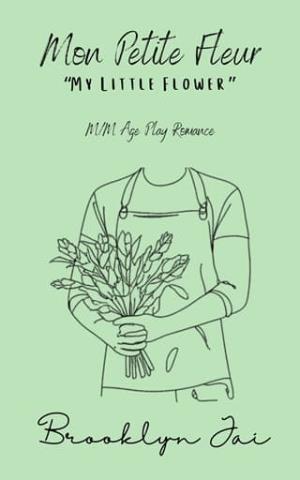
Mon Petite Fleur: My Little Flower (Rockport Ridge #4)
Prologue
____________
Ben
My small fingers, dusted with rich earth, carefully press a tiny unidentified seed into the soil. "Mom," I ask, looking up at her sun-kissed face, "why do we plant so many different kinds of flowers?"
She offers me a gentle smile, eyes crinkling at the corners.
"Because, Benny," her voice warm and gentle, "each one is a little bit of magic.
They bring all sorts of colors and smells.
They also call to different types of butterflies and bees.
It's like creating a colorful party for all the little creatures in our garden. "
"I love parties. Especially the ones with presents," I tell her with a wide grin before looking back down into the bucket of seeds.
She scoops a handful of wildflower seeds from the rusted tin pail we're sharing.
"Think of it like this," she continues, letting the seeds trickle through her fingers, "if we only plant one kind of seed, it would be pretty, but imagine a whole symphony of colors, a chorus of buzzing and chirping.
Variety makes our garden sing." She spins with her arms out wide as if she's dancing to the music of the garden orchestra as she hums a made-up tune.
I join her, the sound of buzzing leaving my lips mimicking the bees that will soon be swarming the garden.
"Come on, little bee, let's finish planting these seeds. It's supposed to rain in a few days, which will help our seeds grow."
Working side by side, we continue planting the seeds, content in the sounds of nature around us. Mom always looks the happiest when she's in her garden. I love it, too. Because she does. But I do enjoy the way the soil feels on my fingers, the smell of the damp earth.
It's not just about the flowers that I love; it's about the time I get to spend with Mom. Just the two of us. A simple joy of watching something beautiful grow together.
Entering the kitchen, the smell of bacon fills the space. "Good morning, Benny, guess what today is?" She asks with a gleam in her eye.
I look around the kitchen and notice old Mason jars sitting on the counter. I instantly smile. We get to explore the garden we planted a few months ago.
After scarfing down my breakfast and cleaning up the dishes, Mom and I head out to the backyard. The old wooden screen door slammed shut behind us.
Mom hands me a small pair of gloves and a pair of clippers. "Be careful with these; we don't need to spend the day in the emergency room."
"I will," I promise and slip on the gloves before grabbing the clippers.
Mom and I spend the day sitting in the garden. We get lost in exploring the critters that have made a home among the sprigs, and even a few bees seem to have taken a liking to some brown and yellow blooms.
"Mom?" I ask hesitantly.
"Yes, sweetie?"
"I was wo-wondering, do you think I could use one of these jars to make Ms. Tibball a small arrangement? I think it would be nice to do something for her." I ask, hoping Mom will let me take the neighbor some flowers.
Ms. Tibball is the older woman next door who helps me with my reading a few days a week after school.
I hate that my brain jumbles the letters.
When I was in kindergarten, I asked my teacher why the letters moved around on the page, and I was sent to the principal's office for playing around in class and making the other kids laugh. She said I impeded their learning. That’s a fancy word for disruption.
She's one of those teachers that I will never forget because of how awful she made me feel about my different kind of brain.
I was labeled a problem student early on, but I wasn't. I just wanted to know why my brain perceived words and letters differently from those of my classmates.
I was diagnosed with dyslexia when I was in second grade. Reading and writing are hard for me. Ms. Tibball is a widow, and she has been so kind to volunteer to help me with my reading. She makes learning fun, and there are times I wish she were my full-time teacher.
"I think that’s a wonderful idea. It's always kind to do something nice for those who help us," she tells me, placing her hand on mine. "Don't ever forget to be kind, no matter what."
I don't know why, but those words feel huge to my ten-year-old ears.
We finish collecting flowers for our individual projects.
Mom made some flowers she said my dad would like, and I made some for Ms. Tibball.
Both arrangements were filled with the brightest blooms we could find–golds, blues, and reds.
They are mini versions of our garden that takes up a large section of our backyard with Mom's tiny white potting shed right in the middle of it.
It looks like something out of one of the storybooks she reads to me.
"Your flowers are beautiful," Dad tells Mom with a kiss to her cheek. She blushes from the compliment. Dad takes the dishes over to set the table for dinner. Mom is making tacos.
"Thank you," she says, accepting the compliment. "Benny made some for Ms. Tibball to thank her for all her help with his reading." She offers me a little wink before turning around to check on the food she's preparing.
She doesn't see Dad's face drop. It makes my stomach feel twisty like a rollercoaster ride. Like I did something wrong. He doesn't say anything about my flowers. That's okay, Mom is my best friend anyway, and she's happy with my kind gesture.
And so life goes on. It's mostly Mom and me at home since Dad works long hours.
He's a tow truck driver and mechanic. He owns his own shop and works hard.
I wish he had time to hang out with me and Mom, but he doesn't seem interested in the garden, not like us.
I still go over to Ms. Tibball's house a few times a week for reading help.
My reading has improved, but I'll never be a strong reader.
That's okay, though. I enjoy art class better anyway. I can be creative and express myself.
"Have a great summer, everyone. I wish you all the best next year while you navigate high school." Mrs. Klein tells us when the last bell of the day rings.
I can't believe summer break is here again already, and I'm officially done with middle school.
"Hey, Benny," Mom calls and waves at me from the open car window.
"Hey, Mom," I greet her as I hop into the front seat of her yellow 1969 VW Beetle. I love this car.
"How does it feel to be finished with middle school?" She grins. "I can't believe I have a high schooler next year. I am way too young for that," she teases, and it makes me giggle.
"No different." The smile on my face tells her otherwise. I'm excited for high school. The art classes do way cooler projects. "Do we still get to open up our flower stand this summer at the Farmers’ Market?" I ask. Hopeful.
"We sure do. I just picked up the glass jars today from the antique mall we love. The collection of mismatched glassware is already in the potting shed waiting for you to do your magic."
The radio just tuned into one of my favorite Taylor Swift songs, and Mom and I cheerfully belt out the pop tune about endless summer days.
My brain must have been in the clouds, as it does sometimes when I'm daydreaming.
My singing was just a bit too loud because I didn't hear the screech of tires on the pavement until it was too late.
My seatbelt bites into my chest as I'm thrown into my side window.
A symphony that contrasts with that of our garden back home plays around us.
One of grinding metal and shattering glass when we get pinned between the truck that ran the red light and the light post. The world outside, with clear blue skies, is twisted into a chaotic kaleidoscope of colors.
I shake my head to clear the fuzziness, only to be met by sharp shooting pain through my temples. The acrid smell of burnt rubber fills my nostrils.
"Mom? Are…are you okay?" I ask, my voice hoarse and raspy.
I look over, needing her comfort and support. To hold me through this. Except her eyes are closed, and a thick rivulet of blood down her forehead is a stark contrast to her paler-than-usual skin.
A cold, sharp panic blooms in my chest.
The cheerful anticipation of summer break, the freedom and fun we just talked about, feels like a lifetime ago, replaced by the terrifying reality of this crumpled metal shell and the silence from the driver's seat.
The ambulance siren wailed, a mournful counterpoint to my ragged breathing. Paramedics move around, their voices a low murmur of medical jargon that I don't understand. Each touch, each adjustment, sends a fresh wave of throbbing pain through my right arm.
The weight of fear begins pressing down on me.
Suffocating.
The only thing keeping me rooted in the chaos is a warm hand on my shoulder–one of the paramedics. His deep brown eyes speak volumes, although his words are kind and gentle.
"We'll get you to the hospital soon. Hang in there..." he hesitates.
"Ben," I whisper wetly before sniffling, answering his unasked question.
"You're doing great, Ben." He encourages. "Try not to talk and keep your eyes on me."
"What's…name?" I ask between deep breaths that hurt.
"I'm Santos." He tells me, understanding my question this time. Santos talks about everything and nothing. It helps to focus on the soothing tone of his voice. He'd be a great storyteller. I think he's just trying to comfort me, and I need that. It makes me feel warm. Like someone cares.
My eyes leak, wetting my cheeks. Crying in part from the pain, but a larger part is knowing that my Mom is gone. Nobody has told me that. It’s just a feeling.
"Mom," I whisper through more tears as I feel my heart splinter and close my eyes to the once rhythmic beeping in the back of the ambulance to the now rapid sound.
"Ben, stay with me, buddy," Santos orders.
I crack an eye open and look at him. His soft smile warms something inside me again. "There you are. We're pulling into the hospital now, and they'll take good care of you. You're going to be okay." He reassures me.
And something that feels like peace overcomes me.
The small, mismatched jars that had held such joy now sit empty on a dusty shelf in the basement, gathering cobwebs like her memory.
They say there are stages of grief. For the past couple of years, I've watched it play out.
Dad's grief went from denial to anger pretty quickly.
During his venomous rage, not only did he take it out on me, he took it out on Mom–what was left of her.
The garden, once a sanctuary of shared laughter and gentle lessons, became a forbidden zone, a painful echo of what was lost.
The shed was torn down and the wood burned.
The garden was replaced with stone.
My calloused fingers no longer pressed seeds into the earth. Instead, they held onto the worn fabric of my shirt as if I could keep myself together in the face of sorrow too vast to understand at such a young age.
Standing on the back porch, staring at the now renovated backyard, I imagine the symphony of buzzing bees Mom described once. But the only noise I can hear is coming from inside the house.
"Ben! Gid your fuggin' faggoty ass in here. Now!" Dad's slurred words cut me. He's called me every name he could think of before. He doesn't mean anything by it. He's just angry that Mom's gone, and he needs to let that anger out. I’m usually the target.
If I say it enough, maybe one day I'll start to believe it.
Walking into the living room, Dad's sitting on the couch with an empty beer bottle in his hand. My stomach churns.
"Yeah, D-Dad?" I hesitantly ask.
At first, he doesn't say anything. He just stares at the empty bottle. Goosebumps on my arms cause my fight or flight reflexes to engage. When Dad finally looks at me, his eyes are red and his pupils are dilated.
What did I do that has him so angry this time?
"Yous got thir-thirdy mins to collect your shit and gid outta my house." He seethes.
My brain spins and my vision blurs.
What is he talking about?
"Did I do something wrong?" Mom's words from all those years ago about being kind no matter what circle my thoughts. I have always been kind. I obey my father in fear of the consequences. I do my chores. I…I don't understand.
"Dad?" I finally croak out after a few minutes. My eyes sting and I hold back the tears.
Dad slides my phone onto the coffee table, and I didn't even realize he was holding it in his other hand. My Instagram account is open. On the screen is a gay couple that I follow. In this particular photo, they are hugging a cute puppy–shirtless.
"It's hard nuff havin’ a son that’s a retard, but now he’s a faggot, too? Too much. You need more help than I have the energy for. Jus’. Gid. Out." He doesn't even look at me when he says those last three words.
"Dad. I'm only sixteen. Where will I go?" The tears are flowing freely now. I don't care.
"Not my problem." Dad stands, sways a bit, and then walks to the doorway to their–his–bedroom and turns to look at me one last time. "There's a box on the kitchen counter. Take it wid ya."
After loading up my duffel bag and backpack, I grab the box from the counter without looking inside and close the front door behind me.
Saying goodbye to the only life I know.
With a deep, ragged breath, I force myself to walk, remembering my time in the garden. The garden that once was a sanctuary, a place of creativity, laughter, and love. I no longer have seeds or jars or my Mom's guiding hand, but I have the memory of her words. "Life is a beautiful, messy symphony."
Maybe someday it could be that again, but on my own terms.