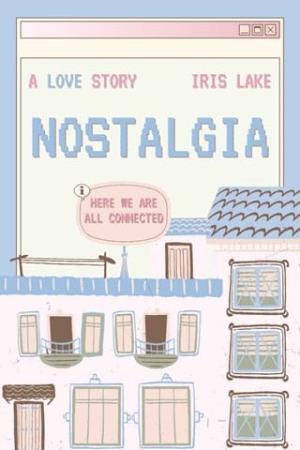
Nostalgia
Chapter 1
Chapter One
My whole life changed the night I came across that word. Nostalgia. A word so powerful that it did not only reveal the truth of the world but also the truth of myself.
Every Friday evening, I visited Mr. Leonard’s bookshop on Marble Street and picked out a book or two so I had something to read over the weekend.
It was my favorite thing in the whole world: leaving work early so I could enjoy a full hour of browsing, watching the city’s lights glimmer over the poster-dazed facade of the bookshop featuring all the latest and most popular publications, hearing the little bell chime as I pushed the glass door in, then getting hit by the vanilla-hued aroma of paper and the subtle chemical scent of ink.
Instant warmth in my chest. The resplendent relationship between habit and feeling.
It was like going through a passage to another realm, into a world composed solely of characters whose lives, I knew, were about to change forever.
To me, a good book was one that made me feel something outside of myself. Sometimes it was something I needed to feel and didn’t know how, and other times it was something I hadn’t known myself capable of feeling at all.
And then there was the bookshop itself, the comfort and loveliness it would bring me.
How Mr. Leonard would look up from his cherrywood desk, his spectacles flashing white for a single moment before his whole face would light up with a smile.
“Welcome, Ms. Anya. You came at a good time. I have just the right book for you.”
Sometimes, I would pick out something immediately, a sizzling new romance or the thriller everyone was reading at work, and other times I would keep on browsing until the very last minute, looking for something I didn’t even have the words to describe.
Perhaps a story that would affect me on a deeper, subconscious level, for there was nothing I dreaded more than the idea of going through this life unaffected.
That was how I stumbled over that book. During a casual Friday evening, looking for something inexpressible.
The cover was pale blue, boasting a drawing of a telephone, with the title scribbled over it in bright pink: Acquiescence.
I took it home with me and spent most of my Saturday reading, stretched out on the sofa, with the window open so I could still feel the crisp autumn air on my skin.
Plot-wise it was nothing extraordinary, just a typical office romance, but then, all of a sudden, the word popped up, the neat, black characters so distinct amid the rest that they gave off a haunting dark glow.
Nostalgia.
The word was so foreign, so disturbingly alien to me, that my breath hitched and my heart began to flutter like a frightened bird inside my ribcage.
Over and over I read it within its context, trying to extract its mysterious and utterly inconceivable meaning until each dark letter became imprinted upon my optical nerves.
Why had I never heard of this word before, and what could it possibly mean?
Why did it make me feel so restless, almost hopeless, and why was I so certain that if I rummaged through the boxes of my mind I would find it there, that bizarre, outlandish thing dangling right beyond the reach of my comprehension?
The next morning, I returned to the bookshop to ask Mr. Leonard about it.
I was so flustered with curiosity that I barely washed and brushed my hair before I was out of the door, the puzzling book tucked under my arm like a newspaper.
I didn’t even notice the time, and only after I found myself standing before the bookshop’s lightless front did I realize that I’d arrived an hour too early.
September had been a warm, humid month, summer clinging on to it like a stubborn child, but October came fast and determined.
Mornings grew crisper and nights unexpected.
One moment the wind was rustling pleasantly through the sycamore trees, rattling the loosening leaves and sweeping them up in the air, and the next it was all bluster and rain pelting the earth, or blankets of mist falling over the city, the pavement left dappled and streetlight-bright.
Now, the unrelieved sky arched menacingly above me, so I decided to go into the coffeehouse next door and wait out the impending storm.
Inside it was packed and feverish, and a waiter suggested I take one of the sidewalk tables, which were protected by a green scalloped canopy.
After he brought me my steaming cup of coffee, I lit a cigarette and for a while just watched the rain.
The trees lining the sidewalk stood out gray and tender, and the tram slipped past us with windows fogged and streaming.
I pulled the sleeves of my sweater over my knuckles and tasted my coffee, which was milky and velvet-rich.
My thoughts quietened, my breathing slowed, my eyes grew bleary observing the fat raindrops darken the pavement until it was sleek like a mirror and emanated a lovely petrichor scent.
More and more people gathered under the canopy of the coffeehouse, seeking sanctuary as the rain grew heavier, some laughing, others scowling, clutching their windblown scarfs and checking the time on their wristwatches.
But within minutes, everyone, even the most irritated of patrons, started talking to each other to pass the time, with their coffee cups in hand and their red-cheeked faces half-obscured in white clouds of breath and cigarette smoke.
That was the miracle of the Inside. Right in the midst of an ordinary day, a moment of togetherness was induced, and the mundane was made special in the most human way possible.
An hour later, the sky cleared, the shops opened, and I was disappointed to discover that Mr. Leonard didn’t know much about the book. It had probably come from Outside, he said, and he had shelved it amongst the rest without paying much attention to it.
When I asked him how come he wasn’t more surprised by this, he said that things from Outside slipped in here all the time.
Books and music and pieces of technology.
After all, we were in constant correspondence with them.
It wasn’t as though the Outside was some kind of forbidden wasteland.
No, nothing like that. They had their way of living, and we had ours, and we existed next to each other quietly and unobtrusively.
“But do you know what the word means?” I persisted, feeling weirdly unsteady, like I was standing on the edge of a very slippery surface. “Have you heard it before?”
“Of course, I’ve heard it,” Mr. Leonard said in his crinkly grandfather’s voice.
“It means the sentimental longing for something of the past. That twinge you get in your chest thinking of a place or a time or a person you can never return to. Like an old wound reopening.” The confusion must have been evident on my face, for he tried to redefine the word in simpler terms. “Basically, it’s something you’re missing. ”
It wasn’t that I couldn’t understand what he was describing, only that I couldn’t relate to it, which in a way was much more disturbing—not being able to relate to something another citizen of the Inside could.
For a second, a terrible, dreadful second, it was almost as if I had stopped being connected.
“But,” I continued in the same breathless manner, “if that’s the case, then why not just say that?”
“It’s like the difference between was and use to be. Use to be implies a feeling of loss. That’s nostalgia.”
“And how come I’ve never heard of it?”
Mr. Leonard laughed at that, the sound like leaves wafting through park gates.
“Well, look at you. You’re a baby. You’ve probably never needed it.
” Raising his brows and lowering his chin, he looked at me over the rim of his glasses.
“If you don’t need it, then you don’t know it.
It’s what makes this place so special, no? ”
At twenty-eight, I was not exactly a baby anymore, but Mr. Leonard did have a point there.
The Inside was special. Here we were relieved from the rapidly evolving technologies and the infinite streams of useless information that plagued the Outside.
Here, we only knew what was necessary for our survival and well-being, living on that rare sweet point between everything and nothing, overstimulation and oblivion.
And yet, it gnawed at me. Nostalgia. Something you’re missing.
What could someone be missing living here?
The whole city was built like a hug, full of glossy neon signs and four-story buildings leaning on each other like drunken friends, quaint lampposts littered with band stickers and technicians’ phone numbers, wide sidewalks cluttered with metal benches and the occasional yellow silhouette of a phone booth, green parks ringing with the laughter of children hopping over white, chalk-drawn squares, and the boisterous voices of teenagers sliding over colorful skateboards.
We had no crime, no poverty, no pollution, no social injustice to fight against. Here we were connected not only to each other but to the best and most important qualities of humanity.
The idea of someone longing for the past when living here in the present was utterly incomprehensible to me. But if the book really was from Outside, maybe that explained why such a miserable word existed in it.
If the Outsiders lived better or worse than us, it didn’t matter.
It was none of our concern. The human mind was not built to know everything all at once or dwell on matters beyond its control.
We only had power over ourselves, and so our sole purpose was to be good, honest, helpful members of society.
After all, there was nothing like the ripple effect of accountability.
Harmony and peace were inevitable when everyone took responsibility for their actions and acted mindfully and respectfully toward others.
Basic human decency proliferating itself.
And so, I had all I could possibly need here.
I had friends I liked, books to read, work I actually enjoyed doing, and a charming little apartment on Arcade Street.
The neighborhood was a bit noisy, especially at night with all the bars and restaurants lining the block, but for a young person who didn’t like driving, it was the best location since everything one could possibly need was within walking distance.
From my fourth-floor apartment, I could see the whole city waking up in the morning, the sunlight tumbling, lush and cold, over the slope of buildings and treetops.
And in the evening, I could watch the streets twinkle with activity and the array of stone chimneys puff out black coils of smoke now that it was autumn again.
Which was exactly what I was doing now, leaning on the balcony’s rain-kissed railing, with a blanket thrown over my shoulders and a cigarette smoldering between my fingers.
Below, the street buzzed with the chatter of passersby, audible even over the rumble of several moving vehicles and the screech of the bus as it slowed to a stop. No noise was ever louder than our togetherness.
The neon sign, posted on the rooftop across from me, advertising a popular sugary drink, flickered red and white below the Center’s billboard, which seemed to hover as though on its own a few inches above. Here we are all connected, it reassured us.
It reminded me that my assessment was coming up soon, and I felt myself rise up to my toes, my eyes searching for the honeycomb dome of the Center, glowing like a beacon in the faraway distance.
The beauty of its hexagons was immeasurable; its brightness, infinite.
No matter where you were, you could always catch a glimpse of the giant white dome.
The Center was the heart of this place. It was where we all began and ended, the converging point where our well-being was interlinked.
◆◆◆
After I finished my cigarette, I disposed of it in the ashtray wedged between my petunia pots and went back inside.
The warmth of the apartment washed over me sweet and thick like treacle, making my fingers sting from the abrupt change in temperature.
I loved this place. I loved that you could take in all of its sunny, age-scrubbed beauty in a single turn.
I loved the butter-yellow wallpaper that had started to fade around the ceiling and the quaint kitchenette, with the kettle always rattling on the stove.
I loved the creaky hardwood floors and the leaky faucet that was releasing droplets of water in the bowl of cereal I had yet to wash.
I loved the faint buzzing noise the TV made every time I changed the channel, its long antenna glowing silver in the dark.
Here, there was no one to disturb me, no one to judge me. There was only the cup of tea I brewed and would soon forget about and the radio I would leave playing all night long.
I tried to imagine what nostalgia would feel like in my body, a body so accustomed to feelings of comfort and delight.
Would it make me ill? Would it upturn the harmony of my soul?
It didn’t sound so bad to long for something, for longing implied having loved too.
But longing for something you could never have back seemed nightmarish.
Why would the author describe nostalgia as bittersweet when there was clearly nothing sweet about it?
Missing something. I didn’t know why I couldn’t stop thinking about it. The mere notion had a fairy-tale quality to it. The dark spell a witch would use to unravel the hero’s destiny. Less of a word than a mystic portent of doom.
When I went to the bathroom to wash up and get ready for bed, I lingered before my fluorescent reflection in the mirror above the sink.
What if I was missing something? Something I hadn’t noticed.
Closely, with an intense feeling gathering in the hollow of my breastbone, I examined myself in the glass, but I appeared to be the same as yesterday and all the days before that.
The same straight black hair and round blue eyes, the same soft mouth and perpetually sad eyebrows.
Nothing had gone askew or amiss. The only different thing about my appearance was my tongue, which had been stained red from the popsicle I’d had after dinner.
I made a silly face in the mirror, then laughed at myself, grabbing my toothbrush.
When I got into bed, I battled with the duvet for an hour or two before I accepted that sleep was going to evade me tonight.
Numbly, I stared at the alternating glow of the neon sign, filtering through the sheer white curtains on my window and flooding the room with its anxious indecisiveness. Red and white. Red and white.
The lights lapped over the bed and caught on to me, pulling me under into a black, depthless void like deep seawater.
There was a pressure in my chest, a disturbance in my blood. Something beneath the surface of my skin was breaking.