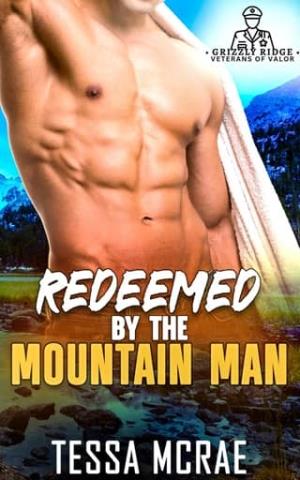
Redeemed By the Mountain Man (Grizzly Ridge: Veterans of Valor #4)
Chapter 1
MARCEL
The crosshairs settle on the bull elk at four hundred and twelve yards.
Wind out of the northwest, six miles per hour. Humidity low, temperature hovering around forty. I adjust for the slight uphill angle, my breathing slowing to that place between heartbeats where the world goes perfectly, terrifyingly still.
I don't pull the trigger.
I haven't pulled a trigger in three years.
Not since Kandahar. Not since the last time I looked through a scope and watched a man drop and knew I'd carry that weight for the rest of my life.
I just come up here to the observation tower every morning before dawn, settle behind the glass, and prove to myself that my hands are still steady.
They are. They always are.
That's the thing about being one of the most lethal snipers in Marine Corps history. The skill doesn't leave. The patience doesn't leave. The ability to hold perfectly still while the world falls apart around you, that doesn't leave either.
What leaves is the man.
I lower the rifle and watch the elk disappear into the tree line, breath fogging in the early September air. Grizzly Ridge is waking up below me, the valley filling with pale gold light that catches the rooftops of Main Street and turns them into something that almost looks like peace.
I've been here eleven months. Bought forty acres with long sight lines in every direction because a man like me needs to see what's coming.
Built the cabin myself. Built the observation tower.
Built a shooting range out back where I test the custom rifles I make for clients who will never know the hands that crafted their weapons have taken more lives than most people can comprehend.
One hundred and fourteen confirmed kills.
I remember every single one.
My phone buzzes against the wooden railing. I glance at the screen and see Logan Creed's name.
I consider ignoring it. Logan is a good man, a former SEAL who understands the particular kind of quiet that veterans like us need. But he's also been trying to drag me into the Grizzly Ridge community for months, and every time I think I've successfully declined, he finds another angle.
"Creed."
"Hale." His voice carries that dry authority that makes people follow orders before they realize they've been given one. "Got a favor."
"No."
"You haven't heard what it is."
"Don't need to." I start breaking down the rifle, hands moving through the familiar motions without thought.
Stock separated from barrel, scope capped, everything wiped clean and laid into the case with the precision that kept me alive for fifteen years.
"Last time you had a favor, I ended up teaching a group of sheriff's deputies how to properly zero a scope.
Took six hours. One of them sneezed on the trigger. "
"This is different."
"It's always different."
Logan lets the silence stretch. He's good at that. SEALs are trained to be comfortable in silence, but snipers are born in it. I can outwait him every time.
He knows this, so he doesn't try.
"Sawyer's been working with the high school on a community outreach program," he says. "Veterans talking to students. Discipline, focus, goal setting. Real world skills from people who've actually used them."
"I'm a sniper, Logan. What am I supposed to tell a room full of teenagers? How to regulate your breathing before you end someone's life?"
"You're a master craftsman who builds precision instruments with his hands. You're a man who understands patience, focus, and the kind of discipline most people can't even imagine. That's what you tell them."
I close the rifle case and stand, looking out over the valley. The morning light has shifted from gold to something warmer, and I can see the high school from here. Small brick building at the edge of town, American flag catching the breeze.
"How many sessions?"
"Three. Once a week for three weeks. The English teacher is running a unit on discipline and craft. She specifically asked for someone who works with their hands."
"She asked for a gunsmith?"
"She asked for a craftsman. Sawyer suggested you."
I drag my hand over my jaw, feeling the stubble I haven't bothered to shave. The scar from my ear to my jaw pulls tight, the way it always does when I clench my teeth.
"One session," I say. "I'll do one. If the teacher decides she wants me back after that, I'll consider it."
"Fair enough. Her name's Tina Ackley. Head of the English department. She's expecting you Thursday at ten."
He hangs up before I can change my mind. Smart man.
I carry the rifle case down the tower ladder and across the property toward the workshop.
Hale Precision Arms is a one man operation, which is exactly how I want it.
Custom rifles built to specifications that most manufacturers can't match.
Every component hand fitted, every trigger pull tested until it breaks clean at exactly the weight the client requests.
I have a six month waiting list and zero interest in expanding.
The workshop smells like gun oil and walnut wood. I set the case on the bench next to the stock I'm shaping for a client in Wyoming and pull up the Langston Hughes collection I've been reading on my phone.
Hold fast to dreams, for if dreams die, life is a broken-winged bird that cannot fly.
Hughes understood something about survival that most people miss. It's not about strength. It's about holding on to something worth holding, even when your hands are slippery with things you can't wash off.
I read for twenty minutes, then I start working.
The stock takes shape under my hands, curving into the grain of the walnut in a way that feels almost like the wood was waiting for someone to find the rifle inside it.
I lose an hour in the work. Two. The kind of focused, meditative labor that is the closest thing to prayer I've ever found.
By noon, I've forgotten about Thursday.
By Wednesday night, I haven't.
I'm standing in front of the bathroom mirror at six a.m. on Thursday, doing something I haven't done in months.
Shaving.
Not all of it. I leave the jaw trimmed close, but I clean up the neck, the cheeks.
Run a hand over the result and stare at the face looking back at me.
Dark skin, angular features, cheekbones my grandmother used to say came from her side.
The scar from ear to jaw, pale against my skin, a permanent reminder of the shrapnel that almost took my head off in Fallujah.
Silver threading through the close cropped black hair at my temples. Dark brown eyes that a woman in a bar in San Diego once told me looked sad even when I smiled.
I don't smile much anymore.
I pull on a clean henley, dark green, and my good boots. Grab the keys to the truck.
The drive into town takes twelve minutes.
Grizzly Ridge is small enough that I can count the buildings on Main Street without trying.
Maggie's Diner, where I pick up coffee twice a week and exchange exactly four words with the woman behind the counter.
Callahan's Auto, where Jace keeps my truck running and doesn't ask questions about the rifle cases in the back seat.
McKenna Craftworks, where Luke McKenna builds furniture with the same quiet precision I build rifles, and we've shared exactly one conversation about wood grain that lasted forty five minutes and felt like the most normal interaction I've had in years.
The high school is a two story brick building with a parking lot that's seen better decades. I park at the far end, habit, always leave yourself an exit, and sit in the truck for a full minute.
One hundred and fourteen men.
And I'm about to walk into a room full of kids and talk about discipline.
The hallway smells like industrial cleaner and something baked, maybe from the cafeteria.
A woman at the front office directs me to room 214 with the kind of wide eyed look I'm used to.
I'm six three, lean in a way that reads more predator than athlete, and I carry myself with the coiled tension of a man who spent fifteen years in environments where relaxation got people killed.
People notice.
Room 214 has the door propped open. I hear her before I see her.
"The point of Hemingway's iceberg theory isn't that he's hiding things from you. It's that the weight of the story lives beneath the surface. What's unsaid carries more power than what's on the page. Think about that the next time someone asks you how you're doing and you say 'fine.'"
A ripple of laughter from the students. Genuine, not polite. She's got them.
I step into the doorway.
The room is standard issue. Desks in a semicircle, bookshelves lining the walls, a whiteboard covered in quotes from writers I recognize and a few I don't. Posters of book covers. A ceramic mug on the teacher's desk that reads Words Have Power in faded letters.
And then there's her.
Tina Ackley is standing at the front of the room with a paperback copy of The Old Man and the Sea in one hand, the other hand gesturing as she talks.
Warm brown hair in soft waves that catch the fluorescent light.
Hazel eyes behind vintage tortoiseshell glasses.
A face that is kind in a way that makes something behind my ribs tighten, because kindness directed at me always feels like a mistake the other person hasn't realized they're making yet.
She's wearing a cream colored sweater that's slightly too big, the sleeves pushed up past her wrists. Dark jeans, comfortable boots. A pen tucked behind her ear that she's forgotten about.
She's soft. Curved in a way that my eyes trace before my brain can tell them to stop.
Hips that fill out those jeans. Full breasts beneath that oversized sweater.
The kind of body that was built for a man's hands, and I shut that thought down immediately because she's a high school teacher and I'm here to talk about precision instruments, not the way her waist curves in like an invitation.
She sees me in the doorway and stops mid sentence.
The color drains from her face.
I've seen that look before. I've seen it on the faces of people in combat zones when they realize the man watching them from the rooftop isn't there to help. It's fear. Pure, instinctive, animal recognition of danger.
She's afraid of me.
Good. She should be.
But then something shifts. Her chin lifts. Her shoulders square. She takes a breath that I can see from fifteen feet away and forces the color back into her cheeks through sheer willpower.
"Class," she says, and her voice doesn't waver, "this is Mr. Hale. He's a master gunsmith and former Marine who's going to talk to us about discipline and precision in craft. Let's make him feel welcome."
Twenty three teenagers turn to look at me. A few of them have the same instinctive flinch Tina did. The scar, the build, the eyes that assess a room like I'm calculating fields of fire. Which I am. I always am. Two exits. Windows on the south wall. Seventeen seconds to the nearest one.
I step inside.
"Thank you for having me, Ms. Ackley."
Her eyes meet mine. Hazel, warm, shot through with gold that catches the light. Expressive in a way that tells me this woman has never successfully lied in her life. Everything she feels is right there on the surface, and right now what she feels is terrified, determined, and something else.
Something that looks a lot like curiosity.
Like she's trying to read the story underneath my skin.
I look away first. Not because I'm intimidated. Because the last time a woman looked at me like I was a person instead of a weapon, I was a different man, and I don't know what to do with the version of myself that wants her to keep looking.
I walk to the front of the room and set the walnut rifle stock I brought on her desk. Her eyes drop to my hands. To the wood. Back to my face.
"This," I say to the class, "took forty seven hours to shape. I'll tell you why."
I talk for forty five minutes. About grain direction and hand tools and the difference between forcing a material into the shape you want and listening to what it's already trying to become.
About patience. About the first rifle I ever built, in a workshop in Camp Pendleton, when a master armorer named Gutierrez told me that if I could learn to be still long enough, the work would teach me everything I needed to know.
I don't talk about the kills.
I don't talk about the war.
But the students feel it. They feel the weight of the things I'm not saying, and some of them lean forward, and some of them look uncomfortable, and one girl in the back row writes in her notebook so furiously that her pen almost tears the paper.
When I finish, Tina Ackley is watching me from the side of the room where she's been standing for the full forty five minutes.
Her arms are wrapped around her middle. Her eyes are bright.
Her lips are parted slightly, and she's looking at me the way she probably looks at a poem she's reading for the first time.
Like she's found something between the lines she wasn't expecting.
The bell rings. Students file out. A few of them stop to touch the rifle stock on the desk, running their fingers along the grain, and I let them because they're being careful and because the wood deserves to be appreciated by people who notice it.
Then it's just us. Me and the English teacher who is standing six feet apart in a room that smells like dry erase markers and old books.
"That was..." She stops. Pushes her glasses up her nose. Starts again. "The Hemingway connection. You did that on purpose."
I didn't. But I'm not going to tell her that.
"The iceberg theory works for more than fiction," I say.
She stares at me. I stare back. The silence between us is not comfortable and it's not uncomfortable. It's loaded, the way a rifle is loaded. Full of potential energy waiting for a trigger pull.
"Thursday," she says. "Same time next week?"
I should say no. One session. That was the deal.
"I'll be here."
She nods once. Then she picks up the walnut stock from her desk and holds it like it's something precious. Something alive.
"It's beautiful," she says quietly. "The wood. You can feel the patience in it."
No one has ever said that to me before. Not about a rifle stock. Not about anything I've built. The words land somewhere in my chest that I thought I'd sealed off years ago, and they settle there like a bullet finding bone.
I take the stock back from her hands. Our fingers brush. Her skin is warm. Soft. She flinches, barely, and then holds her ground.
"Thursday," I say.
I walk out of the room and down the hallway and into the parking lot where I sit in my truck for five minutes with my hands on the steering wheel, breathing.
My hands are shaking.
For the first time in twenty years, my hands are shaking.