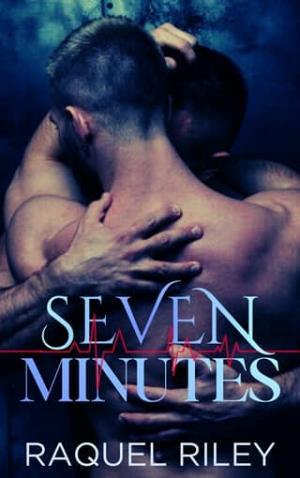
Seven Minutes
Chapter 1
Impact
ADRIAN
Iwas halfway through a cold turkey sandwich—the first food I’d touched in six hours—when the trauma doors slammed open.
The sound echoed through the ER like a gunshot.
I froze mid-bite, mayonnaise clinging to my fingers, as the paramedics’ voices knifed through the din, urgent, clipped, no room for indecision.
They rattled off stats with rapid-fire succession.
“Male, thirty-two. High-speed MVC. Unresponsive at the scene. Massive chest trauma, possible internal bleeding, puncture wound left thigh—BP’s crashing—”
My body reacted before my brain did, the sandwich falling limp into its wrapper as I shoved back from the chair, wiping my greasy hands on my scrubs.
The familiar rhythm kicked in like second nature: airway, chest tubes, fluids, transfuse, call surgery.
Steps lined up in my head as neatly as a well-stocked supply closet.
A nurse was already moving alongside them, firing questions back. My pulse matched the slap of sneakers and gurney wheels against the linoleum as I closed the distance, grabbing for a mask and a pair of gloves in my haste. I could smell his blood, a sharp, rusty odor that tickled my nose.
“On my count—one, two, three!” one paramedic barked.
With a fluid heave, they moved the patient from the backboard to the trauma bed. The straps were unbuckled, the board yanked clear, and IV lines tugged taut as nurses swarmed to resecure them. Scissors hissed, cutting through fabric, peeling bloody clothing away in strips.
I strode forward, weaving past stretchers and staff, my pulse steady, my focus sharpening. Just another trauma. Another body broken by glass and steel and velocity. Another life balanced on the thread we worked so hard to keep from snapping.
I leaned in for my first real look at the patient, already bracing for the wreckage. The mangled chest, the torn skin, the ghostly pallor, but the second my eyes found his face, the bottom dropped out of me.
Dark hair matted with blood. A familiar curve of jaw beneath the bruises. The silver wedding band, smeared and glinting under fluorescent lights.
Eli.
The word detonated inside me. My breath stuttered as if I’d taken a punch to the gut.
The surrounding chaos dimmed to a tunnel, sound thinning into a faraway hum. For a heartbeat, I wasn’t a doctor. I wasn’t anything. I was just a husband staring at the ruin of the man he loved.
“Pressure’s falling—seventy over palp,” a nurse shouted.
“Pupils sluggish and oxygen’s dropping—prep for intubation,” another ordered.
“Get blood hanging now!”
Their voices ricocheted around me, a storm I couldn’t seem to step into. I should’ve been calling orders, running the room. But all I could see was Eli’s chest stuttering unevenly, blood bubbling at his lips.
And right there, I knew I had to decide what I was. A doctor. Or a husband.
I chose Eli.
And then his eyelids fluttered. Blood-flecked lips parted. His gaze found mine, hazy but certain, and he rasped one word.
“Adrian.”
The sound hollowed me out. My name, cracked and broken, leaked from him with the last breath he had left.
“O2 and BP crashing,” the nurse barked in sync with three different alarm bells.
“Bag him,” the resident shouted, and before I could answer, before I could even reach for him, a mask was pressed to his face, the bag squeezing air into lungs that wouldn’t work on their own. His eyes rolled back, his body convulsed.
I lunged forward, grabbing his hand, cold and slick with blood. “Hold on, Eli! Stay with me!”
“Breath sounds absent on the right,” someone called. “He’s not moving air.”
“Possible tension pneumo—”
“Decompress. Now.”
The words hit like a blow. I knew what came next. Knew it too well.
A tray appeared. Needle. Catheter. No time for imaging. No time for anything but action.
“Second intercostal, midclavicular,” the resident muttered, already moving.
I should’ve stepped in. Should’ve been the one calling it, doing it—But I couldn’t let go of him.
The needle drove in. A sharp hiss cut through the chaos—air escaping under pressure, loud and wrong and necessary. Eli’s chest stuttered, then lifted just a fraction.
“Got it,” the resident said. “Prep for chest tube.”
More hands. More movement. They worked fast, cutting, spreading, feeding the tube between his ribs with brutal efficiency. Blood smeared. Suction engaged. Another wet rush of air.
“Come on,” I whispered, gripping his hand tighter. “Come on, baby…”
The monitors wavered, then steadied, just enough to ease the choking tension.
The team didn’t pause, didn’t falter. Chest leads were slapped on, lines checked, meds pushed. They moved with practiced precision, while I—frozen, frantic—felt the world tilt off its axis.
The room spun, panic clawing through the edges of my training.
This wasn’t just another trauma. This was my everything, bleeding out beneath the harsh, unfeeling lights.
The blood matting his hair blurred, and for one dizzy second, I saw him as he was this morning, coffee mug in hand, teasing me about the circles under my eyes.
The memory hit so hard it stole the air from my lungs.
I’d been losing him, inch by inch, to long shifts and missed dinners.
Excuses, broken promises, and exhaustion kept me from being the husband I’d vowed to be on the day we married, the husband Eli deserved.
Now he lay there unresponsive, knocking on death’s door, and for a moment, I was terrified I’d already lost him for good.
A shrill tone spiked above the noise, thin and merciless. I knew that sound. Everyone in the room knew it.
The monitor flatlined.
“No pulse,” the resident snapped. “Starting compressions!”
A nurse dropped the bed low, hands locking over Eli’s sternum, and began driving down. Hard. Rhythmic. The sound of his ribs cracking beneath the pressure tore through me louder than the alarms.
“Don’t stop!” My voice came out raw, a ragged snarl. “Keep going—don’t you dare stop!”
“Charging—clear!” Someone slapped paddles to his chest. His body jerked, lifeless, and then collapsed back into stillness.
As they resumed compressions, I clutched his hand, my gloves slick with his blood. His fingers twitched once, then went slack. I shook my head, throat closing. “Eli, no. No, no, no, stay with me. You don’t get to leave. Not like this.”
I counted along with the compressions as if my voice could lend him strength. “Thirteen, fourteen, fifteen…”
“No pulse,” the nurse called, reaching for the paddles again. “Clear!”
I dropped his hand and stepped back. His body jolted with the shock.
I stood there frozen as they worked on him. I had done this countless times—thousands, maybe—over my career: trauma, accidents, shattered bodies, bleeding hearts. My hands could move on autopilot; my mind could follow protocols even when blindfolded. But now…nothing tracked. Nothing fit.
His blood, his lacerated skin, the lights glinting off his silver band, everything about him grounded me and shattered me all at once. My training and years of discipline meant nothing here. I couldn’t compartmentalize. I couldn’t focus.
The room buzzed with movement, but none of it mattered. They blurred to shadows on the periphery of my nightmare. It was just me and Eli, the living and the dying, locked in a universe where no one else existed.
“Dr. Hawke,” a nurse said softly, her voice straining against the noise.
I didn’t look up, but I felt the hesitation, the shared glances that flickered across the room.
They all knew. They’d seen the way my hand clung to his, how my mask had slipped, my sobs breaking through.
They knew he wasn’t just another patient.
“Call time of—”
“Don’t you finish that sentence,” I barked, the words shattering on a sob. My chest heaved, vision tunneling with tears. “Push another round—charge again! He’s still here, goddamn it!”
The team hesitated. For the first time in my career, I was begging instead of leading. Pleading, not directing. My mask was damp, my face wet, and I pressed his ring against my cheek like I could tether him to me through metal alone.
“Eli,” I whispered against his hand, my voice shredded until all that came out was a rasp that barely sounded human. “It’s me. I’m right here. Just breathe, baby. Please, please…”
My heartbeat thundered inside my skull, wild and untamed, as if it were the only thing still alive.
All the futures we’d planned collapsed in an instant—gray hair and lazy Sunday mornings, anniversaries with too much wine, arguments that always ended in laughter.
Gone, snatched away in a single flatline.
Nothing I had ever done in a hospital, nothing, had prepared me for this.
I was breaking apart and undone in the most public, brutal way possible.
My stomach twisted, bile rising, but I forced it down, forced myself closer, desperate enough to put my ear near his mouth as if I could will sound and breath from him.
Nothing. Just the hiss of the ventilator forcing air. Just the machine screaming death into the room.
His hand was still warm, but too slack, too heavy, like holding a glove filled with sand instead of the hand that had once squeezed mine under restaurant tables.
His ring pressed into my palm, a cruel reminder of the promises we’d made—that we’d grow old together, that neither of us would ever be alone.
Around me, hands moved. Nurses adjusted meds, swapped out syringes, and recorded times. The resident gave orders in a clipped voice. Life and death spinning out in practiced choreography. And me, wrecked in the center, clinging to the man I couldn’t lose.
The sound that tore out of me wasn’t a word. It wasn’t even human. It was the guttural cry of something cornered, broken, feral.
“Come on, come on, come on…” I rocked against the bed, forehead pressed to his arm. Every crack of his ribs under the nurse’s hands was another splinter in my own chest, a reminder that love could break harder than bone.