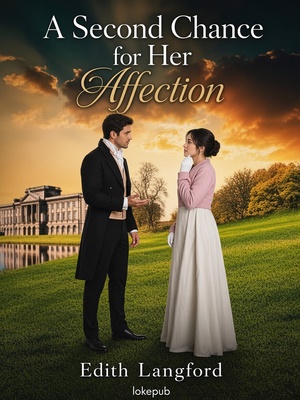
A Second Chance for Her Affections
Chapter I
There were few men in England more accustomed to governing their circumstances than Fitzwilliam Darcy; yet he had lately discovered that the heart was a most unruly possession.
It had all started, of course, the previous autumn during his stay at Netherfield Park with his friend Charles Bingley.
Having spent months considering the events of that stay and what had followed, Darcy had no wish to dwell upon them.
Not when there were other matters afoot.
Suffice it to say that he had left Hertfordshire to save his friend from an imprudent match and himself from temptation, but it had availed him nothing.
Miss Elizabeth Bennet, the woman who invaded his dreams, had been at Rosings when he visited, and not even her rejection had dimmed the fire of his longing for her.
Darcy had no notion of what he might have done next.
Since forgetting her seemed to be a fruitless endeavor, he had considered confessing to Bingley and returning to Netherfield with him, hoping that correcting the misunderstanding that lay between them might soften her toward him.
Meeting her on the grounds of Pemberley had come as a shock.
It had taken only seconds for his confusion to turn into a desperate wish to keep her company.
The request to introduce Georgiana had been as much about ensuring he would see her again as a desire for her to know his dear sister, though that certainly played a part.
Now, fifteen minutes after the Gardiners had departed, taking Miss Elizabeth with them, Darcy tried to concentrate on the estate matters awaiting his attention.
That had been his excuse for parting from the rest of the company and proceeding to Pemberley alone.
Try as he might, Darcy could not focus—every time he looked at a page or tried to listen to his steward’s comments, his mind would wander.
Sometimes his eyes would wander too, finding the road leading away from the estate toward Lambton.
Finally, after assuring himself that nothing was pressing, he dismissed the man and settled back in his chair.
Darcy spared only a brief thought for the chance that had brought Miss Elizabeth to his estate at the exact moment of his return, and then only to thank whatever power had allowed it to happen.
His thoughts were on Miss Elizabeth rather than the circumstance, and the more he considered it, the more he wondered about her behavior.
That her behavior since Hertfordshire and Kent had changed was irrefutable.
What Darcy could not determine was how and why.
A knock interrupted his reverie. At his call, Mrs. Reynolds entered the room. The notion that his trusty housekeeper might know something that he did not struck him, and he determined to ask her.
“Mr. Darcy,” said she with a curtsey. “Do you know when your friends will arrive?”
“Within the next two hours, I should think,” said Darcy. “Is everything prepared?”
Darcy knew that Mrs. Reynolds had everything in hand, but the woman only smiled. “It is, sir.”
She paused, and Darcy knew she was weighing her words. “Mr. Bingley is a joy to host, Mr. Darcy, and his family is welcome.”
Though the first was true, the second was diplomacy at best. Mr. and Mrs. Hurst were no trouble to host, though Darcy cared little for either; Miss Bingley, however, was difficult under the best circumstances.
A visit to a place she yearned to preside over as its mistress could be nothing other than a trial.
“I know you will see to their comfort with your usual perfection,” said Darcy. “Should Miss Bingley make any . . . comments about the house, please know that you are free to ignore her, so long as you give her the appearance of deference.”
Mrs. Reynolds laughed—she had known him since he had been a boy, understood his moods, his character, and his patience. That Darcy did not favor Miss Bingley was not unknown to her, though he had never spoken on the subject.
“Of course, Mr. Darcy,” replied Mrs. Reynolds.
“Tell me,” said Darcy before she could retreat from the room. “What did you think of today’s visitors?”
“Mr. and Mrs. Gardiner and their niece?” asked the housekeeper, with not even a flicker of surprise. “They appear to be excellent people, sir. Mrs. Gardiner grew up in Lambton—some of her extended family still reside in the neighborhood.”
That interested Darcy, though he did not ask at that moment.
“The couple were most friendly and genteel,” continued she, “and the young miss appeared to be impressed with what she saw.”
As an encouraging sign, it was rather modest, but Darcy would take whatever he could get. “I am acquainted with her.”
Mrs. Reynolds’s gaze did not alter a jot. “The way you treated her, I had my suspicions.”
“It was in Hertfordshire last autumn,” said Darcy, his mind not on what he was relating. “Bingley’s leased estate shares a border with her father’s property. Then I met her again in Kent when I was visiting Lady Catherine.”
“Then it must please you to meet an acquaintance here.”
“It does,” agreed Darcy.
“There was one matter of concern,” said Mrs. Reynolds.
“What is that?” asked Darcy, curious but not alarmed.
“When they were looking at the miniatures, they all recognized the portrait of Mr. Wickham.”
At once Darcy understood. Like almost everyone in his employ, Mrs. Reynolds had little liking for George Wickham.
Wickham had made himself most unwelcome at Pemberley long before his last visit.
There were several on the estate—fathers of young ladies and one burly footman—who would like nothing more than to lay hands on dear George.
“When I was in Hertfordshire,” said Darcy, “Wickham joined the militia stationed there. Miss Elizabeth knows him, and I can only suppose that the Gardiners made his acquaintance sometime thereafter.”
Mrs. Reynolds’s expression lightened. “If Mr. Wickham has been in Hertfordshire for several months, I cannot but suppose the young miss already has some knowledge of his ways.”
“She does,” agreed Darcy, though he said nothing of the exact means by which she had gained that understanding. “Miss Bennet and her party are to join us for dinner tomorrow evening.”
“Then we shall ensure that they experience the warmest welcome Pemberley can offer,” assured Mrs. Reynolds.
As she retreated from the room, Darcy was certain Mrs. Reynolds had some suspicions about his interest in Miss Bennet, but as an experienced servant, she knew better than to inquire.
For several long moments, Darcy pondered the situation, wondering how he should structure his campaign to prove himself to Miss Bennet.
Then, his agitation getting the best of him, he rose and strode from the room.
Before long, he was astride a horse, the summer air rushing past him as he urged the animal toward Lambton.
WHEN ELIZABETH TOLD her relations she wished to walk in Lambton before dinner, she expected teasing.
“Of course you wish to see the town,” said her aunt with fondness unfeigned. “I would have wondered whether you were ill had you not expressed such a desire.”
“You walk your father’s property with impunity, my dear,” added Uncle Gardiner, his eyes twinkling with mischief. “Do you suppose your unerring sense of direction will survive the streets of Lambton, or should I expect to dispatch a search party to retrieve you?”
“How dare you insult my abilities, Uncle!” exclaimed Elizabeth. “Do you not know that I am the preeminent walker in all Hertfordshire?”
“Ah, but we are not in Hertfordshire, my dear.”
“I shall not inconvenience you,” said Elizabeth, affecting haughtiness. “You may expect my return before dinner.”
“Then off with you, Lizzy,” said her aunt. “After our walk about Pemberley, I must say that your intention surprises me, but I suppose it should not.”
“No, it should not,” agreed Elizabeth. “I can neither walk so far nor range so freely as I do on my father’s estate. This is merely a trifle.”
“Very well. When you return, I should like more of an account of your acquaintance with Mr. Darcy. It seems there is more than you have told us.”
At present, Elizabeth had very little interest in discussing Mr. Darcy, not because her old antipathy for the gentleman had returned, but because she was confused.
The man who had met them with such civility was not the man she remembered from Hertfordshire or even Kent.
Her thoughts and feelings were a jumble; she needed privacy and uninterrupted time to consider him, though she knew that was unlikely.
“Perhaps,” was all Elizabeth said when she excused herself and left the inn. The lingering memory of her aunt’s expressive look remained with her, carrying the faintest hint of a demand, and Elizabeth knew Mrs. Gardiner would not be satisfied until she had heard all.
Lambton was as charming as her aunt had always claimed.
It was a town nestled amid rolling hills, its streets winding and cobblestoned.
At the top of a prominent hill stood a church that Elizabeth admired from a distance, knowing she did not have enough time to investigate.
After she had walked for perhaps half an hour, she turned her steps back to the inn, regretting the necessity.
Her relations might not have been surprised by her intention to walk, but Elizabeth was decidedly surprised by the sight of Mr. Darcy astride a tall horse less than an hour after they had left him at Pemberley.
When he caught sight of her, his expression brightened, displaying his pleasure at seeing her, though his features did not quite assume a smile.
The gentleman dismounted from his horse and swept into a bow, prompting a responding curtsey from Elizabeth.
“Miss Bennet,” said he.