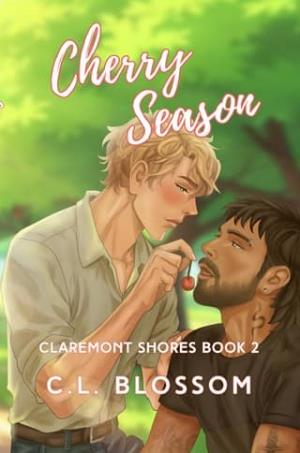
Cherry Season (Claremont Shores #2)
Chapter One
Ashton
When I was a kid, I believed I had cherry juice in my veins.
My dad once told me, “Son, this orchard’s been in our family for three generations. Cherries are in our blood.” So, when I fell off my bike and scraped my knee at six years old, I ran my fingers through the red trickling down my leg and licked them—only to find it didn’t taste like cherries at all.
By age twelve, I was driving forklifts and tractors, spraying the trees with pesticides in a mask far too big for my face. I remember the rumble of the engine beneath me, the smell of cherries and gasoline mingling in the air, and the pride I felt to be helping.
As the oldest Tremblay kid, my life was mapped out long before I could choose for myself. I always knew I’d inherit the farm. It was written in every conversation, every harvest, every “someday, when it’s yours” my dad tossed my way.
I just didn’t think someday would be this soon.
Now, standing in the barn, the scents of motor oil and rain-soaked dirt flood my senses. Dust hangs in the streaks of sunlight streaming through the open door. The cherry harvester sits in front of me, a mechanical monster made of rust and chipped paint.
Dad crouches near the base of the machine, jaw set tight as he threads a bolt through the edge of a new harvester tarp. The old one tore over the winter—probably from the cold, maybe from age.
“Hold it steady, Ashton,” he says, voice clipped.
I tighten my grip on the thick canvas, keeping it taut while he leans in with the wrench. A bead of sweat slides down his temple, cutting through the layer of grime on his wrinkled skin. It’s barely fifty degrees out, but his breathing’s already heavy.
“Dad,” I say carefully, “you wanna take a break?”
He doesn’t look up. The wrench clicks once, twice. “I said, hold it steady.”
My father’s as stubborn as a mule. Last harvest season, his heart finally gave out. One minute he was spraying pesticides; the next, he was tumbling off the tractor, clutching his chest. If one of our farmhands hadn’t been with him, it could’ve been much worse.
Now he’s got a stent in an artery and strict orders from his doctor to take it easy. It was my mother who finally convinced him to retire, warning that she’d never forgive him if he left her alone with five kids, two still in high school.
Letting go of the reins hasn’t been easy for my dad.
He wipes his forehead with the back of his hand, leaving a smear of grease behind. “Pay attention,” he grumbles. “If this tarp isn’t secured right, you’ll lose half the harvest before it even hits the bin. Can’t afford that.”
“I know, sir,” I say quietly.
Sometimes it feels like he’s already decided I’m destined to fail. I know I’m still young, but I wish he’d trust I can handle it. It’s not like I haven’t spent the past decade living, breathing, and bleeding for this farm.
He stands slowly, his joints popping as he gives the tarp a firm tug. “Good as new,” he says, rolling his stiff shoulders back. “Close up the barn and come back to the house for dinner. Olivia’s joining us. Chloe’s making pot roast.”
My youngest sibling, Chloe, is fourteen and in the middle of a cooking phase.
She spends hours watching tutorials online, then insists we come home for dinner—all five siblings, around the same table, like it used to be.
Part of me thinks it’s less about the food and more about the company.
The house feels quieter these days, with only her and my seventeen-year-old brother, Justin, still living at home.
My other two siblings, Olivia and Luke, are nineteen and twenty-two, respectively. Olivia’s working toward her degree in graphic design at Lakeview University, about two hundred miles north of Claremont Shores, but she makes the trip home whenever she can.
I love all my siblings, but I’ve always felt closest to Luke.
Maybe it’s because we’re only two years apart—the closest in age—or because we shared a bedroom growing up.
Our lives have always been tangled together, woven with the same friendships, the same inside jokes, the same memories neither of us can quite separate from the other.
Now he’s a bartender at the only dive bar in town, Old Harbor Tavern.
My parents have made it painfully clear they don’t approve of his new job, making passive-aggressive remarks about his “wasted potential.” But Luke’s still young and figuring things out.
I wish they’d cut him some slack—hell, I wish they’d cut all five of us some slack.
When Dad leaves, I linger a minute longer, listening as his boots crunch across the gravel, each step growing fainter.
The driver’s-side door of his truck creaks open, then slams shut with a hollow clang.
My pulse finally settles as I listen to him drive away, his taillights shrinking beyond the trees.
Only then do I move, sliding the barn doors closed until they meet with a heavy thud.
I drop the latch and step out into the cool evening air.
The sun hangs low over the orchard, bathing the endless rows of budding trees in soft gold.
In a few weeks, they’ll be covered in white blossoms, like a fresh coat of snow.
I climb into my blue pickup and turn the key, the truck rumbling to life.
Dirt kicks up behind my tires as I drive down the narrow path between the orchard and the farmhouse.
Sunlight splinters through the trees when they thin out, giving way to a vast cloudless sky.
The Tremblay house rises from the center of a large green lawn, its white siding soft in the dusk light, blue shutters framing glowing windows.
When I cut the engine, I linger for a moment as it cools, listening to it tick.
The porch swing drifts lazily in the breeze, creaking in the quiet.
I draw in a deep breath before climbing out, my boots thudding against the concrete as I make my way to the front door.
Before I step inside, I knock the dirt from my soles and tug off my mud-caked boots, leaving them on the porch like I’ve done since I was a kid.
The kitchen hums with its usual chaos—pots clattering, dishes steaming, voices overlapping. Scents of rosemary and savory beef fill the warm, sticky air. When all of us are home, it doesn’t take long for the place to feel too small, our body heat and chatter filling every inch.
Chloe is at the stove, a pink apron tied around her waist, blond ponytail bouncing with each frantic movement. Her thick-framed glasses are fogged with steam, cheeks flushed pink.
“Hey, Chloe,” I say, stepping toward the sink. “Smells delicious.”
I scrub the dirt and oil from my hands, watching the brown water swirl down the drain. Over the years, my palms have turned rough and calloused, etched with bittersweet memories of harvest seasons past.
“Hey, Ash! Perfect timing,” Chloe calls. She shoves a stack of plates into my still-damp hands. “Can you set the table?”
“Yeah, sure.”
I carry the plates into the dining room. A massive wooden table takes up most of the space, well loved and weathered with scuffs and dents. I start setting a plate in front of each chair, making sure they’re aligned in a straight row, otherwise I’ll never hear the end of it from Chloe.
I’m halfway through when Mom walks in, wiping her hands on a dish towel. “There’s my handsome boy,” she says warmly, leaning in to kiss my cheek.
“Hey, Mom.”
“Were you able to get the tarp fixed?” she asks, glancing toward me as she starts setting the silverware.
I stiffen. “Dad took care of it,” I say, trying to keep my tone light. “Probably didn’t think I was capable of doing it myself.”
She pauses, then gives a small, sympathetic smile. “You know how he is,” she says gently. “It’s hard for him to let go. Don’t take it personally, Ash.”
I force a tight smile. “Yeah, I know.”
Mom catches my wrist before I turn away. “We don’t need the seventh plate, sweetheart. Luke just called—he’s working at the bar tonight.”
I bite the inside of my cheek as disappointment pools in my stomach. Goddamn it. Luke’s the only reason I can sit through family gatherings without feeling like I’m being dissected by my father.
The front door creaks open, followed by a familiar loud, cheerful voice. “I’m home!”
Olivia steps inside, hauling a pink backpack. Her golden hair falls to her shoulders in a sleek bob that sways when she drops her bag by the door. “Hey, Mom. Ash.” She pulls me into a quick hug, smelling faintly of sickeningly sweet coffee. “I missed you guys.”
Mom offers a small smile. “Welcome home, Liv.”
Before either of us can say more, Dad strides in from the hallway, settling into his usual spot at the head of the table with a quiet grunt. “Well, look who’s back from hippy town,” he mutters.
That’s what he calls Shelby Harbor—a midsized, left-leaning city home to Lakeview University. To a man who loves guns, red meat, and diesel trucks, it might as well be hell.
Olivia’s smile falters for a split second before she recovers. “Nice to see you too, Dad.”
Mom waves a hand through the air. “Your father’s just teasing,” she says lightly, though there’s tension in her voice.
Chloe steps in from the kitchen, balancing a Dutch oven brimming with roast and vegetables. “Dinner’s ready!” she calls, setting the pot on a trivet at the center of the table. “Justin! Get down here!”
Footsteps thump down the stairs, slow and heavy. Justin appears in the archway, his phone glued to his hand as usual, thumbs moving rapidly across the screen.
Unlike the rest of the men in our family, Justin is built like a scarecrow.
He’s tall and lean with gangling limbs, always swallowed by oversized clothing.
He has pale skin, shoulder-length blond hair, and shadows beneath his eyes that make him look perpetually exhausted.
Dad has never been shy about his hatred of Justin’s long hair—or anything straying, even slightly, from what he considers acceptable gender norms.
“Justin,” Mom says tightly. “Say hello to your brother and sister.”