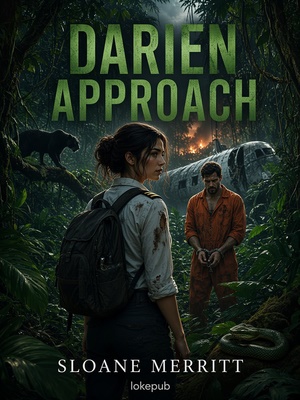
Darien Approach
4. Chapter 1 – Marley
I’d planned my death in vivid detail multiple times in the last three decades. Some gruesome, a few peaceful. All with the same inevitable outcome: my heart no longer pumping, my brain no longer firing, the pain of living no longer housed beneath the surface of my skin.
But I didn’t expect to die today.
“Marley, pull up!”
At Jamie’s order, I forced my hands to close around the plane’s controls as the plane veered hard right.
My belly lurched into the back of my throat as the gray skyline dipped toward the dense tree canopy.
Rich red bathed us in somber light as an aggressive alarm blared overhead.
My flight training kicked in overdrive and my body moved automatically, leaving my brain free to assess the situation.
Fire. Right wing.
A red-page emergency.
Don’t think, just do.
Shit, shit, shit. Panic’s icy kiss flooded through my veins. Just DO, Marley!
First priority, cut the fuel to the engine. I slapped the fuel control switch on the center console.
I struggled to keep the yoke on a stable path as the 15,000-pound metal bird careened eastward.
Thick dewdrops of sweat melted into ribbons along my forehead. I’d never had to use that switch before.
My co-captain, Jaime, and I danced in sync, hands working over the dash in a practiced rhythm. He engaged the round red button behind the center control panel to discharge the suppressant.
Fire suppressant. Right.
A bubble of air caught in my chest as I waited the single agonizing second for the chemicals to engage.
One … tw—
When the shrill beep finally fought through all the other noise in the cabin, I let it out in a forced burst of air like a gunshot. Jamie’s hazel eyes met mine as he settled back into his seat, his face glossy with a grim mix of horror and determination.
But the right wing flaps weren't responding to commands at all. If the 19-passenger plane went belly-up mid-air over the bowels of the Colombian jungle with no civilization for miles, our chances of survival were slim to none.
I pulled upward on the yoke, the panic swirling in my gut stifled by the task at hand. As I worked to level out our Cessna SkyCourier, Jamie orchestrated the switches on our dashboard to adjust our pitch.
“What the fuck happened?” he yelled over the cacophony of alarms filling the cabin, his calm body language at odds with the urgent grate of his tone.
It wasn’t our usual route, or even our usual plane.
We’d been five hours into the nine-hour trip from S?o Paulo to Mexico City when we’d flown into a pocket of extreme weather.
Instead of giving everyone on board a brain bleed, we’d dropped altitude and changed course to get out of the thunderstorm still raging in the thick clouds above our heads.
“No idea!” I shouted back. Could he even hear me over the pounding of my heart?
Adrenaline fueled my limbs with every flick, switch, and turn of a dial over the control panel, my nerve endings electrified with the desperate will to keep us upright. The dashboard lit up in a fiery rainbow of red, yellow, and orange, each light pulsing with its own menacing heartbeat.
Over 1500 flights in 15 years, and this was my first real crisis.
Well, first plane crisis. The West family only knew tragedy and heartbreak.
The invitation of death was a comforting companion most days—but I wasn’t a masochist. Suffering wasn’t my kink. When I finally went through with it, I wouldn’t take 18 innocent people with me.
Certainly not people who’d trusted me with their safe passage. Even the criminal in seat 1B hadn’t been sentenced to death for his crimes.
My empty steel coffee mug, a relic from my years at Purdue, flipped out of its holder when the aircraft banked hard right, toward the damaged wing again.
Pulling up on the yoke to counteract basic physics, my lungs held tight to the air in my chest as I held tight to the hope we had a way out of this.
We needed to get the fire away from the rest of the plane. A side slip was the only way.
One … two … three …
Finally, the plane responded, banked left, forcing the right wing upward, the smoke careening in the opposite direction. It wasn’t enough. Without one active wing, the drag on the plane was slowing us down too quickly. We were dropping too rapidly.
Airspeed is life. Altitude is insurance. Having neither meant death.
“Captain West?” Nikki’s strained British croon came through the intercom, the din of panicked screams from our passengers echoing into the microphone even over the bastions of sound. “Awaiting your instructions.”
Jamie pressed the controls to manually release the oxygen masks into the passenger cabin. Cabin pressure was dropping rapidly—too rapidly. People would pass out.
“Mask up, help anyone who needs it, Nik. We’re dropping fast.”
“Copy that.” Nicolas Seymour, our sole flight attendant’s tone was resolute—the perfect response in a catastrophe. The kind and playful friend I’d worked with on and off for two years faced our impending doom with a professional poise I envied.
Jamie strapped into his seat beside mine, his gaze alight with a paradoxical cocktail of defiance and defeat. We were going down, but we’d go down swinging. As if we’d rehearsed this moment for a part in a play, we donned our own oxygen masks in perfect synchronicity.
My shirt soaked up the evidence of my fear while the plane sluggishly fought against the laws of physics.
If the fire suppression had actually engaged, we would have some semblance of control right now.
I should be able to level it out somewhat, and manually adjust our speed.
A thousand fail-safes were built in for this kind of thing. Why weren’t they working?
Could a fire burn so hot it melted the metal components? If the components were gone, so were our controls.
“Trim is unresponsive,” Jamie grimly confirmed, as the plane pitched forward like an errant seesaw.
Corrosive bile ate away at my stomach lining.
I swallowed hard to keep it from spewing all over the dashboard.
We were about to careen toward the most uninhabited region of the planet in an aluminum tinder box with about as much control as a paper airplane.
I scanned the land below, searching for a suitable landing pad—something, anything, to give us hope.
We were too far away from the ocean. The dense jungle tree canopy posed more harm than good.
A small riverbed in the distance, where the jungle opened to the sky, looked like the only option. We had no choice. Riverbed or bust.
Switching on the intercom to the entire plane, I spoke what could be my last words.
“Folks, our right wing is out and we have to make an emergency landing. We will control the plane as much as possible. Please assume crash positions. This is going to be rough.”
Terror, vicious and raw, cramped my muscles as I fought like hell to keep a modicum of control over my machine. We were slowing down enough not to crash into a million pieces, but it likely wouldn’t be enough to save our lives. The yoke shook violently in my hands until it sputtered out completely.
Hydraulics were failing. How the fuck is this happening?
Jamie’s rough hand reached over, its warmth a temporary reprieve from the hellscape we were caught in.
The somber frown of my mentor said all the words we couldn’t admit out loud. Our plane had failed. Our training had failed. We’d failed.
I’d failed. Again.
An overwhelming hopelessness leached into every bone of my being, absorbing every spark of joy I’d ever felt. Marley West’s legacy was the Midas touch of death. No one was safe in my care.
“It’s been a pleasure working with you, Marl.” He choked the words out between gentle squeezes before letting go, then closed his eyes against the landscape of green.
My eyes burned with his admission, salty tears mixing with the sweat pouring off my brow.
The boulder in my throat wouldn’t let me say the words back.
Jamie was a good man, a skilled pilot, and the best colleague I ever had.
His death wasn’t fair when he had people to live for.
A husband and three children. He had so much more to give to the world than I did.
I didn’t even have a cat.
The shrill alarms and blinking lights spun around me like a technological tilt-a-whirl as the plane’s acceleration guaranteed a quick and painful death.
“Brace for impact,” I gritted out as the air burst from my lungs in a bitter gasp.
This was it—what I yearned for. The universe was handing me my darkest wishes on a platter, but had tainted their flavor.
This wasn’t the way it was supposed to happen.
With no ability to save the rest of my passengers despite years of training, and supposed unbeatable fail-safes that had failed entirely, what was left to do but lean into the inevitable?
Still, my body struggled to accept it. Time slowed and my pulse sped up, the staccato rhythm pin-pricking every nerve along my skin.
Was I really ready to die? Did I have a choice?
An idea, its insanity clearly a last-ditch effort of survival instinct, catapulted me into action.
The fuselage—the cabin. There might still be a way to save them.
As if in a trance, I unbuckled my seatbelt and stood, fighting all the forces of gravity to push toward the cockpit door.
There was an open seat available—next to the convict and his handler at the front of the plane.
If I could just get to it, I might have a chance of survival, too.
Better than a sitting duck in a cockpit aimed directly at the ground below.
If I survived, I could keep them safe until we were rescued. I might be the only one who could.
G forces pressed against me like I weighed a thousand pounds, but I used the last of my energy to put one foot in front of the other – one hand with a death grip on each handle along the cockpit – until I got to the door.
The latch released with a whoosh at the difference in cabin pressure.
Emergency lighting pulsed along the floorboards, and every passenger was leaning over their knees heads bowed, their oxygen masks covering their mouths and noses as they whispered their final prayers.
My head spun from the change in pressure—I had seconds to get my own mask on.
Muscles burning, I reached with shaking hands for the chair arm to my left, my nails leaving gouges in the leather as I hauled my body into the seat, vaguely aware of the handcuffed beast of a man with his shaved head bowed in the aisle across from me.
The seatbelt barely closed as my bleeding fingers clumsily clasped the two squares of metal together. When they finally clicked, I pulled the air mask on and folded my body over my lap, head between my knees just before the jarring jolt of the collision resonated through every molecule of my being.
The raw screech of hot metal scraping along the jungle floor was the last parade of sound before everything went black.