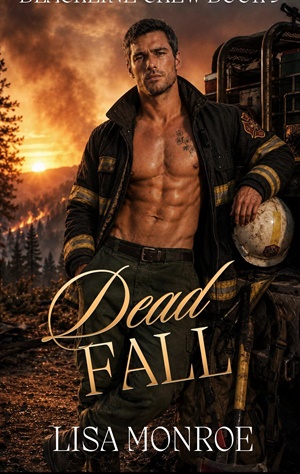
Dead Fall (Blackline Crew #3)
1. Calder
Chapter one
Calder
The frost had frozen the woodpile tarp to the top row. I knocked the tarp loose with the heel of my hand. The canvas peeled away with a dry rasp.
Cold came through my socks as I crossed the porch. As usual, I’d shoved my feet into my work boots, leaving the laces untied. Loose boots gave me a fair measure of the temperature. This morning the air bit hard enough to put us below freezing.
The river ran low beyond the property. Ice had started along the banks where the current slowed, but I could still hear the water beneath the tarp’s scrape, beneath the knock of wood.
I stood a round on the stump, then swung. The maul struck true. Both halves dropped to the boards.
Twelve seasons had polished the handle beneath my hands. I used the maul’s weight, following the grain. A big windup only tired a man out. I’d learned to split wood the same year I quit answering to my full name.
I set up another round.
Smoke lay near the door with his nose under his tail. At four, he used to circle the stump, tearing bark from the splits. Now, at eight, he knew better than to spend heat before breakfast. A half-round bounced near his paws.
He lifted his head until the half-round stopped moving, then tucked his muzzle back under his tail. His tags gave one jingle.
“Yeah,” I said. “Me too.”
The eastern sky had begun to pale behind the ridge. I kept working. Split wood collected beneath the eaves while my hands followed a rhythm learned too well to require counting. The motion was no different from laying hose or digging line: place, strike, clear, repeat.
The kitchen radio played through the cracked door. I kept the dial tuned to the station out of Missoula. Most mornings, music mixed with low voices made the cabin feel less shut in. A man read the weather between songs. The news came at the top of the hour. I could listen without joining in.
I put another round on the stump.
The announcer moved through the overnight report. “The court has approved accelerated proceedings in Halvorsen versus Mallick & Vale. High Country News will publish a case preview later today.”
The air went out of me.
My grip clamped down, sending the maul half an inch from where I’d aimed. The round split anyway.
The name was on the radio now.
The case had entered an ordinary morning in this valley, lodged after the weather report, before high-school sports.
Smoke raised his head. His ears pointed at me.
I had stopped with the maul hanging at my side.
I set another piece on the stump, adjusted my grip, then swung. The next stroke landed square. Smoke watched me split one more round before lowering his head again.
The announcer repeated the firm’s name, then moved on to a road closure west of town. I kept swinging. Wood opened under the blade, striking the porch boards.
There was nobody to fool except the dog, but habit took over. Keep working. Finish the stack. Leave nothing in your hands long enough for shaking to start.
When the wood-box pile was ready, I let the maul rest against the stump. My arms hung at my sides. I’d completed the chore, though some part of me remained beside the radio, listening to the firm’s name enter the room.
The name tied to the case had followed me for twelve years. For the last two, I’d tracked the case through the public record, treating every filing as a column of smoke beyond my district. A distant warning. A threat far enough away for the moment.
That distance was gone.
Pine sap mixed with iron on my hands. I gathered an armload of wood, then carried the splits inside.
Smoke squeezed past my legs before heading to the rug by the stove. He circled once, stiff in the hips, then lowered himself with a groan.
I filled the wood box, then fed two splits into the fire. The cabin had taken me three summers to build. I’d cut every notch in the logs. I’d placed the shelves where I wanted them. The chair beside the window had shaped itself around my back.
My guitar stood in the corner. The spruce top had darkened around the sound hole. The upper frets were worn nearly flat. My mother had taught me my first chords on that guitar.
I passed within reach of the neck while carrying the second load. I kept going. I only played when no vehicle moved along the road, when the windows offered no witnesses.
Smoke’s kibble rattled into his steel bowl. He came over at his own pace, then ate with one shoulder against my shin. I put a hand on his head.
“Go on, old man.”
I set the enamel coffee pot on the stove, then measured the grounds by feel. While the coffee brewed, I hung my flannel beside the door. Heat worked through my henley, bringing the sting back to my fingers.
The RAWS printout waited on the table from the night before. I carried the printout to the chair.
October burn windows lived in those columns: relative humidity, overnight low, wind aloft, fuel moisture. I ran a finger down the figures for the larch stand I’d marked with blue paint.
Wind light. Humidity rising. A slow system building northwest of us, still several days out. Typical October weather.
The thousand-hour fuels read fourteen percent.
I reached the bottom of the sheet, then started again. When my finger stopped on fourteen percent a second time, I realized none of the numbers had stayed with me.
Smoke stretched across my boot, his head against my ankle. The stove ticked as the iron heated. Outside, daylight reached the river, leaving the bank ice blue in the shade.
The kitchen shelf was quiet.
I looked over. The radio was off.
“When did I switch off the radio?”
Smoke kept his eyes closed.
Then I remembered the knob under my fingertips, followed by the resistance before the click. I must have shut off the radio after bringing in the wood. The choice had registered in my hand but nowhere else.
I poured the coffee, then drank at the window with my back to the radio. The river slid past the shelf ice. Sun reached the upper ridge, exposing every snag, every bare patch on the slope.
My mother’s photograph sat beside the chair in a silver frame from another house. Dark hair, square shoulders, chin tipped a little too high. I glanced at the photograph, tightening both hands around the cup.
The picture had occupied that table since the day I finished the cabin. The photograph would remain there tomorrow too.
I finished the coffee before the cup cooled, rinsed the cup, dried the rim, then placed the cup in the rack. I followed the same sequence each morning. Today I paid attention to every step.
In the bedroom, I changed into my green pants, then pulled on my Nomex shirt. My work boots were on their second set of replacement soles. I laced the boots tight before taking the crew jacket from its hook.
brENNAN was stitched above the pocket in block letters, the thread fuzzy from wear.
Half a name. Enough in this valley.
My fingers lingered at the collar before I returned to the main room.
Smoke watched from the rug. I crouched, pressing my palm beside his front paw.
“You’re staying home. Guard the stove.”
He stood long enough to make another circle, then lay down facing the door. He had the confidence of an animal whose man had always come back.
The Tacoma took two tries to start. I backed down the gravel drive, then turned toward the base.
Four miles separated the cabin from the gate. I knew where winter had lifted the asphalt, which bends held shade, which culvert iced first. Usually the drive vanished beneath habit. That morning I noticed every dip.
Sun came through the windshield. Frost receded from the ditch grass while the temperature needle lifted from its stop.
At the first straightaway, my hand left the wheel, moving toward the radio.
I stopped before touching the knob.
My hand returned to ten o’clock.
I drove on without music or news. The base’s green metal roof appeared through the trees, followed by the chain-link fence, then the flagpole.
Four miles had always been enough to make me Cal Brennan again. Cal came from the name on my birth certificate, the only part I’d kept.
Behind me, the stove would be burning down toward coals. The radio sat dark on its shelf.
Beyond the ridges, on the road toward Missoula, the rest of my name had entered the day carrying my blood.
I loosened my grip on the wheel as I turned through the gate.