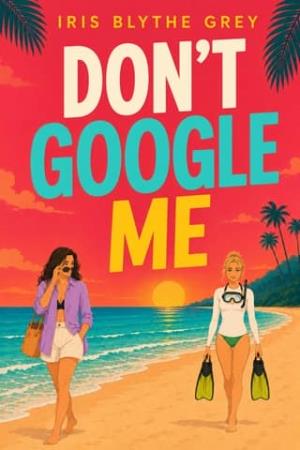
Don’t Google Me
1. Annie
One
Annie
The first rule of disappearing was to look like someone who had never tried to disappear in her life.
That was what Rachel Donovan had told me after removing three pairs of sunglasses from my suitcase and replacing them with a baseball cap from a golf course I had never visited.
“Those make you look famous,” she had said.
“They’re sunglasses.”
“They’re sunglasses that say I have opinions about private aviation.”
“I do have opinions about private aviation.”
“Exactly.”
The cap, according to Rachel, said I had once attended a charity scramble with my uncle and had been bored the entire time. Apparently, that was the energy we wanted.
She had also approved two faded shirts, a pair of denim shorts, sneakers without a visible designer logo, and a canvas tote bag that had cost twelve dollars at an airport bookstore.
No jewelry. No dramatic hair changes. No large hotels. No posting. No calling anyone who might post. No making friends with strangers who owned active social media accounts.
“Mostly,” Rachel had said, standing in the doorway of my Nashville bedroom with both arms folded, “try not to behave like Savannah Brooks.”
Which was how I ended up alone at a beach café in the Florida Keys, wearing a pale blue button-down over a black bikini and trying to eat a breakfast sandwich without checking every raised phone in my peripheral vision.
So far, the phones were behaving.
A man two tables away was taking six nearly identical photographs of his pancakes.
A teenage girl was filming a seagull attempting to steal a packet of sugar.
An older woman had her phone pointed in my direction, but only because I was sitting between her and a palm tree her husband apparently refused to pose beside correctly.
“Move left, Gary.”
Gary moved right.
“Your other left.”
Gary looked toward the ocean as if considering his options.
Unless I had recently learned how to disguise myself as tropical landscaping, I was probably safe.
That should have felt like victory.
Instead, I had one hand wrapped around a paper cup of coffee and the other curled beneath the edge of the picnic table, because old habits did not retire just because a doctor used the word necessary and my mother used the phrase finally acting like a human being.
The café sat directly on the beach, all striped umbrellas, painted picnic tables, and handwritten signs making aggressive claims about key lime pie.
The morning was still soft around the edges.
Sunlight skimmed the water. A breeze lifted the corners of napkins and carried the smell of coffee, sunscreen, and something frying in enough butter to qualify as a spiritual experience.
Behind me, someone was rinsing scuba tanks outside a low white building.
The sign above the door read:
REEF RASCAL DIVE CO.
A chalkboard leaned against the wall beneath it.
BEGINNER DIVES
PRIVATE LESSONS
REEF TOURS
MERMAID BIRTHDAY PARTIES
Someone had added, in different-colored chalk:
MERMAIDS MUST PROVIDE THEIR OWN TAILS.
I was deciding whether the disclaimer had been legally necessary when a shadow fell across my table.
“You’re in my seat.”
I looked up.
The woman standing in front of me held two coffees and wore a black wetsuit peeled down to her waist. Her dark-blond hair was wet and twisted over one shoulder, and a thin line of salt had dried along her collarbone.
There was a small scar near her left eyebrow and a sun-faded bracelet knotted around one wrist.
She was smiling like apologies were something other people did before nine in the morning.
I glanced at the empty benches around us.
“Is your name on it?”
She looked down at the table as if she might genuinely check.
“Not officially. Emotionally, yes.”
“Emotionally reserved seating. That’s bold.”
“I’m a bold person.”
“I can see that.”
Her smile widened.
For one sharp second, my body prepared for the change.
The recognition.
The double take.
The slight widening of the eyes before someone decided whether to be polite or loud.
The phone appearing in a hand that had been empty a moment ago.
But the woman only lifted one of the coffees.
“I’m willing to share,” she said.
“The seat?”
“The table. Not the coffee. I’m generous, but I have limits.”
I should have said no.
Rachel’s rules had been very clear about strangers. Especially attractive strangers with phones, friends, internet access, or functional eyesight.
The point of disappearing was not to invite someone into your hiding place because she had ocean-colored eyes and a mouth that looked designed to make poor decisions seem reasonable.
Instead, I slid my plate an inch to the left.
“That depends,” I said. “Are you going to report me to the emotional seating authorities?”
“Not if you keep a low profile.”
My laugh came out before I could stop it.
The irony was so precise it felt personal.
She sat across from me, bare feet disappearing into the sand beneath the table, and placed the second coffee beside her untouched.
“You don’t look like a repeat offender,” she said.
“I’m new in town.”
“That explains it. Tourists never know which tables are haunted.”
“This one is haunted?”
“By me before my first dive of the day. Very dangerous spirit. Needs caffeine. Sometimes a bagel.”
She studied my plate with the professional concern of a doctor reviewing an alarming scan.
“You got the egg sandwich.”
“I did.”
“Risky.”
“It was listed under breakfast.”
“That’s how they get you. Seems safe until the yolk betrays you.”
“The yolk betrays you?”
“Blue shirt. Yellow yolk. High visibility crime scene.”
I looked down at my shirt.
“It’s pale blue.”
“Even worse. Now there’s nowhere for the shame to hide.”
The laugh escaped louder this time, sudden and real enough that I felt it in my chest.
Her gaze flicked briefly to my mouth.
Not recognition.
Not admiration.
Just interest.
It had been a long time since someone had looked at me without immediately trying to place me in relation to Savannah Brooks.
Fan. Critic. Journalist. Employee. Industry acquaintance. Person who had once heard one song and felt the need to explain country music to me.
This woman looked amused.
That was all.
“I’ll be careful,” I said.
“Please do. We’re still recovering as a community.”
She held out her hand across the table.
“Ellie Parker. Dive instructor, local menace, emotional owner of this table.”
Savannah Brooks was the name on the posters, the album covers, the awards, and the side of three buses currently sitting in storage outside Nashville. Savannah was the woman people dressed as for Halloween in denim, rhinestones, and boots no actual farm would allow near livestock.
Annie Miller was the name on my birth certificate.
The one my mother used when she was worried.
The one my grandmother still shouted across the kitchen whether I was six feet away or six hundred miles.
Annie was not exactly a secret.
She was simply buried beneath better lighting.
I took Ellie’s hand.
“Annie.”
Just Annie.
The name landed between us like something I had set down years ago and had only now remembered belonged to me.
Ellie’s palm was warm and slightly damp from the coffee cup.
“Nice to meet you, Just Annie.”
“That’s a terrible last name.”
“I’ve heard worse.”
“I’m afraid to ask.”
“You should be.”
She released my hand, but the warmth of it stayed behind.
A burst of music crackled through the café speakers.
For one peaceful second, I did not recognize it.
The intro was all fiddle, handclaps, and a guitar line I had played badly in the studio before my guitarist gently suggested I focus on singing.
Then my own voice rolled across the sand.
I went still.
Not dramatically.
I had too much practice for that.
My fingers tightened around my coffee, but my face stayed relaxed. The song had been everywhere last summer. Grocery stores. Bars. Airports. Wedding receptions. One deeply confusing video of a goat wearing sunglasses.
I had performed it so many times that my muscles probably knew the chorus better than my mind did.
Ellie’s face lit up.
“Oh, I love this one.”
I looked toward the speakers because looking at her suddenly felt dangerous.
“Do you?”
“Perfect equipment-cleaning music.”
“That’s a category?”
“A very important one. There’s music for driving, music for crying, and music for pretending you’re not cleaning someone else’s sand out of a wetsuit.” She lifted her cup toward the speaker. “This belongs in the last category.”
Despite myself, I smiled.
“Do you know who sings it?”
Ellie gave me a look like I had asked whether dolphins were waterproof.
“Savannah Brooks.”
The name hit the table and sat there between the coffee cups.
My body prepared itself again.
This was the moment when the air changed. When Annie disappeared and Savannah walked in wearing my face.
But Ellie only tore a piece from her muffin and popped it into her mouth.
“So you know her,” I said carefully.
“I mean, who doesn’t? Unless you only listen to whale sounds or men with banjos and unresolved feelings.”
“That eliminates more of the country chart than you’d think.”
“You’re not wrong.”
Any sensible fugitive would have nodded, finished her sandwich, and avoided discussing her own market positioning before breakfast.
Unfortunately, Ellie’s complete lack of reverence made me reckless.
“I like some of her music,” I said. “But she always seems a little artificial in interviews.”
Ellie tilted her head.
“Artificial how?”
“You know. Polished. Smiling at the right time. Saying whatever everyone expects her to say. Pretending each answer just occurred to her instead of being reviewed by a publicist, a manager, a record label, and possibly a focus group in Ohio.”
The words tasted stranger than I expected.
I had meant them as bait. Something light. A way to find out whether Ellie was a serious fan or whether she had merely survived repeated exposure to my summer single.
Instead, I sounded like someone who knew exactly where the costume pinched.
Ellie considered it.
“I wouldn’t know.”
“No?”