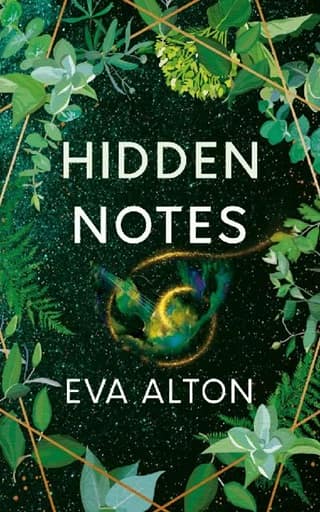
Hidden Notes: a fantasy romance mystery with historical family secrets, ghosts, travel, and suspense
1
Beatriz Exposito decided to die that morning.
Sadly, she was completely unaware that it wouldn’t prevent her past from knocking on her door to collect her debts.
She woke up lying on the floor, her gray hair soaked with wine and sweat and a hammering hangover that made her wish she had already died in her sleep. She felt someone pulling her to the floor, but it was just her blouse stuck to a puddle of dried vomit. A sour aftertaste rose in her throat, and for yet another day, she felt ashamed of herself.
The reflection in the window that stared back at her looked tired, with a deep vertical wrinkle between her eyebrows and dark circles under her eyes that betrayed those two decades in which she’d been burdened with one or two accidental deaths. Little remained of the lustrous jet waves and high cheekbones that had once bewitched more than one suitor.
She lit a cigarette and sat down next to the urn containing her late husband”s ashes. She took off the lid and used the urn as an ashtray.
In the cupboard, there was only a sad bottle of homemade plum liqueur, the one her mother-in-law from Yugoslavia had bought before she ended up in an urn too. Beatriz had been saving it for later. Not out of love for the deceased but because she hated the concoction with all her soul. She found it frustrating, having to die with that disgusting taste on her lips, but she accepted it as penance for her sins.
She swept the floor and went through the kitchen, checking her mental list like someone preparing for a long vacation. She didn”t want to leave food in the fridge, let alone dirty underwear in the laundry basket. She wanted to save her daughter some trouble: it was enough to leave her a mountain of debts and a mortgage on the apartment.
She considered writing her a letter, but it seemed overly dramatic, which wasn”t her style. Besides, it reeked of hypocrisy. How could she write to someone with whom she had purposely not communicated with for months? Both she and Vesna hated any display of feelings.
Beatriz came up with a better idea.
A mystery.
A question.
Yes, that would please her daughter.
A kick up the rear that would catapult her out of the hole she’d dug herself into, one which would soon lead her to the same fate as her mother.
She clambered onto a chair and pulled out an old suitcase from the attic, full of yellowed newspapers, tattered postcards, and mantillas embroidered by her grandmother, Carmen. There was also a jewelry box, the contents of which had ended up in a pawnshop during the lean season. The only thing left inside was an old wooden pendant, a trinket too big, too long, and with a broken tip, but ingrained with family secrets. Beatriz put it around her neck, under her clothes. Then she put the suitcase away and finished the preparations for her impending suicide. By then, it was already dark.
Before getting into the car, she felt the overwhelming need to call and say goodbye to her daughter, but she didn”t. She put the radio on full volume and backed recklessly out of the garage, scratching the bumper in an act of defiance. It didn”t matter: the bank would keep everything, anyway. She could have fun, at least.
She knew the road by heart, down to the last bend. It wasn’t until shortly after leaving the town of Tuéjar that she was tempted to call her daughter and confess her intentions, anxious to hear her voice one last time.
In her final days, she would have liked to discover if, deep down and in spite of everything, her daughter still loved her, even if only a little.
Ah, human weakness. That pressing desire to be loved, to leave a mark... Beatriz had never considered herself sentimental, and yet… there she was.
“Fuck it,” she growled and pressed the call button.
Vesna responded immediately
“Mom, it”s not a good time right now.” She sounded upset, nervous.
“I know, but...”
But I wanted to say goodbye.
I wanted you to try to convince me.
“I”ll call you back later,” her daughter said and hung up.
Beatriz heard a man”s voice in the background.
She instantly knew that calling had been a mistake.
The Benagéber reservoir appeared in the distance, like a polished emerald flowing between the dry, orange banks of the Turia river. In the background, the imposing retaining wall reminded her of the many summers she had spent in the area during her childhood. Back then, she liked to imagine that the dam concealed a secret fortress on the other side: if she was brave enough to break through the wall, she would marry the high prince of all forests who lived beyond.
The memory made her smile. She rolled down the window, enjoying the smell of pine and gorse, her eyes scanning for the perfect spot, the one where the road edged closer to the water.
She turned up the music to maximum volume and shifted into fourth gear, then pressed her foot hard on the accelerator. A huge truck swerved out of her way, alerting her with loud honks. Beatriz ignored it. She gripped the steering wheel, forcing herself to keep her eyes wide open.
It”s not every day that one has the opportunity to fly.
The gray road disappeared and gave way to a swift parade of grayish bushes that didn’t even brush the underside of the car. As she glided through the air, her favorite singer, Joaquín Sabina, was singing “Suicidal Drivers” in a sublime serendipity. Submerged in a kind of ecstasy, she wondered fleetingly why it had taken her so long to make this decision.
The sudden impact with the boggy swamp interrupted her ramblings.
She died on the spot, and that should have been the end of it.
But when the water began to flood into the vehicle through the open windows, she found herself watching the scene from the outside, squatting on the shore, hardly able to believe her unlikely fate.
She felt a tap on her shoulder and, turning around, looked into the black eyes of her late mother-in-law, miraculously rejuvenated.
“Carmen?” asked Beatriz with uncertainty, observing the oddly bright countenance of the newcomer.
She saw the truck driver pacing the edge of the road, cell phone to his ear as he traced the trail of her old Citro?n.
“Beatriz, filla meua,” her mother-in-law said in greeting.[1] “Did you really think it would be that easy? That your burdens would go down with the rest of the car?”
Beatriz shrugged, defeated.
At least she had tried.