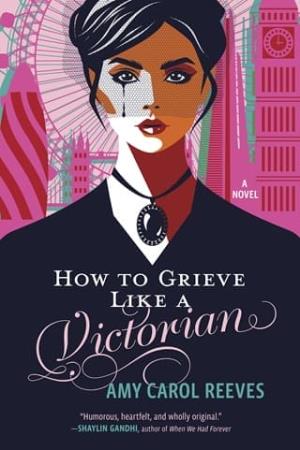
How to Grieve Like a Victorian
Prologue
An acupuncturist once told me grief settles in the chest, pressing on the heart and lungs, squeezing around the ribs like
a whalebone corset. This is why acute grief feels something like panic. But I’m also convinced now—miracle that the body is—that
there’s still heart-space for joy, flickering at the strangest times.
For instance, right now, in King’s Cross Station, I’m excited as my train lurches forward, northbound toward Leeds and onward
to Keighley, where a bus will take me to my next destination. I love this station not only because there’s Platform 9? and
my pockets are full of Bertie Bott’s jelly beans, but because railways delight me. It’s all a webwork of tracks and sleepers
and fasteners, iron, steel, wood, the old and new—nineteenth-century engineering evolved into the sleek beast transporting
me. Over the next few hours, I can settle back and take in the surrounding farmlands bordered by elms and hawthorns, the towns,
the rising church spires. I can nap to the engine’s rhythms.
When Philip passed away and I decided to adapt certain Victorian mourning rituals, I thought it would make me a better widow.
I thought I would learn how to grieve and honor him as I walked a prescribed path to closure.
I didn’t know the path is ongoing, the journey never really over.
I didn’t know I would unravel layers of myself in this process and rekindle love and relationships in new ways.
I didn’t know that I would feel this happiness and peace and yet still have the bittersweet urge to tell Philip all about
it. I know now that all these feelings are perfectly fine and will coexist for the rest of my (hopefully) long life.
Because there’s space for it all.