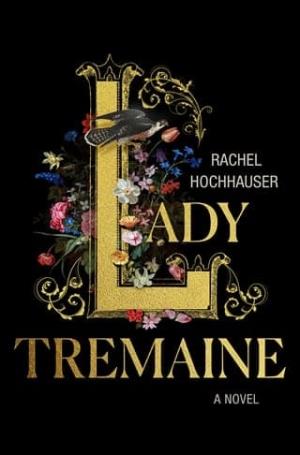
Lady Tremaine
Chapter One
I’ve been warned to be wary of strangers in the woods since I was a little girl.
A person, alone, unfamiliar, hidden in the dappled darkness, is not to be trusted.
And, certainly, the woods can hide the sorts of people you’d rather not encounter.
Outlaws and outcasts. Gruesomely mutilated pariahs—those with fingers taken for thieving, lips and tongues cut out for lying, flesh rotting for submission to disease.
But just as shadows serve to hide and disguise, they also provide privacy and solitude, and, if you look carefully, beauty.
The darkness of the woods offers a break from watchful eyes and rules to follow and stiffened skirts and the never-ending etiquette of being a woman in the world.
For a few short hours of the day, I’ve always considered it a fair trade: darkness for freedom.
But when I first heard the twig snap and saw the man ahead of me, I was scared. I saw beard and sword and steel. Year after year of warnings—to stay in the light, to travel in pairs, to avoid complicity in your fate—surfaced with one shallow breath.
That morning, it was early, and I had been somewhere I was not supposed to be. No matter if the stranger intended no harm. Fear makes people dangerous. And you see: To him, I, too, was a stranger in the woods.
I had started my day as usual. Feet out of the bedcovers before dawn, searching for slippers on the cold floor.
The hurried application of smock and kirtle, frost riming the obsidian windowpanes.
I shoved my hand into a leather glove and gently roused Lucy, who slept beneath the velvet folds of her own wing.
Keeping a peregrine in my bedchambers was unusual, but it was my only means of indulging her.
All else with a falcon was measured, calculated, managed, tied down.
She was trussed to her perch. Flew only when allowed.
Weighed near daily on a brass scale. I could not help but offer a small bit of nocturnal warmth.
She sat on my gauntlet, bound by her jesses to my very body, and we went out into the dark hallway.
I held the bird aloft ahead of me, arm extended as if she were a lantern, feeling my way along the wall.
Past Rosamund’s door. Past Mathilde’s. Past the steps that led up to Elin.
Feet soft on the worn tread of the carpet.
A sound emerged from the shadows behind me. I turned back to see my eldest framed by the slender crack of her doorway, face lit by the stub of a flickering candle. “Do not say not today,” Mathilde whispered.
I frowned. “I will meet you at breakfast.”
“No one will see us,” she protested. “I can help you.”
Lucy’s talons tightened on the glove and I pulled her closer.
“Back to bed.” The candle was not so dim that I missed the shadow of dissatisfaction on Mathilde’s face.
She shut her door without speaking, leaving me near blind in the semidarkness.
It made no difference, I told myself. Soon the world and its sleeping daughters would turn their faces toward the light.
In the kitchen, Wenthelen, sturdy and red-faced, stood over a pot gurgling on the hearth. Small piles of ash collected beneath rushlights. The room smelled of cooking vegetables.
“Taste this.” She plucked her spoon from the pot.
“I’m sure it’s—” The wooden instrument was inserted into my mouth. Wenthelen, a good cook who required the compliments of a great chef, rummaged with the utensil for several long moments.
“Satisfactory,” I said, when I was able to. In truth, the broth needed salt and the savory flavor of meat, but I couldn’t say so—I’d insisted that we buy a pound of sugar instead of a flank of beef.
Wenthelen took a step closer. The spoon twitched in her hand.
“It is nothing short of delectable!” I cried, stepping backward, into Alice, our only other household staff, who had just entered behind me. “Did I detect a hint of spice? You’ve elevated the humble parsnip to a veritable triumph!”
“Leak’s worse,” Alice announced placidly.
I turned to our housekeeper—gray eyes and gray hair, pulled into a bun so tight it left her forehead expressionless—and frowned at her. “You always say so on the day after rain.”
“And it rains a lot.” Alice frowned back, as unflustered as Wenthelen was perturbed. “We made a tidy sum on Rosie’s embroidery bits.”
“Those pennies are to go to the haberdasher.”
She crossed her arms. “Write the thatcher.”
“The girls need lace sleeves.”
“Lace sleeves.” Wenthelen tutted from the edge of the hearth. Seeing the look on my face, she added: “Ma’am.”
“Everyone is wearing blond flounces this year.” I’d seen the fine needle and bobbin meshwork peeking out of necklines and gathered in diaphanous ruffles at elbows. “And the world is unkind to those who don’t follow its rules.”
Alice lifted my old cloak from the peg and shook it out, tucking a twist of cloth into one of the pockets. “And yet, you go out each morning dressed like a swineherd.”
I snatched at the cloak. “I can hardly hunt in silk.”
Alice glanced at the dark windows. “You might have better luck in the afternoon.”
“Better luck would be if I were hunting for sport.”
Wenthelen stuck the spoon back into the pot and gave its contents a hearty stir. “We could buy meat if you did not insist on buying sugar.”
“We could not have guests if I could not serve confections.”
Wenthelen only sighed and clucked at my falcon—“Go on, then, Lucy, get us something for supper”—before turning to face Alice: “Try the stew.”
“Needs salt—” Alice started to say.
I hurried away.
According to a map, I own a piece of land.
But a map is a symbol. It has no real connection to the soil—it serves as an artifact or an echo.
A map is made and then the land changes and the map does not change with it.
And yet we respect maps as if they are the law, treating their boundaries as finite, allowing them to determine yours, mine, ours, theirs, his. Rarely hers.
But the map says: I do own some land. An aberration in the system: A man—my husband—died with no male heirs. His became hers. The map now draws a line around what is mine: a property that sits next to, but does not touch, a stream. On paper, it is a snaking blue line, thin and nearly invisible.
Because that snaking blue line does not cross my property, it is not good hunting land.
The quail and the grouse and the pheasants stay closer to the streams and rivers that branch and fracture the landscape.
So, for the purposes of my morning routine, I often choose to be liberal with the boundaries of the map.
Technically, this is illegal.
The hunt did not start well. By the time the sun hovered on the horizon, we’d still had no luck.
No movement or missed chances. Lucy sat, high on a branch above me, waiting, and I moved slowly beneath her, poking at the brambles with a stick, hoping to flush a pheasant.
The ground was soft and sucking. I watched the brambles and Lucy watched it all: the curls of water in the stream, the leaves quivering on the branches, the fog moving like breath along the forest floor.
Peregrines need room to hunt; they start high and dive low.
Sky and space and speed are their best tools.
Across the stream, the growth thinned, and the forest’s canopy gave way to large pockets of sky; the land had the open air that would yield us game.
But the crossing of the water was as symbolic as water itself.
On one side: dubiously legal hunting. On the other: punishable poaching on royal land.
As if sensing my intentions, Lucy pulled her feathers in tight, her body going slick.
“It’s fine,” I assured her.
She blinked slowly, hiding her eyes from me for half a moment.
“Quail and grouse do not abide by the rules of a map. Three hops and we’ll be back on the right side.”
I bent over, gathered my skirts in my hands, and tied a practiced knot between my legs.
There were no logs or rocks to use, so, after a running start, I leapt across the water and landed in the soft mud on the other side.
The jump soaked my hem and splattered my shins with black slurry.
I looked around. The forest has eyes but cannot speak. It had no way of telling on me.
I did not believe in magic, nor did I think members of royalty were divine, but there was something to be said for their land.
Working my way through the underbrush, I used the stick to poke and prod the growth.
Blackthorn and ferns and holly. Tangled thickets of vine and clusters of orange-red hawthorn haws and the young green of early rose hips.
The air was quiet, and I went still, inhaling.
Here, with a little bit more space and a little bit of sun, the odor of damp—of decay and of turning leaves—had a life of its own, a quiet, dark fertility that calmed me.
I squinted up at a patch of white sky as Lucy took flight and rose above.
A falcon is a murderous creature. There is destruction in its bones.
Its body hums, faster than the fastest clock, priming itself for that quick moment.
Tick. The click of an eyelid. Tick. The silent swivel of a head.
Tick. A stoop so fast it is but a gray streak in your eye.
Time runs out. The bird gives over all that is regal and becomes what it was meant to be, what it was born to be, and the hum becomes a roar.
The sound of Lucy’s bell told me she had moved before I saw, and then she was in front of me, closed wings, head down, legs back, diving faster than I could watch her.
A vicious entry into the brush, twigs breaking, wings flapping: The rabbit was dead before I’d known it was alive, the unpleasantness done in less than two heartbeats.