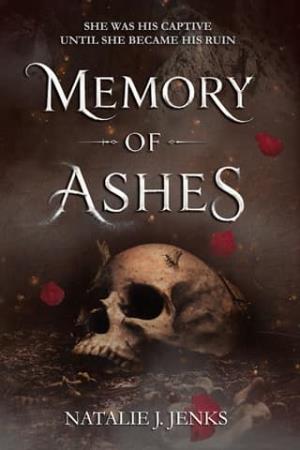
Memory of Ashes (The Singing Stone Guild #1)
Chapter 1
“Look at these, Emin,” Amelia said.
The parchment trembled in her grip. She should have stopped copying them hours ago.
The mountain had quivered when she found the symbols engraved on the cave wall.
The memory lingered more vividly than the biting cold.
She’d copied them, afraid the ground beneath her would open up, and now they sat on her desk, crudely inked in uneven lines.
Whenever she glanced away, her attention drifted back to them.
The symbols flowed in graceful arcs and intersecting lines.
She ran her fingers over the inconsistent shapes.
A deep sense of familiarity stirred, as if she hovered at the edge of a memory or a forgotten dream, certain she had seen them before yet unable to remember where.
Emin rose from his desk and came over. His brow furrowed as he studied her rough scribbles.
“Have you seen anything like this before?” she asked.
“They resemble glyphs, but here, these…” The Lore Master stooped to trace one with his finger. “These are… different. Fascinating.”
“I’ve not seen anything like them before. I thought perhaps you might have, with all your experience?”
“Is that your polite way of saying I’m old?” he asked, a twinkle in his eyes.
She gave a small huff.
“They’re unusual, right? I can’t find anything in the records that matches.” She paused, chewing on the end of her quill.
“You’ll have to come back to them. We’ve got a meeting at the palace. The sickness at the mines is getting worse.”
She exhaled slowly through her nose. The adventures she’d fantasised about when she joined the guild took a back seat to the meetings at the palace. Others seemed content with that, but the world waited to be uncovered.
“I wish they’d never found those remains,” she muttered. “Then we wouldn’t be dragged to these meetings.”
She gathered her things and donned the formal grey robes. Their long, flowing sleeves got in the way, while the bunched material around the neck felt like a hand at her throat.
She hurried past the initiates who crowded the halls of the Singing Stone Guild, weaving through them unnoticed, and joined Emin and the guild members outside.
The fading Blood Sun tinged the scattered white buildings of the city pink. The heavy fabric of her robes clung to her skin as the molten rays shone down upon her.
“Do they have to be so thick?” she asked, tugging at her collar, earning an eye roll from Emin.
Her excavator rank required them, but she preferred to wear simple trousers and shirts, especially as she was often working outdoors.
Squinting at the sun, she moved into the shadow of the guild’s headquarters, sheltering beneath the turrets that rose from the building at different levels. The sight stirred warm memories of visiting her father at work, when the enormous doors had dwarfed her as a child. They seemed smaller now.
They crossed the walled city. It was her home, yet sometimes she felt more familiar with the ruins she studied than the people in the streets.
Jasmine perfumed the air as they headed through the palace gardens. The refreshing spray from the fountain cooled her as she walked by.
As they entered the palace, guards ushered them towards the boardroom for the meeting. They were late.
“Close the mine,” the physician said.
They took their seats at the long stone table. Amelia shifted uncomfortably on the unforgiving stone seat.
“Absolutely not,” Councillor Cyrus said immediately.
Amelia caught Emin’s attention across the room and tried not to sigh. He was one of the few who could meet her eyes without hesitation.
“So many have fallen sick, my lord,” the miner said. “It’s spreading. Soon there’ll be none of us left to harvest the chrysonium.”
“If production drops much more, half the city will go dark.”
“Then send someone else underground,” the miner insisted.
“How many have actually died?” the councillor asked.
“Six so far.”
“Perhaps we should stop the mining until we identify the cause,” a voice said.
Everyone turned towards the geologist. Her cheeks burned beneath their scrutiny. She was clearly new to the meetings. Amelia already knew what their answer would be. Stopping mining wasn’t an option. They’d looked at her as though she were mad when she’d last suggested it.
“His Majesty won’t halt production over the deaths of six miners.”
Of course he wouldn’t. Deaths were always acceptable until they became inconvenient.
“We need answers,” the councillor said. His polished tone rang with authority. “We can’t afford to wait any longer. We’ll assemble a team,” he said, addressing the elders in the room. “Guild Masters, choose a representative from each of your guilds.”
No one had suggested sending guild representatives before. They could sacrifice a few common miners; in their eyes, workers drawn from the poorest parts of the city were replaceable. But now the stakes were higher. They were willing to risk more to find out what they were dealing with.
A bead of cold sweat trickled down her spine. No one volunteered. Their eyes were glued to the floor. Every instinct told her to remain silent, but the words escaped anyway.
“I’ll go for the archaeologists,” Amelia said into the silence. “If it gets me out of these meetings,” she muttered.
The elder guild master nodded without looking at her. “A fresh pair of eyes might make all the difference.”
What if she fell ill? Could she become a carrier of the sickness? She pushed the thoughts to the back of her mind. This was her chance to prove herself.
“You leave at noon.”
Her hands trembled as she packed.
“Keep your mask on whilst you’re down there,” Emin ordered.
*
The carriage waited in the courtyard. Four others joined her. The mine overseer looked like he’d rather be anywhere else. He grumbled about going down there again.
Of course, he preferred to leave the actual risk to the miners beneath him.
The guild had been denied access since the initial survey. The palace had been eager to begin harvesting as soon as the mineral’s usefulness was discovered, and further investigation would only have hindered the work.
Not much had been recorded about the mine, and this was her opportunity to contribute to the records and perhaps make a discovery of her own.
They set off on their journey, mostly in silence.
She recognised Karl, the geologist. He’d been the only one to greet her upon her arrival. The rest had mostly ignored her.
As they moved away from the city, the colour of the landscape faded and the lush greens of vegetation slowly disappeared.
There were no buildings in sight, and the dry earth crumbled under the turning wheels of the carriage.
Gradually, the ruins she’d heard about came into view.
The others pressed on. Their impatience to reach the mine gave her no time to examine them.
When they arrived, Amelia stared wide-eyed at the miners still moving in and out of the mine. A man doubled over, coughing into his sleeve.
“Try not to get in anyone’s way whilst you’re down there,” the overseer muttered.
Amelia put on her mask and tightened its straps as they descended into the mine. Torches flickered as she passed them, illuminating traces of the coveted mineral.
She focused on the sound of her footsteps. It was like any other excavation.
The air felt wrong, like the static had faded, leaving an unnatural stillness.
They followed the overseer until the tunnel opened into a cave.
They passed miners, one of whom was being carried out on a stretcher.
Blood streamed from his mouth and nose. It was too late for him.
She pressed the mask closer to her face.
Because the sickness had not spread beyond the miners, everyone assumed its cause lay underground.
“It’s barren,” Karl said.
“This is where we first found it. We cleared the first chamber and found more beyond,” the overseer said, scratching his head.
Karl wandered off to inspect the mineral deposits whilst the physician and scientist followed him, unsure of what to do. The physician should have been inspecting the miners, but he hovered at a distance, staring.
“Where are the skeletal remains?” Amelia asked.
“There are some over there.” He pointed. “And others we found last month when we were digging out the next cave. It looked like the entrance had caved in.”
She frowned. There’d been no new reports of remains.
“Why weren’t they reported?”
He shrugged. “It didn’t seem important. If it doesn’t affect mining, we ignore it.”
“Can you take me to them?”
He guided her into the other cave. The others trailed slowly behind, inspecting their surroundings. The mineral deposits in the rock glistened in the lights of the sconces; it was strange to think that the same crystals powered the sconces around them. She didn’t fully understand how it worked.
Then she saw them.
Bones littered the tunnel, scattered like debris. The air was thick, and sweat gathered beneath her mask as they followed the trail.
She was still trying to make sense of the fragments when the passage widened, drawing a gasp from her. The trail of bones led to a mountain of remains piled against one side of the cave.
She’d only expected a few skeletons. This looked like the catacombs that ran under their city, but more disordered.
“Were they found like this?” she asked. The sheer number suggested that something catastrophic had happened, and she doubted the sickness had caused it.
“No, we just moved them out of the way.”
There were hundreds, if not thousands. She tried to count the number of bodies but gave up after counting more than sixty skulls, all tangled together. The skeletons had become disconnected from the miners’ rough handling.
The miners were unfazed by the sight, continuing to work nearby. No one had reported this.
Karl came to stand beside her. “I thought there were only a few bodies,” he said.
“Me too,” she replied, shaking her head. “There could be thousands in here. Only a few were recorded in the archives.”
Examining the bones proved difficult in their disordered state. The anatomy was wrong. She tried to remember what the records had said about the remains’ anatomical anomalies.
Kneeling, she studied a femur that looked too large to be human. She carefully picked up a skull to study it under the glow of the sconces. The skull was large, but it was the stumps that caught her attention.
They weren’t incidental.
They protruded symmetrically from the skull, almost like the bases of horns. No one had reported anything like this. She would have remembered that. This was no ordinary human.
Wrapping the skull carefully in a cloth, she selected more bones to take back with her. The guild would want to examine them. They still needed to look for evidence linking the sickness to the deaths of those buried here.
Only then did she notice the engravings on the cave wall. They were the same symbols she had seen at Mount Ryjul, but these did not look as ancient.
How could they be here too?
She stepped closer and reached out, but before her fingers touched the wall, the ground began to shake. A deafening rumble rolled through the mine and its tunnels as dust fell.
The miners paused as though waiting for it to stop. Their calm reassured her for only a moment; as the shaking continued, they began to shout, throwing down their tools and running towards the exit.
The tunnel seemed to close in on her.
“We need to go—now!” the overseer yelled.
The group ran, following him through the tunnels as the walls of the mine shook. Dust rose into the air and clung to the sweat that gathered on her forehead.
Worried about the sickness, she hadn’t considered the other dangers. She was used to working above ground, excavating in open fields. The thought of being buried alive urged her to run faster.
A section of the wall crumbled. Rocks cascaded, trapping a miner as he ran.
“Karl, help me!” she cried, running towards the miner.
The tunnel shook again.
Karl turned and hesitated for a second before joining her.
Shards of rock fell. She winced as they struck her, clutching her arm as the wound oozed with blood. There was no time.
They could die down here, but she couldn’t just leave him. They crouched beside him. He screamed, eyes wide, as they wedged their hands beneath the fallen rock and heaved. He moaned and pulled himself free.
Amelia grabbed the miner beneath one arm while Karl took the other.
“Move!” Karl yelled.
A sob escaped her when the entrance came into view. A wave of fresh air hit her as they exited the mine, and she removed her mask to take a grateful lungful of it.
The dust cleared.
She was alive. They all were.
The workers stood outside, waiting as the shaking ceased.
She pressed both palms to the ground, counting the seconds until she trusted the stillness.
“What was that?” Karl asked, panting for breath.
“It’s been happening more often,” the overseer said. “We’ll have to make sure it’s secure before anyone can go back in. It will take a while.”
As the carriage bore them back to the safety of the city, her mind lingered on the ancient remains hidden within the mine. The thought of returning, only to be entombed alongside them, made her hesitate.