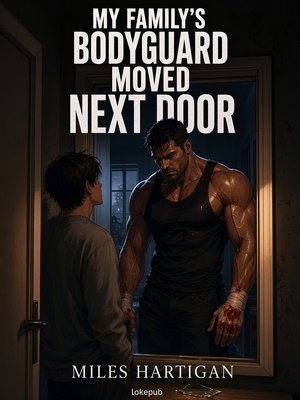
My Family's Bodyguard Moved Next Door
Chapter 1
Elliot Vale’s fingers hovered over the keys like they belonged to someone else.
The grand piano in the corner of the living room was the only thing in the apartment that still felt like his.
Everything else—the pale oak floors, the floor-to-ceiling windows looking out over the glittering sprawl of Los Angeles, the carefully curated silence—had been chosen by his parents’ assistant.
A place to “recover.” A place to be quiet.
He was supposed to be quiet.
Clair de Lune sat open on the music stand, the notes swimming in front of his eyes.
He knew the piece by heart. He had played it a hundred times on stages that no longer felt safe.
Tonight the first soft arpeggio came out uneven, the third note catching on a tremor he couldn’t quite still.
He stopped, flexed his hands, and tried again.
The second attempt was worse.
Elliot closed his eyes and breathed the way the therapist had taught him. In through the nose. Hold. Out through the mouth. The city lights beyond the glass blurred into soft gold streaks. For a moment he almost believed the quiet could hold him.
Then the wall between the apartments shuddered.
A heavy, dull thud—like something solid striking something that refused to give. Followed by another. And another. Rhythmic. Violent. The kind of sound that made the air itself feel thinner.
Elliot’s eyes snapped open.
The thuds continued, each one landing with the weight of a body behind it.
Then came the breathing—harsh, ragged, pulled from deep in a chest that sounded like it was fighting itself.
A low, broken sound that wasn’t quite a groan and wasn’t quite a curse.
Glass shattered somewhere on the other side of the wall, sharp and sudden, followed by a thick, wet silence.
Elliot’s heart slammed against his ribs.
He stood so fast the piano bench scraped backward.
The apartment was dark except for the single lamp over the keyboard.
Shadows stretched long across the floor.
He crossed to the front door on bare feet, phone already in his hand, and dialed the building’s security line with fingers that would not stop shaking.
It rang.
And rang.
And went to a recorded message that told him, in a calm female voice, that all operators were currently assisting other residents.
Elliot ended the call. The phone felt useless in his palm.
Another thud. Harder this time. The breathing on the other side of the wall grew louder, more strained, as if someone was pushing through pain and refusing to stop.
He should stay inside. Lock the door. Wait for morning.
Instead he stepped into the hallway.
The corridor was empty, lit by soft recessed lights that made the dark wood doors look almost polite.
His own door clicked shut behind him. The apartment next to his—2B—was only six feet away.
Up close the sounds were clearer: the wet slap of skin against something unyielding, the sharp inhale that followed every impact, the faint metallic scent of blood already seeping under the door.
Elliot raised his fist and knocked.
The noise stopped instantly.
Silence pressed against the other side of the wood like a living thing. He knocked again, harder, because the alternative was turning around and pretending he had never heard anything at all.
The lock turned.
The door opened three inches, then wider.
The man standing in the threshold filled the entire frame.
He was tall enough that Elliot had to tip his head back to meet his eyes.
Broad through the shoulders in a way that made the plain black tank top look like it was fighting for its life.
Sweat darkened the fabric in a wide V down his chest and darkened the waistband of the gray sweatpants hanging low on his hips.
His left hand was wrapped in white athletic tape already spotted with fresh red.
The knuckles beneath the tape looked swollen, the skin split open in more than one place.
A smear of blood marked the wall just inside the apartment, and a heavy punching bag still swayed slightly from its chain in the center of the living room.
The man’s breathing was still uneven. A thin sheen of sweat covered every visible inch of skin—forearms corded with muscle, the thick column of his neck, the hard line of his jaw shadowed with stubble.
His hair was dark, cut short on the sides, longer on top and currently plastered to his forehead.
When he looked down at Elliot, his eyes were a cold, pale gray that seemed to take in everything at once and give nothing back.
“What do you need?”
The voice was low, roughened by exertion, and carried the kind of quiet authority that made the question feel like a command.
Elliot’s mouth opened. Nothing came out.
He had prepared a complaint. Something polite about the noise and the hour and the thin walls. Standing here, with the heat rolling off the stranger’s body and the metallic scent of blood in the air, every rehearsed word evaporated.
The man—Kael, though Elliot did not know the name yet—waited. He did not shift his weight. He did not smile. He simply stood there, one shoulder braced against the doorframe, injured hand hanging loose at his side, and watched Elliot with an intensity that felt like being measured.
Elliot’s gaze dropped, traitorous, to the taped knuckles, then lower to the way the sweatpants clung to heavy thighs, then snapped back up because looking any longer felt dangerous.
The man was built like the kind of violence that had learned how to wear clothes.
Every line of him spoke of controlled power held under tight rein.
And underneath the control, something rawer. Something that still hurt.
“I…” Elliot’s voice came out thinner than he wanted. He cleared his throat and tried again. “I heard… glass. And the— the sounds. I thought someone might be hurt.”
A muscle jumped in the man’s jaw.
He glanced once over his shoulder at the swaying bag, at the small scatter of broken glass near the kitchen island, at the dark drop of blood on the hardwood. When he looked back, the gray eyes had cooled another degree.
“I’m fine.”
The two words were final. Dismissive. They should have ended the conversation.
Elliot did not move.
Up close he could see the fine tremor in the man’s uninjured hand, the way his chest still rose and fell too fast, the faint white scar that cut through one eyebrow.
Pain lived in the set of those shoulders.
Not the sharp kind that came from a single night’s training.
The deeper kind that had settled into bone and refused to leave.
Elliot had spent the last eight months learning the shape of that kind of pain in himself. Recognizing it in someone else felt like looking into a darkened mirror.
“Your hand,” he said quietly.
The man’s gaze flicked down to the bloody tape, then back to Elliot’s face. Something unreadable moved behind his eyes.
“It’s nothing.”
“It doesn’t look like nothing.”
For a moment neither of them spoke. The hallway hummed with the distant sound of the building’s air conditioning.
Somewhere below them a car horn floated up from the street.
Between their bodies the air felt charged, thick with the leftover heat of exertion and the unexpected intimacy of standing this close to a stranger at two in the morning.
Elliot became acutely aware of his own appearance: bare feet, soft gray sleep pants, an old Columbia University t-shirt that had grown thin at the collar.
He was five-nine on a good day and currently felt half that height under the weight of the other man’s stare.
The stranger had to be at least six-four, maybe more, and carried the kind of dense muscle that came from years of real contact rather than carefully lit gym selfies.
Size difference had never been something Elliot thought about. Standing here, it was impossible not to feel it in every nerve.
The man exhaled slowly through his nose, a sound that carried reluctant acceptance.
“You live next door.”
It was not a question.
Elliot nodded. “2A.”
“Kael.” The name was offered like a concession. “Rourke.”
“Elliot.”
Kael’s eyes moved over him once more, slower this time, taking in the fine bones of his wrists, the way he still held the phone like a shield, the faint shadows under his eyes that no amount of expensive moisturizer had managed to erase.
Whatever he saw made the hard line of his mouth soften by a fraction.
“Go back inside, Elliot.”
The use of his name in that rough voice sent an unexpected ripple down Elliot’s spine.
He should have obeyed. Every cautious instinct he had cultivated since the incident told him to retreat, lock the door, pretend this conversation had never happened. Instead he heard himself ask, “Are you sure you’re all right?”
Kael looked at him for a long second.
In that second Elliot saw it clearly—the exhaustion under the discipline, the way the injured hand curled slightly as if the pain was sharper than Kael wanted to admit, the careful distance he kept even while standing only two feet away.
Something in Elliot’s chest, something that had been locked down tight for months, shifted.
Kael’s voice dropped even lower.
“I’m sure.”
Then, quieter, almost to himself: “You shouldn’t be out here alone at this hour.”
The words carried an edge of protectiveness that did not match the blood on his knuckles or the violence still lingering in the air. Elliot felt heat climb the back of his neck. He took a small step backward, suddenly needing space.
“I— I’m sorry for bothering you.”
Kael watched him retreat. He did not close the door. He simply stood there, a dark silhouette framed by the warm light of his apartment, and waited until Elliot had reached his own threshold.
Elliot fumbled the key, got the door open, and slipped inside without looking back. The lock turned under his fingers with a soft, final click. He leaned against the wood, phone still clutched in one hand, and listened.
On the other side of the wall he heard the slow, measured sound of Kael’s door closing. Then nothing.
Elliot stayed where he was, heart still racing, the ghost of that low voice repeating his name in the quiet of the apartment.
He could still smell the clean sweat and copper of blood that had rolled off Kael’s skin.
He could still feel the exact height difference, the way he had had to tilt his head just to meet those pale eyes.
He crossed to the piano on unsteady legs and sat. Clair de Lune still waited on the stand. His hands no longer shook from anxiety alone.
In the apartment next door, Kael Rourke rested his forehead against the closed door and let out a long, controlled breath.
Blood had already soaked through the tape on his left hand.
The punching bag hung still now, the chain faintly creaking.
He had come out here tonight to exhaust the restless thing that lived under his skin—the leftover violence that therapy and time had never quite managed to quiet.
He had not expected the soft knock. He had not expected the wide, dark eyes or the careful voice or the way the kid had looked at his damaged hand like he understood pain from the inside.
Kael closed his eyes.
“Damn,” he murmured to the empty room. The word came out rough, almost unwilling. “He’s too small.”
Too small. Too soft. Too easy to break.
And already under Kael’s skin in a way that felt dangerous.
He pushed away from the door, crossed to the kitchen, and ran cold water over his split knuckles until the blood diluted and swirled down the drain.
In the mirror above the sink his reflection looked the same as always: hard lines, cold eyes, the face of a man who had once made a living ending fights with his bare hands.
Tonight that man had opened the door to a pianist with trembling fingers and a voice that somehow still asked if he was all right.
Kael shut off the water.
Somewhere on the other side of the shared wall, a single clear note rose from a piano—tentative, then stronger. Clair de Lune, played soft enough that it should not have reached him. It did anyway.
He stood in the dark kitchen and listened until the last note faded.
Somewhere on the other side of the wall, the piano fell silent. Kael pressed his palm flat against the cool plaster, not sure what he was listening for, only that he did not want the sound to stop.
Then he turned off every light and tried to remember how to sleep in a body that suddenly felt too aware of the quiet apartment next door.