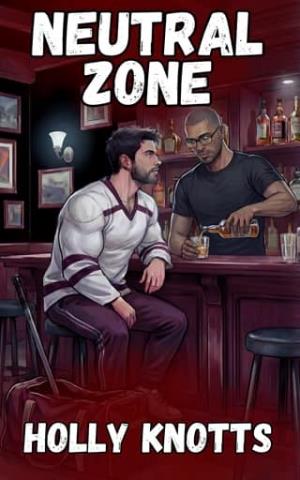
Neutral Zone (The Ice Breakers #4)
Milo
Four to one. Columbus. The kind of loss where nobody on the bus ride home made eye contact, where the equipment manager moved through the locker room like a man defusing a bomb, where even Kasner, who could find the bright side of a severed limb, had nothing to offer except his shitty music turned up too loud.
He pulled the right skate’s lace free and started on the boot.
“Food?” Brody said from his stall.
“No.”
“Steakhouse has that—”
“No.”
Brody nodded once and went back to his own tape.
Good man, Brody. Two years of being road roommates and he’d figured out that the best thing he could do for Milo after a loss was stop talking.
Most people never figured that out. Most people heard silence and panicked and tried to fill it, and every word they used to fill it made Milo want to put his head through the wall.
Kovac rose. The room shut up, because rooms shut up when Kovac did anything. That was the main reason Kovac was a good captain. Some captains gave speeches. Kovac just existed with authority.
“Tomorrow,” he said. “Seven AM. Be better.”
He sat back down. Nobody had anything to add to that, which was the second reason Kovac was a good captain.
The coaches’ door opened. Strand came through along the far wall, not toward the players but past them, saying something low to an assistant that Milo caught the shape of but not the words.
He moved through the room without disturbing it, shoulders level, hands at rest, and pushed out through the corridor exit.
The door settled back into its frame and the room kept going as if he’d never been in it.
Milo finished the gear in order. Shin guards, pants, shoulder pads.
He showered after the room cleared out, because the water pressure was better and because he didn’t love being naked around twenty other men.
Not for the reason he couldn’t think about.
For the other reason, the normal one, which was that he liked being alone. That was the reason. The only reason.
He stood under the hot water with his palms flat on the tile and replayed the third period one more time.
The puck on his stick in the slot, the half-second where the shot was there, the goalie’s pad sliding across, the puck deflecting wide.
The flat dead sound of rubber hitting boards behind the net.
That sound was the sound of nothing happening, and Milo had heard it twice tonight.
Two shots. Zero points. One hit that had split a guy’s lip on the glass, which the ref hadn’t called, which meant Milo had drawn blood and gotten nothing for it. Great. Productive evening.
* * *
The car smelled like his equipment bag. It always smelled like his equipment bag. At this point he wasn’t sure the car had ever smelled like anything else. He’d probably try to sell it someday and the dealership would open the door and flinch and quietly suggest he keep it.
He drove the route on autopilot, the familiar sequence of turns and lights running themselves while he replayed the third period.
Again. The shot that wasn’t there. The pass he’d forced.
The turnover at the blue line that had led to nothing good.
His brain was a highlight reel of his own failures, looping, and the only thing that had ever made it stop was the bar.
Not the bourbon. Not the warmth. The bartender.
He wasn’t going to think about that. He wasn’t going to think about why the game stopped replaying in his head when he sat on the third stool from the right and a man with paint on his wrists poured bourbon without being asked.
He wasn’t going to think about broad shoulders and glasses that slid down and hands that moved through the narrow space behind the bar like the space had been built around them.
He wasn’t going to think about any of that, because thinking about it would require acknowledging what it meant, and acknowledging what it meant would break the system, and the system was the only thing keeping him functional.
So. The bar.
He parked on the second level of the structure across the street and looked at the donut sign. Six letters, four working. N, U, T, S. He considered that, decided it was funny in a way he’d never tell anyone, and got out of the car.
* * *
The door was wrong before he opened it.
No, that wasn’t right. The door was the same door, heavy and crooked in its frame, paint layered thick enough to feel under his hand.
But the sound coming through it was off.
Sports radio. Tinny, too loud, leaking through the gap between the door and the frame where the weather stripping had given up.
The bartender played vinyl. Always. A woman’s voice under piano, or a trumpet doing something low and warm, or a bass line that filled the room without crowding it.
Not sports radio. Not a postgame show about the loss Milo had just showered off.
He pushed through anyway.
The bar was the same bar. Black walls, cherry mahogany, the low light pulling the red out of the wood. The stools with their uneven legs. The EMPLOYEES ONLY sign with the E hanging crooked. Everything in the right place.
The wrong man was behind the bar.
Shorter, blond, early twenties, wiping the mahogany with a rag that was too wet and leaving a streak.
He looked up with the expression of someone ready to be helpful, which was already a problem, because the bartender, the real bartender, was never ready to be helpful.
He was just present. He existed in the space behind the bar the way the bottles existed on the shelf, with the settled certainty of something that had been there long enough to stop thinking about whether it belonged.
“What can I get you?”
Milo stared at him. What can I get you. As if Milo were anyone, walking in off any street, wanting any drink. As if the glass wasn’t supposed to be already poured and waiting on the ghost ring where it always sat, the good bourbon, two fingers, the knowledge in the man’s hand and not his head.
“Bourbon,” Milo said. “Neat.”
The kid reached for the well bottle. The cheap stuff.
Poured it into the wrong glass, a tumbler instead of the rocks glass, and set it down with a little nod like he’d accomplished something.
Milo picked it up and drank and it burned going down in a way that the good stuff never did.
The good stuff settled. This stuff just hurt.
He sat on the third stool from the right and the game replay started up again immediately because there was nothing here to stop it.
The replacement bartender wiped the same section of bar he’d already wiped, the rag leaving the same wet streak.
Milo watched his hands. Small, quick, efficient.
Not the hands he was looking for. Not the broad hands with the blue paint ground into the creases, the knuckles that wrapped around the bottle’s neck, the cloth turning in circles along the rail like the cleaning was a conversation between the man and the room.
Milo stopped watching the bartender’s hands. He drank his bad bourbon and let the game play in his head. The puck in the slot. The pad. The flat dead sound. No one here to make it stop. Just the room, doing nothing, being nothing, a bar without the thing that made it more than a bar.
He was on his second drink when the door opened.
Cold air, two bodies, loud. A man and a woman, the man’s voice carrying the kind of confidence that came from a couple of drinks and a firm belief that his opinions mattered.
They sat three stools down and the man ordered two beers without asking the woman what she wanted and Milo’s jaw tightened and he went back to his bourbon.
Then the phone came up.
“Holy shit.” The man’s voice, louder, angled at Milo. “Babe. Babe, that’s Milo Vance.”
Milo didn’t move.
“Dude.” Already recording. Milo could see the phone’s glow in his peripheral vision, held at chest height, the lens pointed at his profile. “Dude, four to one. Rough night, man. What happened out there?”
The replacement bartender looked over, uncertain. The woman said something low that might have been “leave him alone.”
“Nah, hold on.” The man stood from his stool. Columbus jersey. Of course. “Hey, Vance. Two shots, right? That’s what, like, eight minutes of ice time for zero points? My fantasy team is pissed at you, bro.”
Three feet away now. The phone’s glow closer. The faint hum of video recording.
Milo looked up.
The man was grinning. Mid-thirties, soft through the middle, a Werenski jersey he’d probably bought at a mall kiosk.
He had the phone angled for the reaction shot.
This was the part where the athlete was supposed to be a good sport.
Laugh it off. Give him the content. Perform gratitude for the attention of a stranger who’d paid sixty bucks for a nosebleed seat and decided that entitled him to a piece of Milo’s worst night of the season.
“Turn the phone off,” Milo said.
“Come on, man, it’s just for my boys back in—”
“Turn it off or I’ll put it in your beer.”
The grin took a second to fall. The stages played across the man’s face: the laugh that started and died, the realization that Milo wasn’t joking, the glance down at Milo’s hands on the bar. Milo’s hands were relaxed. That was probably worse.
“Jesus, dude. It’s a fucking bar.”
“It is,” Milo said. “So fuck off and drink in it.”
The man muttered something about Milo being an asshole and went back to his stool, already narrating the injustice to the woman, who looked like she’d rather be anywhere else. Milo went back to his bourbon.
The replacement bartender appeared at his end, hovering. “Hey, man, sorry about that. You want another one? On the house?”
The real bartender wouldn’t have hovered.
He would have handled it. Milo didn’t know exactly how, but the man had a way of managing his space without raising his voice, the same way he moved behind the bar without turning sideways.
The room would have been handled and Milo wouldn’t be sitting here with bad bourbon and a stranger’s phone playing on loop behind his eyes.
“No,” Milo said. He put cash on the bar, more than the drink cost, because the kid had tried. He stood and put on his jacket and walked out.
The cold air hit him and he stood on the sidewalk with his hands in his pockets and the warmth already gone from his skin. Across the street, the sign read N U T S in its four surviving letters.
He should go home. He should drive to the apartment and do the rest of the routine, the elevator and the empty kitchen and the bed that was good for recovery and nothing else, and sleep seven hours and wake up and go to practice and be better.
It worked. It had kept him functional for eight years in four different locker rooms and three different cities and every version of a night this bad.
It worked fine.
His phone was in his hand. He was looking at the bar’s website, a staff page with a photo that was years out of date.
He wasn’t looking for the hours. He knew the hours.
He was looking for a name, something that would tell him when the other bartender worked, the one who poured the good bourbon and didn’t ask and didn’t hover and didn’t look at Milo and didn’t ignore him, and the difference between those two things was the difference between a room where the game replayed in his head and one where it didn’t.
Adrian Cross. The name sat on the screen in small type next to a photo that didn’t look like him.
Milo closed the browser. Put the phone in his pocket.
He drove home. The apartment was cold and the kitchen was empty and the refrigerator hummed and the bed was exactly as he’d left it. He sat on the edge in the unlit room and pulled off his shoes and set them at the foot of the frame, aligned, even, and lay back and stared at the ceiling.
Tomorrow. Seven AM. Be better.
The cheap bourbon sat bad in his stomach. Everything about tonight sat bad. The game, the phone, the Columbus jersey, the bartender who asked what he wanted because the one who already knew wasn’t there.
He closed his eyes.
Adrian Cross. He’d found the name and now he couldn’t unfind it, and the name was doing something in his head that names weren’t supposed to do, taking up space, sitting in the front of his brain where the game replay usually lived, and for the first time in as long as he could remember the game wasn’t the last thing in his head before sleep.
He turned onto his side and waited, and the last thought wasn’t the shot or the boards or Kovac’s voice. It was the sports radio playing where the vinyl should have been, and a room that had everything except the one thing that made it work.