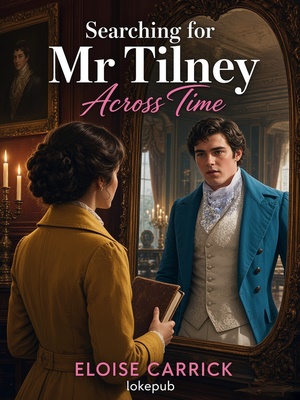
Searching for Mr Tilney Across Time
Prologue
Caroline
Chelsea, London
I found it in an old bookshop in Cambridge a few weeks ago, on a tour of the city.
It was a hot day, and to step inside the cool book-lined walls of the crooked Tudor building was like finding heaven on earth.
I’d become ever more obsessed as the years went by in my quest to find even the smallest detail of tangible proof for all that had happened to me as a young girl, and I’d scoured every relevant book I could find for any clues to support the insight I’d gained.
Though the overwhelming guilt that I’d done nothing about my discovery had softened over the years, I could never decide if I’d been right to keep its knowledge hidden, and even now I felt it might have been wrong to collude in guarding such secrets.
It was midsummer’s day when I found the rare copy of Northanger Abbey that contained a photo of the portrait, another precious book to add to my collection.
I smiled when I saw the picture, and the familiar skipping of my heartbeat began, as the memories came flooding back.
The girl with the green parasol gazed back at me with her enigmatic smile, seeming to acknowledge me as the keeper of her secrets, though perhaps I was being fanciful.
The emotions of youthful longing with all its quivering expectation, came rushing to the surface like blood bruising pale skin, as I remembered every vivid picture, every haunted image.
Yet, alongside the recollections of ghosts from the past and the excitement of being young with all its magical memories, it was impossible not to recall my uncertain fears and those other feelings that still surfaced from time to time, of guilt and shame.
I’ve never been one for reading the preface of a book, and I don’t quite know why I did on that day, though I knew I wanted to linger, soaking up the atmosphere of the bookshop with its damp odours of ancient paper, leather, and dust. I turned the pages of the book, wondering how many people had held it in their hands and read the words like a spellbinding charm, bringing pleasure in every line.
There was the usual biographical notice written after Jane Austen’s death by her brother Henry, followed by the history of the publication.
And then there was a letter from Jane Austen written in 1809 that I hadn’t seen replicated before.
Written to her publisher Richard Crosby who’d bought the manuscript in 1803 for ten pounds and not published it, Jane was accusing him of having lost what was later to become Northanger Abbey.
The tone of the letter was curt, cross and coldly polite, but she was willing to supply him with another copy.
There was a reply printed further down the page from Crosby who’d suggested, rather meanly, that if publication were sought elsewhere, he’d take proceedings to stop it, demanding she pay back the money he’d given her.
This was all very interesting, but Jane’s letter was a mystery in more ways than one.
She’d signed it at the bottom: I am Gentlemen, &c.
&c. M. A. D., with an address for the post office at Southampton for a Mrs Ashton Dennis.
I laughed out loud at that, which made one or two people turn round to stare at me for disturbing the church-like sanctity of the place, but I could see what she’d done.
The initials of her pseudonym had been written so she could express just how she was feeling about the man who’d failed to publish her book.
As the successful author of Sense and Sensibility and Pride and Prejudice, she must have been feeling very “mad” that her dearest Catherine had been overlooked.
Quite unexpectedly, and with chills to send my spine tingling, another memory surfaced as I read the familiar sounding name again - Mrs Ashton Dennis.
It was forty-two years since I’d heard it, almost the same number of years Jane Austen had been when she’d tragically died, but the name was as well known to me as the person who’d hidden behind it.
And then I knew, even if I had more questions to be answered than ever before, I’d been gifted the chance to see just what had happened all those years ago, confirming my suspicions that I’d been meant to discover the story lost in time.
I’d never been back to the Bath townhouse where it all began.
It felt wrong to be disturbing the past, stirring up the souls of those who’d once lived there, or resurrecting the dreams and visions that still held me, captivated and caught in the layers of time.
When I got home it took me a while to find it, the diary I’d kept all those years ago, the memories tumbling from its pages along with the train tickets, theatre programmes, admission for the Assembly Rooms, and a pamphlet for the house on the Royal Crescent, not to mention the menu I’d taken as a souvenir from the Pump Rooms, where such a lot had happened.
Going to Bath had been a turning point in my life, the most incredible journey I’d ever made, and able to glance back once more at my youthful self, I couldn’t wait to re-live it all over again.