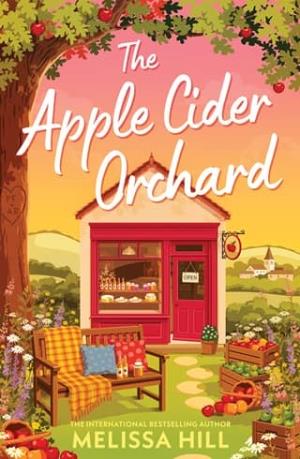
The Apple Cider Orchard (Golden Valley #1)
Chapter 1
Molly Harris hadn’t cried at her own grandmother’s funeral, but she very nearly did over a broken conference call.
The screen froze just as the client’s face sharpened into interest – not exactly enthusiasm, but close enough that she felt the shift like a change in air pressure – until the damn spinning wheel appeared. Buffering. Silence.
‘Molly?’ Her boss frowned from the far end of the boardroom table.
She didn’t look away from her laptop. ‘One sec,’ she said crisply, fingers already flying, toggling between tabs, rerouting the call through her phone hotspot. Her pulse thudded in her ears, but her voice stayed level.
Calm was her currency.
The Manhattan skyline stretched behind them in plate-glass perfection, the late afternoon sun slanting between steel towers.
Forty-two floors up, the city hummed – traffic horns muted, helicopters slicing the air like clockwork – but inside the conference room there was only the low buzz of impatience and the faint, traitorous wheeze of Molly’s own breath.
She fixed the situation in less than twenty seconds.
‘I’m back,’ she purred seamlessly to the client. ‘As I was saying … we’re not just selling a product. We’re selling a feeling. Belonging. Trust.’
Out of the corner of her eye she saw her boss lean back, arms crossed, watching her the way one might observe a high-wire act: impressed but alert to the possibility of a fall.
Molly clicked to the next slide, her reflection briefly ghosting across the glossy screen; dark hair pulled into a ponytail, tailored blazer, lipstick just bold enough to mean business, pale skin that hadn’t seen the sun in some time.
She talked them through the campaign with practiced ease: market data, emotional hooks, storytelling arcs. She spoke about warmth and connection as if she hadn’t spent the last six nights leaving the office after nine, eating takeaway salads at her desk while the cleaning crew worked around her.
When it was over, there was a beat of silence. Then applause; polite, corporate, but real.
‘Well done,’ the client said. ‘This feels … human.’
Molly smiled. She always smiled at that line.
By the time the meeting ended, her adrenaline had nowhere to go. It pooled in her chest, sharp and restless, even as her colleagues filed out with murmured congratulations. Her assistant hovered in the doorway.
‘You okay?’ Jenna asked, lowering her voice.
‘I’m great,’ Molly chirped automatically, already packing up her laptop. ‘Could you send the revised deck to legal and schedule a follow-up for early next week?’
Jenna hesitated. ‘Molly … it’s five p.m. On Friday.’
She blinked, genuinely surprised. ‘Right,’ she said after a moment. ‘Of course.’
Molly returned to her office; glass walls, minimalist desk, a single framed photo on the credenza behind her. In it, her beloved grandmother, the woman who’d raised her, sat in a messy kitchen, flour on her hands, laughing at something just out of frame.
Her phone buzzed.
Cole.
She ignored it. It buzzed again. Molly sighed and picked up. ‘Hey,’ she said, already scrolling through emails with her free hand.
‘Do you know what day it is?’ her brother asked.
‘Yes,’ she said. ‘A disaster, unless I get three more approvals before close of business.’
‘It’s been a year, Mol.’
Her fingers stilled. She leaned back in her chair, the city sprawling below her like a map she knew by heart.
‘I know,’ she said quietly.
Though she’d been trying her utmost to forget.
There was a pause on the line – the kind that meant her brother was choosing his next words carefully, which always unnerved her more than his usual bluntness.
‘You promised,’ he said.
Molly closed her eyes. ‘I haven’t forgotten,’ she assured him.
‘Yet you haven’t done anything to make it happen.’
‘I’ve been busy.’
‘Busy isn’t a reason,’ Cole said gently. ‘It’s an excuse.’
She stood abruptly, crossing to the window. The sun was dipping now, gilding the city in gold. It was beautiful. It always was. And yet today, it failed to move her.
‘I’ll get to it,’ Molly said, sharper than she meant to. ‘I have a lot on right now.’
‘Like what?’ her brother asked. ‘You barely take weekends off anymore.’
She didn’t answer.
When the call ended, the silence pressed in. Molly returned to her desk, reached for her coffee, cold now, but she took a sip anyway. Her hand shook slightly.
Her boss, Bruno, appeared in the doorway not ten minutes later.
‘Harris,’ he said, tone carefully neutral. ‘Walk with me.’
They didn’t make it far; just to the quiet seating area by the windows, but she felt the shift immediately. This wasn’t praise. This was concern.
‘You’re one of the best we have, Molly,’ he said. ‘But you’re running on fumes.’
‘I’m fine,’ she said, a reflex.
‘No vacation this year, no time off, nothing.’ Bruno shook his head. ‘You’re exhausted, pushing yourself to oblivion since your grandmother’s passing. And if I can see it, so can everyone else.’
She swallowed.
‘I’m mandating a sabbatical,’ he continued. ‘Holiday campaigns are all locked-in, so the pressure’s off. A month. Starting now.’
‘What?’ Her composure cracked. ‘I can’t—’
‘You can,’ he said firmly. ‘And you will.’
The city blurred beyond the glass. A whole month. No meetings. No seasonal campaigns. No carefully curated urgency.
Just … space. Time to think. But worse, to grieve.
When she finally left the office that evening, the lobby lights were dimmed and the security guard nodded sympathetically. Outside, the city breathed; warm pavements and food carts, laughter drifting from bars. Life happening regardless.
Molly stood on the sidewalk, laptop case in hand and for the first time in longer than she could remember, she had nowhere she needed to be.
Four weeks’ leave. The thought was both terrifying and, somewhere in a corner of her mind she rarely acknowledged, faintly appealing too. A month without deadlines, without the constant pressure to perform, to exceed. To … forget.
Across the street, a man was selling roasted chestnuts from a steel cart, the air threaded with smoke and sweetness. Somewhere nearby, a saxophone street-performer was playing slow, deliberate notes that echoed off the buildings.
Molly exhaled.
She hadn’t noticed autumn arriving. In her line of work, it appeared in spring in the form of advanced branding decks, pumpkin-spiced product tie-ins and color palettes approved months in advance. Fall, to her, was a concept. A campaign.
But this was the real thing. She bent and picked up a leaf, its surface dry and fragile, veins standing out like a map. She turned it between her fingers, vaguely embarrassed by the gesture, as if doing something indulgent.
And all of a sudden her grandmother’s voice appeared in her head.
‘Nature never rushes,’ Aoife had told her in the small backyard behind their Brooklyn house, hands buried in the soil. ‘Yet everything still gets done.’
Molly closed her eyes. She could see it as clearly as if she were there again: her beloved nan planting a rosebush in their backyard, apron smudged with dirt, hair escaping its pins.
Molly had been so young then, impatient, tapping her foot while waiting to be driven somewhere, a practice or lesson, she couldn’t recall. ‘But it’s so tiny,’ she’d commented. ‘How long will it take to grow?’
Her grandmother had smiled at her then, that knowing, sideways smile. ‘Anything that matters always takes time.’