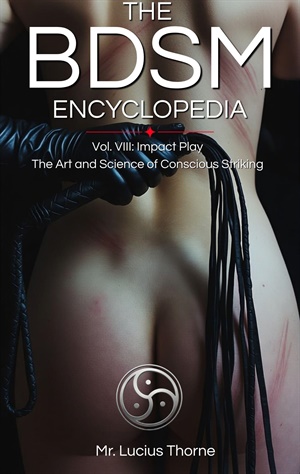
The BDSM Encyclopedia Volume VIII
Consent Changes Everything
The same physical act is two completely different things depending on one condition—and understanding why is where genuine practice begins
“Outside of consent, the strike is assault. Inside consent, the same physical act becomes something the body has been waiting to receive.”
— Mr. Lucius Thorne
The Transformation That Consent Performs
A hand lands hard on someone’s body. In one context, this is assault—a violation, unwanted, causing harm.
In another context, with full informed consent between adults, it is something categorically different: a deliberate exchange that both parties have chosen, within a framework of care and attentiveness, producing experiences that cannot be obtained any other way.
The transformation consent performs is not a legal technicality.
It is not merely social permission for what would otherwise be wrong.
It is a fundamental change in the nature of the experience—for both the person delivering and the person receiving the strike.
This is the paradox at the center of impact play and the first thing every practitioner must understand at a depth beyond intellectual assent.
The Receiver who has genuinely consented to impact is not merely tolerating something they dislike for the Striker’s benefit.
They are choosing it. Actively. With full knowledge of what they are choosing.
The surrender involved in that choice—the willingness to receive force from another person, to be physically acted upon in a way that would be threatening or harmful in any other context—is itself a significant act.
The Striker who understands this treats the Receiver’s willingness not as permission to proceed but as a gift that obligates a specific quality of response.
That quality of response is what this volume is about.
Not the technique alone—though technique matters enormously and is covered in depth.
The complete orientation that genuine impact practice requires: the anatomical knowledge that keeps the Receiver safe, the attentiveness that keeps the encounter honest, and the understanding of what is actually happening psychologically for both people throughout.
―― ? ――
The Range of the Practice
Impact play spans an enormous range of intensity, implement, and purpose.
At the accessible end: light hand spanking, a soft flogger applied with minimal force, a crop tap that produces more sound than sensation.
At the technically demanding end: heavy caning, singletail work that requires years of solo practice before it can safely be applied to a person, high-intensity flogging with weighted implements that demand continuous anatomical awareness to deploy without injury.
This range is not a hierarchy with more intense at the top.
The practitioner who applies a light hand spank with genuine attentiveness and precise calibration to what the Receiver needs in this moment is doing something more complete and more skilled than the practitioner who delivers impressive cane strokes without reading what they are actually producing.
Intensity is a tool. Skill is knowing when and how to use it.
This volume covers the full range. The early chapters establish the foundation that every level of practice requires.
The implement chapters address each category with the technical depth necessary for safe and effective use.
The safety chapters are not optional regardless of intensity level—the anatomy of the person you are striking is the same whether you are using an open hand or a cane, and the structures you must protect are present in every encounter.
―― ? ――
Who This Volume Is For
This volume is written for practitioners who are serious about impact play.
Not practitioners who are already expert—many beginners read this volume, and it is designed to serve them.
But practitioners who are willing to do the full work: to read the anatomy before touching anyone, to understand why the warm-up is not optional, to examine their own development honestly rather than assuming competence because they have been doing this for a few years.
If you are looking for a shortcut past the safety chapters, this is not your book. The people who receive what you deliver are not practice material. They are trusting you with their bodies. That trust requires the preparation this volume asks for.