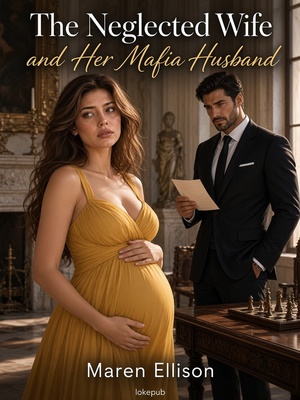
The Neglected Wife and Her Mafia Husband
Prologue
Cat
The first time I see Massimo Moretti in the flesh, I want to throw my espresso in his face.
Not because he’s done anything yet, he hasn’t even looked at me, but because nobody warned me.
Nobody sat me down and said, By the way, Caterina, the man you’re being sold to in exchange for thirty years of peace is going to be the most beautiful thing you’ve ever seen, and you’re going to resent him for it immediately.
The restaurant is closed for us tonight. Private room, heavy curtains, the kind of old-world elegance that costs more than most people make in a year. There’s enough security outside to start a small war, which is ironic, given we’re here to end one.
My papà sits at the head of the table, Salvatore Romano, flown in from Italy, one leg and one cane and zero illusions about what his daughter is worth in a negotiation.
My mother Rosa sits beside him, elegant and watchful, the woman who’s spent thirty years keeping our family fed and functioning while the men played at war.
Enzo stands at Papà’s shoulder, my older brother, the working don.
Across from them: Aldo Moretti, gray and visibly dying, making peace his final act.
And beside Aldo, the heir. The enemy prince.
The man whose family took my father’s leg.
He’s checking his watch again. Third time in ten minutes.
“Your espresso’s getting cold,” I say, just to see if he’ll react.
“I don’t drink espresso.”
“Then why is it in front of you?”
“Someone put it there. I’m not obligated to drink things I didn’t ask for.”
“Charming. Really. The famous Moretti hospitality on full display.”
“I wasn’t aware hospitality was required.” He checks his watch a fourth time, and I want to rip it off his wrist. “This is a contract negotiation, not a dinner party.”
“You could at least look at me when you’re being dismissive. Basic eye contact. Common courtesy.”
That gets a reaction. His eyes flick to mine, blue on blue, sharp and assessing, and his mouth does something that might be a smile on a less irritating man.
“There,” he says flatly. “Eye contact. Satisfied?”
“Thrilled. I was told to expect the famous Moretti charm, but I’m beginning to think it stayed in the car.”
My mother makes a sound that might be a suppressed laugh. Massimo’s eyebrow rises.
“Good. Then we can stop pretending this is a social call.”
“And acknowledge what it actually is?”
“Exactly.”
“Which is what, in your expert opinion? Since you clearly have thoughts.”
He leans back, arms crossed, finally giving me his full attention. The size of him is absurd, broad shoulders, ink disappearing under his cuffs, hands that could crush mine without effort. The stillness is worse. Like a predator who doesn’t need to move because his prey will come to him eventually.
“A transaction,” he says. “Your family needs peace. Mine needs legitimacy. You’re the currency being exchanged. I’m the account receiving it. The wedding’s in a week. What would charm accomplish between now and then?”
“I don’t know. Make the next three years less miserable?”
“Misery is a choice,” he says, flat, not looking up from the paperwork.
“Is that what you tell yourself? When you’re being deliberately unpleasant?”
“I’m not being deliberately anything. I’m being efficient.”
“You’re being an ass.”
His eyebrow rises. “Am I?”
“Yes. A cold, condescending, watch-checking ass.”
“And you’re being naive if you think a few pleasant conversations will change what this is.”
“What this is,” I repeat. “You keep saying that. Like you’ve already decided.”
“Haven’t you?”
I set my espresso down harder than necessary. “You know, I’ve heard stories about you my whole life. The enemy prince. The body count. The man who-”
“Who took your father’s leg?” He doesn’t flinch. “That wasn’t me personally.”
“Your family, then. Your soldiers. Your war.”
“Fair enough. And your family killed my uncle. Your soldiers burned three of our warehouses. Your war too.”
“So we’re even?”
“We’re not even close to even. That’s why we’re here.” He gestures at the room, the fathers conferring, the documents spread like a battle map. “Thirty years of blood, and the best solution anyone could find was to put the two of us in a room and hope we don’t kill each other.”
“Is that likely? The killing each other part?”
“Ask me again in a year.”
I should be offended. Instead, I feel the corner of my mouth twitch.
“Was that a joke?”
“It was an observation.”
“It was almost funny. Don’t worry, I won’t tell anyone.”
His mouth moves, not into a smile, but toward the ghost of one, killed before it can live. “Your secret’s safe.”
“Caterina. Massimo.” My father’s cane taps twice on the marble. “Come here.”
We rise together and cross to the main table.
“Sit,” Papà says. “Both of you.”
We sit. Aldo Moretti leans forward, and his breath rattles like loose change.
“The terms,” Aldo says. “Three years minimum. The donna seated at every alliance table, her seat written into the treaty itself. Both families honor the marriage as binding.”
“The war ends the day she says yes.” Papà looks at me, and there’s something in his eyes I’ve never seen before. Regret, maybe. Or pride. “That’s what this costs, figlia mia. That’s what your yes is worth.”
“And if I say no?”
“Then we bury more sons.” Aldo’s voice is quiet. “More daughters. More of everyone until there’s no one left to bury.”
“I have conditions,” I say.
The table goes still.
“Caterina-” Enzo starts.
“No. If I’m doing this, I’m doing it with my eyes open.” I turn to face Massimo directly. “My seat at alliance tables isn’t decorative. I actually sit there. I actually participate. I’m not a prop.”
Massimo glances at his father. Aldo nods once.
“Agreed,” Massimo says.
“I’m not finished. I want access to information about decisions that affect me.
I want to be consulted, not informed after the fact.
And I want it understood that I’m choosing this.
I’m not being sold or traded or handed off like a clause in a contract.
This is mine to decide, and I’ve decided. Understood?”
“Understood.”
“Say it back to me.”
He holds my gaze without blinking. “You’re choosing this. Your decision. Your agency. I understand completely. Anything else?”
“One more thing.” I lean forward. “I want to know why you’re dying.”
The silence that follows is absolute.
“Caterina!” Enzo hisses.
“No, she’s right to ask.” Aldo waves a hand weakly. “Pancreatic. Stage four. Six months if I’m lucky, less if I’m not. This peace is my last act, Caterina Romano. I’m asking you to make it matter.”
I look at the old man, my enemy, my father-in-law, a dying stranger asking me to carry his legacy.
“I’ll make it matter,” I say quietly. “I promise.”
“Then we’re agreed?” Papà asks.
I look at the documents. At my father. At the man I’m supposed to marry, who’s watching me with an expression I can’t quite read.
“We’re agreed,” I say. “I’m saying yes.”
Before I sign, the families’ lawyer takes me through the annex: no heir within two years, divided loyalties, conduct unbecoming.
Each is grounds to request a hearing before both families, not a license for Max to discard me.
I make him underline that distinction. Enzo keeps my signed copy until I can put it somewhere secure.
Lucia Moretti stands behind Aldo’s chair while the ink dries.
She has said almost nothing all night. When I offer her the pen, she leaves it in my hand.
“Your father has always confused giving things away with making peace,” she tells Max.
Aldo closes his fingers over the treaty before she can touch it.
Aldo turns to his son. “When you take the Romano bride, the old guard confirms you as don. No more delays, no more challenges. You understand what that means?”
Max meets his father’s eyes without flinching. “I understand. I accept.”
One week later, in early December, I marry Massimo Moretti in a cathedral full of people who’ve spent thirty years killing each other.
The ceremony is theater, him in black, me in white, both of us reciting vows we didn’t write to a God neither family has obeyed in generations. My bouquet is ranunculus and white roses, chosen by someone I’ve never met. The flowers tremble in my hands.
The reception is endless. By the time we reach the bridal suite, my feet ache and my face hurts from smiling at strangers who’d happily slit my throat if the alliance failed.
Massimo closes the door behind us, and the silence is deafening.
“So,” I say, setting the bouquet on the dresser. The ranunculus petals are already wilting. “Here we are.”
“Here we are.”
“Alone at last. Every girl’s dream.”
“Is sarcasm your default setting, or do you have others?”
“I have several settings. Sarcasm is just the one I use when I’m nervous and standing in a hotel room with a man I’ve known for seven days.”
I turn from the dresser and take the measure of the man I married a few hours ago, this stranger whose ring still sits cold on my finger.
“Six, technically. We didn’t speak on day four.”
“You were avoiding me on day four.”
“I was handling a crisis.”
He gives me the wary whole of himself, arms crossed, and I catalog him the way I catalog anything I don’t yet know how to survive.
“You were hiding in your father’s study pretending to handle a crisis.”
“How do you know I was pretending?”
“Because the crisis was a catering dispute, and you don’t strike me as someone who cares deeply about whether we serve salmon or chicken.”
He almost smiles. Almost. “It was an important dispute.”
“It was an excuse. You didn’t want to have lunch with me.”
“I didn’t know what to say to you.”
“You could have started with ‘hello’ and worked your way up.”
“Hello seems inadequate for the woman I’m about to spend the rest of my life with.”
There’s something almost boyish under the arrogance, and I hate how much I want to see more of it.
“And yet you’ve managed to avoid saying it for an entire week.”
“Hello, Caterina.”
“Hello, Massimo. See? That wasn’t so hard.”