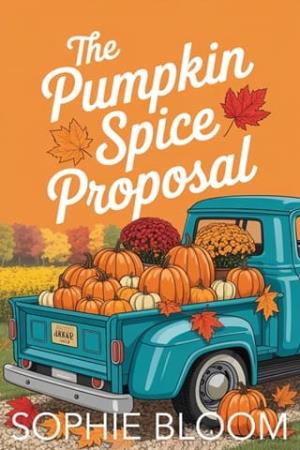
The Pumpkin Spice Proposal (Happily Ever After Lane #1)
1. Lily
Lily
Late September
I survived most of Sunday dinner on a steady diet of mashed potatoes and tactical evasion. At my parents’ house, Sunday dinner wasn’t just a meal; it was a team sport where the objective was to pin down my love life and perform a full, loving, and very public autopsy on it.
“Did you hear, Lily? Father Michael said Gary Novak’s boy is back in town,” my mother, Margaret, announced over the clatter of silverware. She speared a green bean with the precision of a surgeon. “He’s a dentist. Very stable.”
I offered a noncommittal hum and shoveled a spoonful of potatoes into my mouth, hoping the sheer volume of carbs would form a protective wall against further inquiries.
Across the table, my brother, Ben, caught my eye and gave me a look that was one part sympathy, two parts ‘you’re on your own, sis.’ Traitor.
“A dentist, Margie? That’s nice,” my Aunt Carol chimed in, her voice dripping with the kind of enthusiasm usually reserved for lottery wins. “Good with his hands, I bet.”
A hot flush crept up my neck, a preview of the full-body cringe to come.
My family operated on the firm belief that my single status was a community problem, a puzzle for them to solve with a rotating cast of eligible bachelors they’d cataloged from church bulletins and grocery store run-ins.
They meant well. Their love was a warm, smothering, hand-knitted afghan of good intentions, and it was threatening to suffocate me.
“I’m really busy with the shop,” I said, aiming for breezy and landing somewhere near frantic. “The Pumpkin Ridge Festival is just a few weeks away, and I’m drowning in orders for mums and those little gourds that look like swans.”
“You can’t build a life on swan-shaped gourds, Lillian,” she said, her tone gentle but firm. It was the same tone she used when reminding me to get my oil changed or go to confession.
My father, bless his quiet heart, attempted a diversion. “The roast is excellent, dear. Really top-notch.”
It was a valiant effort, but it was like trying to stop a freight train with a well-placed compliment.
My seven-year-old daughter, Olivia, seated beside me, chose that moment to contribute. “Mommy’s life is built on flowers and glitter,” she said matter-of-factly, not looking up from her mission to construct a potato fortress around her peas. “And me.”
A wave of warmth, potent as mulled cider, washed through me. I squeezed her knee under the table. See? My life was perfectly full.
“Of course, sweetheart,” my mother cooed, but her focus snapped right back to me. “But wouldn’t it be nice to have someone help with all that … glitter?”
Before I could formulate a response that wasn’t just a primal scream, the doorbell rang.
A sudden, expectant hush fell over the dining room.
Every head except Olivia’s and mine turned toward the front hall.
A slow, creeping dread began to bloom in my stomach.
This was not a normal Sunday family dinner occurrence.
We were a ‘walk-in-through-the-back-door’ kind of family.
The doorbell was reserved for package deliveries and, apparently, ambushes.
“I’ll get it!” my Uncle Mike declared, already halfway out of his chair with suspicious speed.
My mother fussed with her napkin, a faint, hopeful blush on her cheeks. Ben leaned back in his chair, folding his arms. The look he shot me now was pure, uncut amusement. He knew. Of course, he knew.
I felt like an animal in a nature documentary, the one all by itself, who hasn’t noticed the predator circling.
A moment later, Uncle Mike returned, clapping a man on the shoulder. The man was… fine. He was aggressively, generically fine. Khakis, a blue button-down, a navy sweater vest, and a nervous smile that didn’t quite reach his eyes. He was holding a pumpkin pie like it was a shield.
“Everyone, this is Todd,” my mother announced, her voice trembling with triumph. “He’s a friend of Gary Novak’s. I ran into him at the market and told him we always have room for one more at Sunday dinner.”
The lie was so audacious, so beautifully crafted, that I could almost admire it. Todd looked around the table of a dozen Sage family members, all staring at him, his smile faltering. He looked as ambushed as I felt.
“I, uh, I hope I’m not interrupting,” he stammered, holding out the pie. The scent of cinnamon and nutmeg wafted from the golden crust, mingling with the already-overwhelming aroma of my mother’s feast.
“Nonsense!” my mother chirped, taking the offering. “Lily, make some room for Todd.”
This was it. My personal circle of hell, complete with a potluck dessert.
Todd was squeezed into a chair beside me, the scent of his generic cologne warring with the cozy aroma of my mother’s apple crumble, which was already on the sideboard.
My family, their matchmaking mission in full swing, launched a volley of painfully cheerful questions at him.
What did he do? (Financial planning.) Where did he live?
(A condo on the other side of town.) Was he allergic to cats, gluten, or commitment? (No, no, and a panicked ‘not at all!’)
I sat there, a polite smile plastered on my face, feeling my soul slowly vacate my body.
I could feel their collective will pressing in, trying to smoosh me and this poor, unsuspecting financial planner together like two halves of a mismatched Tupperware set.
I just had to get through this. Survive the apple crumble and Todd’s pie, then bundle Olivia into the car and escape back to my quiet, man-free existence.
My mother cleared her throat, her gaze flicking between me and Todd. “Lily is so creative,” she said to him, as if I weren’t present. “She owns that lovely flower shop on the square. Sage & Bloom.”
“Oh, that’s great,” Todd said, turning to me. “I’m not much of a flower guy. Allergies.” He gave a little sniffle for emphasis.
Perfect. Just perfect.
“But I do appreciate … botany,” he added, a desperate attempt to find common ground.
The conversation stalled. The silence was thick, heavy, and full of my mother’s frantic, telepathic commands for me to say something interesting, for the love of God.
I opened my mouth, ready to ask a scintillating question about mutual funds, when Olivia, who had been quietly observing the entire exchange, put her fork down with a small, decisive clink.
She looked at Todd. She looked at me. Then she looked at her grandmother.
In the clear, piping voice unique to a seven-year-old with zero filter, she announced to the silent, waiting table, “Mommy doesn’t even like him.”
Time didn’t just stop. It shattered.
Todd’s face went from pale to a fascinating shade of mottled red. My father coughed into his napkin, a noise that sounded suspiciously like a laugh. Aunt Carol’s jaw hung open. Ben lost his battle with composure completely, his shoulders shaking with silent laughter.
But the most glorious sight was my mother.
Her face was a frozen mask of horror, her smile still plastered on but her eyes wide with the shock of a general whose secret weapon had just detonated in her own command tent.
Her fingers instinctively went to her cross necklace, the way they always did when she was praying for patience.
The silence that followed stretched for an eternity. It was so profound I could hear the faint hum of the refrigerator and the distant whistle of wind through the maple trees outside.
Olivia, oblivious to the carnage she had wrought, simply picked up her fork. “Can I have a piece of crumble now?” she asked.
An hour later, tucked into the passenger seat of my slightly beat-up station wagon, Olivia was humming to herself, her small hand resting on my arm.
The streetlights of Happily Ever After Lane—yes, that was its real name—cast a warm, golden glow over our little town.
Fallen leaves danced across the windshield, and I could hear them crunching under our tires as we drove the familiar route home.
The escape had been a blur of mumbled apologies and my mother’s hissed promises that Olivia “didn’t mean it that way. ”
Poor Todd had practically vaporized.
The cool evening air carried the scent of woodsmoke from someone’s fireplace, and I rolled down my window just enough to let it mingle with the lingering warmth of the car’s heater. This was what I loved about fall—the way it wrapped you in comfort, like pulling on your favorite sweater.
Back in our own little cottage across town, the chaos of my parents’ house felt a world away.
Here, it was quiet and soft around the edges.
The air smelled of potting soil and the cinnamon-scented candles I couldn’t resist lighting the second the calendar flipped to September.
A bouquet of russet mums from the shop sat on the kitchen counter, their petals catching the amber light.
I tucked Olivia into her bed, a nest of unicorn pillows and sparkly blankets that she’d arranged with the precision of an interior designer.
She looked up at me, her eyes sleepy. “Was that man your boyfriend?”
“No, sweetie. He was just … a man.”
“Okay.” She burrowed deeper under her covers. “He was boring.”
I laughed, a real, unforced sound that felt like shaking off a heavy coat. “Yeah. He was.”
“You don’t need a boring boyfriend,” she mumbled, her eyes drifting shut. “You have me.”
My heart did a painful, happy clench. I kissed her forehead, smoothing her hair back. “I know. You’re all I need.”
After she was asleep, I padded back to the living room and stood there for a long moment, just breathing it all in.
I looked at the half-finished knitting project on the couch—a scarf in autumn colors that I’d probably never complete.
The stack of invoices on the little desk in the corner, weighted down by a ceramic pumpkin Olivia had painted last year.
The colorful chaos of her art projects taped to the fridge.
The soft throw pillows I’d arranged and rearranged until they looked just right.
It wasn’t perfect. It was a constant juggle of bills and school drop-offs and temperamental floral suppliers. But it was ours. I had built this life, this safe, happy little world for my daughter and me, with my own two hands. And it was enough. More than enough.
The humiliation of the evening began to fade, replaced by something steadier.
A cool, hard clarity settled in my chest like warm cider on a cold night.
I was done. Done with the setups, done with the apologetic smiles, done with trying to fit into the couple-shaped hole my family thought was empty in my life.
I didn’t need a dentist or a financial planner or anyone else to validate my existence.
I sank into my favorite armchair, pulling a soft wool throw around my shoulders.
The house was quiet except for the gentle tick of the silly cat clock in the hallway and the distant hum of the refrigerator.
Outside, the wind rustled through the oak tree by my bedroom window, and somewhere down the street, a dog barked once before settling back into the peaceful night.
My life wasn’t a problem to be solved. It was full. It was happy. It was mine.
I took a deep breath, letting the scent of cinnamon and the lingering warmth of a day well-survived fill my lungs. I was fine on my own. I would prove to all of them—and maybe, a little bit, to myself—that I could build a perfect life for us, no man required.
Of course, knowing my family, they wouldn’t give up that easily. My mother still had a mental Rolodex of “eligible” men, and Ben had mentioned something about his mysterious best friend—some hotshot who’d just come back to town—getting dragged into Sunday dinners soon enough.
I shook the thought away and reached for my knitting, determined to enjoy the quiet. My life wasn’t perfect, but it was ours. And sitting here in my cozy living room, surrounded by the gentle chaos of our little world, I felt nothing but grateful.
At least, that’s what I told myself as I tried to ignore the tiny voice asking why I suddenly cared who Ben’s best friend might be.