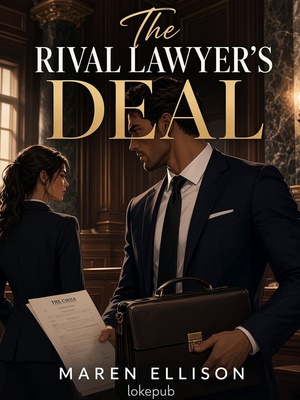
The Rival Lawyer's Deal
1. Abigail
ABIGAIL
Breathe. Just breathe.
I’ve got this…I think.
And I’m on time.
Barely.
I clutch the case files to my chest and step into The Belmont for the first time.
It’s Alton Hills’ most exclusive office building, maybe even the most exclusive on the entire West Coast. Sleek glass and steel define its exterior, but the interior surprises me.
Natural wood accents and lush living walls filled with greenery and delicate white blossoms give it a calm, almost serene elegance.
I head toward the elevators, trying to project the easy confidence of someone who belongs here.
Not someone who stayed up until midnight memorizing the floor plan.
The line is long and I take a slow, steadying breath.
I can do this.
Neil, my boss, might have his doubts. But I don’t.
Well. Mostly don’t.
The moment I saw Will Carter was my opposing counsel, I almost bailed.
Actually, Neil, funny story. Maybe I’m not cut out for high-stakes cases after all.
He knows I’m out of my depth. But I’ve poured months into this case.
It’s solid. An injury claim after a car accident, the kind insurance companies love to drag out until the victim gives up.
But to me, it’s not just another case. Up until now, I’ve handled smaller stuff.
Traffic violations, family law, the occasional wrongful termination.
This case is different. These are real stakes.
Today changes everything.
I’m stepping into the big leagues. And why shouldn’t I? I’ve been practicing for nine years. I’m no rookie. But Will Carter is about the same age, with the same years of experience, and somehow, he built one of the most respected firms in the country. Meanwhile, I’ve been playing it safe.
Can I really do this?
The line creeps forward. Twenty people ahead of me. Still enough time. Confidence is key today, which is why I’m cutting it so close. I changed my outfit six times before landing on a fitted white sheath dress. It’s structured, professional, and most importantly, my lucky dress.
God knows I’ll need it.
I shouldn’t have looked into Will. That was my mistake.
Turns out, there is such a thing as being too prepared.
He operates in a completely different stratosphere.
I’d heard stories—whispers in courthouse corridors, headlines praising his victories, and Neil’s warnings: he’s ruthless, cunning and willing to do whatever it takes.
I want to believe the rumors are exaggerated.
Will’s a legend, and legends tend to grow with the telling.
But last night’s research confirmed everything. He’s not just good. He doesn’t lose.
The line lurches forward. My grip tightens around the files, the plastic folders slick beneath my palms. I glance back. The crowd has thickened, impatient faces shifting and sighing.
That’s when I see her.
A little girl in a baby-blue dress patterned with tiny flowers stands alone, just off to the side.
She can’t be more than five. Her shoulders are slumped, and she’s staring at the floor.
The ping of an arriving elevator pulls me back.
People farther up the line file through the open doors.
Mine is next. But when I glance at the girl again, she’s rubbing at her face with both hands.
Oh no. Is she crying?
Another ding. My elevator has arrived.
Tucking the files under my arm, I step out of line and hurry toward her.
I crouch in front of her and soften my voice. “Are you lost?”
She nods. Then, like she’s been holding it in all this time, the tears begin to fall.
My chest tightens. “It’s okay. I’ll help you.” I give her shoulder a gentle squeeze. “Who are you here with?”
Between shaky breaths, she describes her dad.
Tall, dark hair, blue-striped shirt. Not exactly helpful, considering half the men in the building match that description.
I scan the crowded lobby, hoping for someone looking around in panic.
But everyone is rushing past with their heads down, eyes on their phones.
No frantic father in sight. Does this place have security?
A front desk? I glance around again. No uniforms, no help kiosk.
Just a stream of suits and briefcases. Maybe there’s a loudspeaker?
My eyes jump to the ceiling, but it’s only recessed lights and smoke detectors.
“There you are.” A man reaches for her hand and starts leading her toward the exit without even looking at me. The girl glances back and gives me a quick, tear-streaked smile before the crowd swallows them both.
I exhale. Then I drag myself to the back of the line, which is now twice as long.
I’m only four minutes late. In the grand scheme of things, what’s four minutes?
The elevator doors slide open on the thirty-fourth floor, and for a heartbeat, I hesitate.
Thank God I agreed to meet here instead of my office, with its dated furniture and carpet that hasn’t seen an update since dial-up was revolutionary.
The Carter & Ross office mirrors the lobby.
Floor-to-ceiling glass, a monochrome blend of charcoal and warm browns, and plants.
They’re everywhere. Not the wilted or plastic kind you find in waiting rooms, but lush, thriving greenery that probably has its own full-time caretaker.
The receptionist glances up as I approach. She’s effortlessly beautiful, the kind of woman who could’ve stepped straight out of a Scandinavian furniture catalog. Her smile is polished but disinterested. I tell her my name.
“Meeting room three,” she says, flicking a manicured hand to the right. I follow her vague gesture down the hall, my heels clicking against the dark hardwood. Each step tightens the knot in my stomach. When I reach the door, I knock three times and step inside before doubt can catch up to me.
The air is colder here. Not the dry, artificial chill of overworked AC, but something deeper. The kind of cold that slips under your skin and lingers.
My client, Donovan Jones, sits in his wheelchair on one side of a monstrous desk—glossy, black, and absurdly oversized.
The Pinnacle Health executives face him in sterile uniformity.
Three gray suits, three silver heads, three identically stony expressions.
They all look at me, and then to the man by the window.
Will Carter stands by the window, hands resting on his hips as he looks out over the city.
He has the relaxed posture of a man who knows he belongs exactly where he is.
When he turns, his dark eyes lock onto mine.
They are assessing, annoyed, as if I’ve personally inconvenienced him. And I suppose I have.
My stomach twists.
I’ve seen his photo in legal journals and firm profiles, but he’s never at the usual networking events.
In person, he’s every bit as polished as his reputation suggests: sharp jawline, immaculately styled dark hair, a navy suit tailored to perfection.
Handsome, yes, but that’s not what makes me pause.
It’s the way he owns the room, like the walls themselves shrink back to give him space.
And right now, his attention is fixed on me.
“Miss Reed. How kind of you to grace us with your presence,” Will says, the edge in his voice slicing through the room. He flicks a hand toward the empty seat beside Donovan. Every head swivels between us.
“Sorry. There was a lost girl in the lobby—” I start.
“Save the stories.” He cuts me off like I’m a misbehaving intern. Stories? Yes, I’m late. But I’m not making up stories.
I sit beside Donovan while Will takes his place at the head of the table. Of course that’s where he sits. My jaw tightens. He doesn’t even glance at his clients, just flicks a hand and says, “Let’s settle this today,” like we’re discussing a parking ticket instead of someone’s life.
I get the impression you could take this man down a peg or twelve, and he’d still find a way to look down on everyone around him. It’s reckless, maybe, but someone has to cut him down to size.
“I don’t believe we’ve met,” I say, extending my hand. “You are?”
His handshake is warm and firm. His smirk is sharper. “Will Carter.” His eyes gleam. We both know I know exactly who he is.
I force a tight smile. So much for knocking him down a peg.
I pull the files from my case with practiced calm.
Out of the corner of my eye, Donovan lifts his empty glass, takes a pretend sip, and sets it down with a small tremor.
Stay steady. We’ve been through this. Donovan needs to sit still, stay quiet, and let me do the talking. We can’t show any weakness.
“This is Martin Scowler, Martin Green, and Martin Long,” Will says, gesturing toward the trio from Pinnacle Health.
I duck my head under the pretense of organizing papers, hiding a smirk. Three Martins? It’s just absurd enough to break my focus for a second. Pull it together. Negotiation is where I thrive. If I play this right, we walk out of here with a deal.
Will flips open his leather folio with a practiced flick. “We’ve been keeping Mr. Jones company while waiting for you. He’s looking well.”
The Martins nod like puppets on a string. Donovan, pale and still carrying the gauntness of a man recovering from being hit by a car, looks anything but fine. But that’s the game, isn’t it? Minimize the damage. Downplay the suffering.
“Let’s talk numbers,” Will says.
“No.” I tap my folder. “We start with the medical report—”
“We’ve read it.”
“—specifically Dr. Fitzgerald’s assessment that Mr. Jones can no longer—”
“Skip the theatrics.” Will scrawls a figure on his notepad and slides it toward me.
$2,000,000.
“That’s insulting,” I say. “Double it.”
Will leans toward Donovan, voice slick with false sympathy.
“Sign today, or we reassess and that number might shrink.” Of course he thinks he can scare us into accepting a payout so low it borders on insulting.
But the numbers don’t lie. Donovan’s lifetime earnings would have topped six million.
We want three and a half. Not a windfall.
Just fairness. It’s the bare minimum he needs to keep his home, support his family, and live in a city like Alton Hills without being priced out of his own life.
That’s not too much to ask. It’s what’s right.
“Four.” I level my gaze at the Martins. “Or we take this to court, and I’ll drag you for six. Not to mention the headlines. Pinnacle Health screws over family.”
“It’s two,” Will fires back. “Or we let a judge decide, and you’ll walk away with half a mil. If you’re lucky.”
That’s a stretch. No judge would go below three, but I’m pushing for four. That’s how this works. Ask for three and a half, they’ll gut you down to two. I’d love to just name a fair number and shake hands, but this isn’t that kind of game.
“Can we talk?” Donovan cuts in.
Damn it, Donovan. Not now.
Will can’t suppress a smug grin. “Make it quick,” he says. He and the Martins spill out of the room, no doubt already celebrating their victory. But they haven’t won yet.
“Two million isn’t so bad,” Donovan says. Except it is that bad. That extra $1.5 million? It’s the difference between scraping by, downsizing, fleeing the city, pinching every penny, or breathing easy. I can’t let him fold.
“We can get three and a half. Think about Emily. She’d never have to worry again. None of this is your fault, and you shouldn’t have to pay because some executive wants a prettier bottom line. Our case is solid. This is intimidation, plain and simple. And we’re not falling—”
It hits me. Will knows he has a losing case. He must. That’s why he’s putting on this performance. He has nothing else.
Maybe I can do this.
Maybe, I can win.
“…for it,” I finish.
Donovan hesitates. But then I see it. The flicker in his eyes. He wants to believe me.
“Alright,” he says.
“Neutral face. No reaction. Say nothing,” I remind him. We went over this already, but it’s hard to stay composed when everything you care about is on the line.
I open the door with fresh confidence, only to find Will right there, too close, invading my space before I can stop myself from stumbling back.
He’s not even that much taller—six-one to my five-seven, five-nine in heels—but the way he fills the doorway sends my pulse skittering.
And that arrogant smirk of his? I want to wipe it clean off his face.
“We’re ready,” I say.
Once we’re all seated, Will leans in. “So, who do we make the check out to?”
“Given the pain and suffering my client has endured, we’ve reconsidered. 4.5 is our price.” I offer him a tight smile, but the man doesn’t flinch.
“Pain and suffering are subjective. Mr. Jones, do you really want to drag this out—”
“Don’t talk to my client directly,” I cut in. Will shifts his focus to me.
“Do you not think it irresponsible to encourage your client to risk everything—”
“He’s not risking anything. This case is airtight.”
“Airtight?” He leans back in his chair. “I have 124 employees, four assigned to this case alone. What resources do you have? Where are you from again?”
God, I’ve never met a more smug man in my life. And technically, he’s right. I have none. No interns, no backup. Just me.
“You’ll need a team to win, Mr. Carter. I don’t.” I lean back, mirroring him. One of the Martins breaks character, glancing at Will. Did I just rattle them? Will presses his tongue into his cheek.
“Clearly, we’re not going to reach an agreement today.” He turns to Donovan. “Why don’t you take some time to consider your representation? With so much at risk—”
“I asked you not to talk directly to my client,” I interrupt. “Do you need me to say it slower?”
Will fixes his attention on me, and for a second, I forget to breathe.
“You should tell your client that if winning is the goal, he should’ve hired someone who knows how to make that happen.”
Will snaps his folder shut and, without so much as a glance back, leads the Martins out of the room.