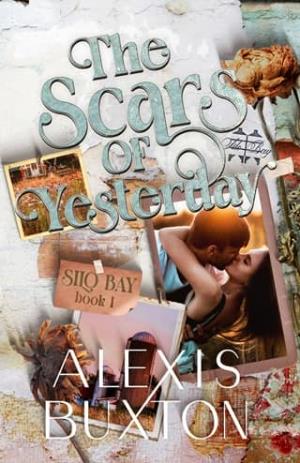
The Scars of Yesterday (Silo Bay #1)
Chapter 1
Wren
Home. How can one simple word feel so unfamiliar?
Maybe it’s because I haven’t lived here in nearly a decade.
Or maybe it’s because I’ve never really known what home was supposed to feel like on my own. Safety. Roots. A place you could breathe deep and have no doubts that you belonged.
I stand in the middle of my childhood bedroom, suitcase open on the bedspread, rifling through the few outfits I managed to pack.
The closet still smells faintly of Hollister’s Malaia perfume, which I wore every day through middle and high school.
A cream blouse slips from the pile, smooth and crisp—the kind of business casual that used to carry me through meetings in downtown LA.
Coastal cowgirl meets corporate chic. A look that worked in California and reminded me a little of home.
I place the blouse on a hanger and begin steaming out the wrinkles.
When I arrived in Silo Bay two nights ago, I thought I was ready for this room. I wasn’t. Everything was the same—a shirtless black-and-white poster of Zac Efron, a Lana Del Ray Born to Die album poster, framed photos of my friends from high school, scuffs on the baseboards.
Everything exactly how I left it, except for the journal sitting on my nightstand. My mom’s journal. With her reading glasses resting on top, like she’d just set the book down.
I haven’t opened it yet.
I couldn't. The thought of her sitting here, writing in my absence, was enough to splinter something inside me. She came into my room to feel close to me. And I wasn’t here.
Grams and Gramps welcomed me with open arms. Both were overwhelmed with joy to get the chance to hug me again.
Seeing their aging faces nearly broke me, but seeing my dad hit even harder.
The deep wrinkles and sunspots. His eyes, which are a direct match of mine, buried beneath bags from sleepless nights, and the spark that used to shine through from the joy he had in life, all of which have been diminished. Now, that broke me.
He wrapped his arms around me, and I gripped him tightly as my tears soaked his shirt.
I fought the flinch as pain seared through my ribs.
It wasn’t the time for him to see my truths.
Everyone was concerned with my return and the ending of my engagement, even though they were never the biggest fans of Elias.
But I promised them that we’d talk more about it later.
The truth is, I’m not sure I want to tell them everything.
When he finally pulled away, eyes filled with unshed tears, I couldn’t help but look for my mom.
But I’ll never get the chance of feeling her arms holding me close.
It’s been two months since we lost her, but I lost her long before that.
There’s an ache in my chest I’ll never heal.
But maybe that’s how my life is supposed to be.
A series of unfortunate events leading to heartbreak.
A sharp hiss snaps me back to the present—the hand-held steamer sputtering in my hand. I smooth it over the sleeve of the blouse, a faint scent of damp silk rising with the steam.
Sunlight spills through the sheer curtains, casting warm squares across the worn hardwood floor.
The window’s cracked slightly, enough to let in the smell of spring: damp earth thawing from winter, a trace of wildflowers starting to bloom, and—because this is Ohio—the unmistakable tang of manure spread across nearby fields.
Strangely, it’s comforting. It’s the smell of hard work, of early mornings, of long days and late nights, of jobs well done and families taken care of.
I close my eyes as I breathe deeply, letting it settle in my soul.
But it’s not long before the uninvited memories wander West again. To the days when the Pacific Ocean was only a fifteen-minute walk away. When I danced under desert stars at Coachella, or drank overpriced green juice in Beverly Hills cafes.
Red carpets and camera flashes demanded my best angles and my brightest smiles. I was one of the faces on a hit reality show, Buying LA, selling homes worth millions with drama-worthy ratings. People tuned in to watch me close deals, fight with colleagues, and live a picture-perfect life.
But that’s all it was.
A picture. A glossy version of me, carefully curated and edited for television. The reality was that contracts owned me. Friends weren’t friends. And there was always a gnawing darkness growing in and all around me that I could never shake, no matter how big the commission check.
It was always there.
It trailed me home from the office. Slid beneath the covers at night. Whispered that I’d never be enough, no matter how many smiles I faked.
Coming back wasn’t part of my plan. It was survival.
I tug the steamer cord free and set it aside, slipping on my blouse before smoothing it down and tucking it into a pencil skirt that feels more boardroom than farmhouse.
My Louboutins pinch, but I push them on anyway—my armor for the day.
Sun-kissed skin, still bronzed from California sunshine and the spray tans my old life required, makes me look healthier than I feel.
The person staring back at me is nowhere near the same person as the girl who used to live here.
In the past nine years, I lost her. No, the girl who lived here had an identity.
It may have been forged from my parents’ expectations to always be a good person, to do the right thing, show everyone kindness, and never bring embarrassment to the family.
But deep down was a girl who would sneak around and test those boundaries, flirting with the edge of rebellion at the hands of her friends.
She’d get a thrill out of seeing the surprised look on people’s faces when she went against the grain that society, and her parents, forged her into.
My eyes scan over my bedroom, and I picture the young girl who used to spend hours lounging across her bed, reading Heartland books in middle school, before sneakily switching to romance novels in high school.
Now it’s been too many months to count since I picked up a book or done anything wild.
I shove my suitcase into the closet, out of sight, as it feels like even more proof I haven’t settled in yet.
Dad says he wants to check the plumbing and wiring before I move into the cottage, so for now, I’m a guest in the house I grew up in.
And with no more than two suitcases and a duffel bag, I feel even more like a visitor.
I had to leave behind more than I wanted, but I’m hopeful I’ll be able to get my belongings soon.
My eyes land on Mom’s unopened journal, again. It’s as if it’s calling to me, begging me to open it. A reminder that her words are here if I ever get the courage to face them.
Slinging my bag over my shoulder, I blow out a deep breath and absentmindedly rub my chest. Today, it’s the credit union.
A simple meeting about accounts, signatures, and the kind of paperwork that keeps Hannah’s Haven running through another season.
Hannah’s Haven was my mom’s slice of heaven on Drummond Farms. Her place to grow flowers and pumpkins while providing family-friendly activities centered around farm life.
I don’t know if I’ll ever get the courage to read the words she left behind, but at least I can find a small reprieve by helping her business continue to thrive.
The old stairs creek beneath my heels, the sound carrying down into the kitchen like it always did when my brother and I would race each other. The banister is worn smooth from years of hands sliding along the wood railing.
Sunlight spills across the wide-plank floors as the kitchen comes into view at the bottom of the steps. This space used to be Mom and Grandma’s domain.
Now, it’s just Grandma’s…
Sage-green cabinets hug the walls, the butcher-block counters scarred from decades of chopping and baking.
The oak table near the stairs is crowded with a half-empty breadbasket and a vase of daffodils from the yard, while beyond the island, the house opens into the big sunroom addition—now the dining space for ranch hands.
A long farmhouse table dominates the room, surrounded by mismatched chairs and a wall of windows overlooking Drummond Farm.
It smells faintly of coffee, onion, and the orange oil Grandma uses to wipe down the wood.
Speaking of Grams, my eyes land on her small frame at the sink.
She’s busy rinsing plates as the wide farmhouse window lets in fresh air.
A few lunch dishes sit drying on towels.
At the sound of my footsteps, she glances up, her eyes narrowing slightly in concern.
If I weren’t familiar with the crinkle her eyes get, I would’ve missed the look entirely.
“Morning— Well, afternoon, honey,” she says gently. Her gaze lingers too long on me, on the way she takes in my slight frame.
“Morning,” I manage, forcing a small smile as I brush a loose strand of hair behind my ear.
A voice clears, and my gaze lands on my dad, who’s standing in the doorway separating the kitchen from the breezeway. He’s dressed in his signature Wrangler jeans, a short-sleeve plaid work shirt, and worn leather boots. The hair along his temples has grown almost entirely grey.
He tips his head in greeting. “Afternoon, Pumpkin.”
Pumpkin. My chest warms at the use of my childhood nickname, which only my parents and grandparents started calling me when I was six.
It all stemmed from a Thanksgiving dinner when my brother, Nate, dared me to sneak the pumpkin pie and eat the whole thing.
Deep down, I knew it was wrong, but seeing the bewilderment on my brother’s face when I polished the entire pie off was worth the trouble I got into.
Since the Thanksgiving pie saga, the pumpkin pies stay hidden until dinnertime, and the nickname pumpkin has stuck with me ever since.
“Hi, Dad,” I smile sheepishly.
He steps closer to the built-in desk and begins rummaging through papers.