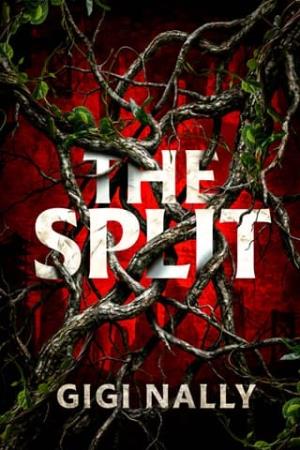
The Split (The Split #1)
Chapter One
WAITING IS THE WORST PART, but Fig Newtons are precious cargo. And I’d wait all afternoon if I knew the boys found the strawberry ones. I’d sit my ass in this dank truck the whole damn day—
No. I wouldn’t. Not when I’m up against the clock.
I roll up the truck’s back door, cold metal rattling as I heave it open. On the ledge, I lean against one hundred and thirty-two cans of chickpeas—not enough to feed everyone for even a day, but at least we’ll go home with something.
My belly rumbles.
I blow hot air into my hands and grab a can from the stack, picking at the frayed label. What’s one less? Will anyone miss this can of chickpeas?
I loosen my grip and let the can hit the truck floor with a metallic clang. If a can drops in a truck and nobody’s around to hear it, does it make a sound?
Shit. I don’t know. But a belly full of beans beats a belly full of brains. And if I die of starvation, I’ll join the leagues of zombies with brains on the menu for the end of time.
Order up, Kota—your serving of juicy pink noggin is hot ’n’ ready!
But, no. Chandler has a plan. Chandler knows how to divvy up the food. I’ll get my proper share, and my hunger pangs will go away. I just have to get through the next few hours.
Gritting my teeth, I pick up the dented can and stack it back on top of the mound.
You’re beautiful, I tell it. It’s what’s inside that counts.
My stomach roars, the angry sound echoing through the truck.
I close my eyes and, just for a moment, let myself daydream about the real good stuff—Chef Boyardee Ravioli and Green Giant Peas, Frosted Flakes and Dinosaur Egg Oatmeal.
We scavenged those luxuries a year ago. If we want more than the basics, we’ll have to venture further from the Split.
Problem is, we can’t risk entering the city.
Berea’s fine and dandy, but Greenville’s crawling with zombies.
The old church on Main Street: ridden with zombie Baptists.
The now-broken Liberty Bridge: weighed down by hundreds of tourists-turned-zombies.
Swamp Rabbit Café: full of stale, never-to-be-eaten, moldy biscuits, plus zombies.
The factory across from me is in good enough shape, given the state of the parking lot. Jagged concrete blocks and busted metal beams, splintered light poles, overturned cars, and bits of rubber litter the ground.
And bones. There are always bones.
We never got the chance to bury my brother’s.
The factory shudders. Perhaps, like me, it feels the effects of the unpredictable weather. November in South Carolina’s a toss-up, especially after Z Day, when virus-tinged water seeped into the atmosphere to wreak havoc on weather patterns.
Grandma said that when she grew up, there were four seasons. Throughout my twenty-one years, however, there’s never once been a summer day without snow, or a winter without a spike of heat. Yesterday, it was ninety. Today? The truck’s thermostat read fifteen.
Another rumble from the factory. This time, a big C tumbles off the side and hits the ground with a thud. The official death of PepsiCo. Though we parked far from the building, the impact rattles our truck.
Did something happen inside the factory? Are the boys okay?
My worries are futile; there’s nothing I can do but wait. I opt for self-torture. With cold, numb fingers, I pick up a yellowed product catalog—one we found from last week’s failed supply run to this factory—and scan the soft paper in search of the three-letter word: fig.
100% Real Fruit!
As a kid, Grandma would send me to school with two strawberry bars for snack time—one for me, and one for my friend Anika. RIP, Anika.
Assuming, of course, since practically everyone else in the grand US of A is dead.
I wonder if she knew Fig Newtons were made with real fruit. I wonder if she turned into an it and eventually burst at the seams with brains.
I miss fruit sometimes more than I miss my friend.
When we tried hitting up this factory last week, one of our tires blew out and attracted a horde of shamblers—zombies who’ve seen better days. Still deadly, but slower than they were three years ago when they sprang to life.
Back to life, I suppose.
So as not to go home empty-handed, we bounced and circled back to the Walmart closer to the Split, cleared out the last of the Saltines.
Crackers are great and all, but less so when you’re granted only three ounces of water to wash them down.
Not an ideal cracker-to-water ratio. I had crumbs stuck in my throat for two days.
I twiddle a knob on my watch, waiting for the minute to change. 4:49 p.m.
Ticktock, ticktock, ticktock.
I pull my tangled, dark blond hair into a faded blue scrunchie. When Anika first gave it to me, the fabric was dotted with little stars, but the pattern is barely visible anymore. The rubber band inside still holds.
4:50 p.m. The boys have exactly ten minutes to get back—starting now.
I shouldn’t look forward to the adrenaline rush that inevitably comes with the countdown, but here we are.
It’s intoxicating, the thrill of not knowing if the boys will come back with food or with shamblers riding their asses.
Sitting inside a groaning truck with nothing but a shitty flashlight, stacks of canned food, and a lackluster view of a decrepit parking lot has grown dull.
I check my watch. 4:52.
Ticktock, ticktock, ticktock.
My knuckles turn white as I clutch the balisong at my hip.
Chandler won’t give us guns. The focused blare of gunshots attracts zombies, and would draw them toward the Split.
While zombies aren’t smart by any means, they seem to associate the sound of bullets with fresh bodies—food.
My theory’s that part of them refuses to forget.
Anything other than a perfect shot is a waste of bullets, anyway.
Dying has never been glamorous. Far from it. Listening to Mom’s gurgling breath as her lungs finally gave out? Wouldn’t make my list of Top Ten Favorite Experiences. And that was before Z Day—before death meant rebirth.
These days, when a person kicks the bucket, they transform into a zombie.
Death by brain injury is the sole way to prevent it.
Sharp stab in the skull, hammer to the temple, well-aimed bullet, the likes.
That’s how to kill zombies, too, and since we aren’t allowed guns, the boys and I got good with our hands.
I found this knife in my brother’s pocket after Grandma killed him—the zombie version of him. It hasn’t left my side since.
I tighten my grip.
Wind whips through the lot, shaking the truck.
Burnt rubber fills my nose, the ash-laden air forming a thick layer on my tongue.
Gray clouds roll through the sky, casting haunting shadows behind twisted pole lights and yawning potholes.
The full moon peeks out beside the sun, gloating.
Laughing at me about how easy it was for it to stay intact while everything down here on earth got fucked.
I pull my jacket closer, wrapping myself in the soft but sullied fabric.
Soon. The boys will be back soon.
The truck creaks as I scoot forward, bracing for action. I bite a grimy fingernail and watch the cloud of warm breath dissolve in the twilight.
A scream pierces through the air.
A deep, distinctively British voice hollers, “Help!”
Indy.
I sweep my gaze to the left. My lanky friend storms out of the warehouse and collides with a zombie—not a shambler. No, this one’s hungry. And fast. Indy wrestles the zombie, pushing against its rotting, concave chest to get out from under its grip. My heart stops as a hiss escapes its gaping jaw.
Indy wails when the zombie’s sharp fingernails pierce his skin, blood splashing on the asphalt. Steam rises from the ground, a crimson haze. His legs flail as the zombie nearly overpowers him, then he scrambles for the knife he dropped somewhere along the way.
In the back of my head, I hear him. Peter. “Stay inside the truck, Kota. Try to help, and you’ll get yourself killed.”
And maybe Peter’s right. Indy has an entire foot on me, and even he is barely putting up a fight. Maybe I don’t stand a chance against this zombie. But I’ll be damned if I just sit here and watch my friend get ripped to shreds. I won’t lose him like I lost West.
I wipe my sweaty palms on my pants, whip open my knife, and jump out of the truck.
“Kota!” Indy yells, breaking free from under the zombie—but its spindly hands cling to Indy’s leg like a child to their mother in a shopping mall. Only, less adorable.
The zombie rises to a hunch and lunges at Indy. His foot kicks Indy’s knife, and it goes skidding out of his reach.
I sprint. My thighs shake, my knees could buckle at any moment, and my heart pounds faster than my feet. I don’t stop—I can’t. Indy yelps, and I resist the urge to tell him to shut the hell up. I settle for a hissed “Quiet.”
C’mon, Indy. That’s rule number one: Keep your mouth shut, or else the zombies will come.
“Please,” Indy whimpers, his wide eyes pleading with me as the zombie’s unhinged jaw snaps at him. “Help.”
I mouth, I’m trying!
Indy holds the zombie at arm’s length, his back turned to me. I need to get around him, but they’re dancing across the parking lot, Indy leading the zombie in an apocalyptic tango. As they spin, the zombie’s temple comes into view.
Aim for the brain.
I drive my arm forward, but the zombie turns its contorted head at the last minute, and my knife plunges into its soft cheekbone.
It shrieks.
Oh no. I’ve made it angry.
The zombie’s entire body pivots toward me as it chomps.
A yellow molar flies out of its mouth and hits me square in the forehead.
It almost looks human—almost. Its eyes are green but unseeing, and its lips are intact, though crusty and split.
Black blotches and blood speckle its face, and its scalp is torn in half.
A growl rips through its throat as it turns its clawed hands on me.