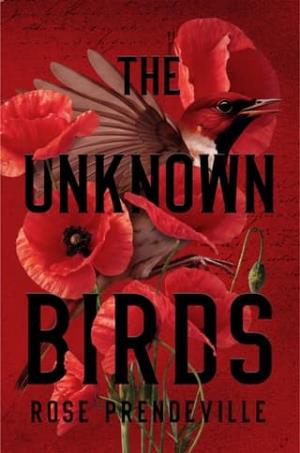
The Unknown Birds
Chapter 1
But let my death be memoried on this disc.
Wear it, sweet friend. Inscribe no date nor deed.
But may thy heart-beat kiss it night and day,
Until the name grow vague and wear away.
—Wilfred Owen
With an Identity Disc
Charley Ashley was haunted by the ghosts of boys, of men, of soldiers marching—always marching just behind her, two by two.
They followed her home from the battlefield more than twenty years ago, her constant companions: the id, the ego, and the ghosts.
Now they whispered rumors, rumbling warnings of German plans.
Take the Netherlands. Launch an attack. Neutralize all of Britain from meddling in European affairs.
If the rumors came to pass, then everything Ash had worked for the entirety of her adult life would have been in vain.
No use borrowing trouble, Spatzi. Frau Wintter’s words came to her, so oft repeated she could almost hear them right out loud as she gazed through the window at the pigeons shuffling and pecking their way across the square below.
She took a breath and focused on the birds.
They grounded her, so unbothered by the grand University of London auditorium or by the lecture series taking place inside.
They certainly gave no thought to the twentieth anniversary of the Paris Peace Conference or to what Germany might or might not do in the coming days.
Nor did they care about the ghosts staring back from the audience when Ash had stolen a peek of the assembling crowd: dark hair and sad grey eyes; black skin and a cheeky smile; wire specs hiding an ocean of freckles.
For years, her ghosts had loitered in quiet corners or stood watching her from awnings in the rain.
They were the reason she’d agreed to guest lecture—they and so many others.
Her old mentor had invited her to speak about wartime poetry in the hope that sharing the words of dead men would open enough eyes to the atrocities which once befell them and somehow, someway prevent another war.
It was far too little, probably too late, and it might not work, but it was better than nothing at all.
Because, Lord knew, the last war nearly broke her.
She wasn’t ready to go through it all again.
Outside, a boy jogged past, books tucked under one arm as his long legs pumped with ease, and a flare of pale-green jealousy surged through Ashley’s veins. How she missed running as she’d done in her youth.
“They’re ready for you, Miss Ashley.” The young woman who had shown her to this waiting room stepped inside, her cheerful voice just loud enough to make Ash jump. “There are so many people out there. I’ve never seen it this full. Not just students, but alumni and guests from the community as well.”
Ash licked her lips. “I hope they won’t be disappointed then.”
“Why should they be?” the girl asked with a laugh.
“I spend my days teaching primary students in Whitechapel.”
“Not here at the university? I was hoping to take a class with you next term. I’m Daphne, by the way. I find war poetry so very romantic. Is that why you chose to study it?”
Ash shook her head. “War isn’t romantic.”
Daphne’s face fell. She was young, no more than nineteen, so fresh and full of possibility as Ashley once had been.
“I like poetry,” Ash told her. “Theirs helped me move forward when I was stuck in the past. I lived it, you see.”
She nodded earnestly, as though she did see. She certainly wanted to.
“Sharing their words feels like a way to ensure they live on, but also to raise awareness about the horrors they faced. The horrors we faced. So maybe it won’t all be repeated.”
“You think it might be repeated?”
A loud bang outside, perhaps a door slamming or a motor backfiring, made Ashley jump once more. She turned back to the window in time to see all those pigeons scatter on the wind.
“I’ll be ready in just a moment. If that’s all right?”
“Of course. Take all the time you need,” Daphne said, regarding her curiously before stepping out of the room.
Alone again, Ash ran her hands down her waist and hips, smoothing her navy bodice and blue checked skirt.
Then she pressed her lips to the round, red disc which had hung from her neck these twenty years, imagining it smelled of bergamot.
The ceramic was cool like a ghost’s caress as she breathed in its solidity and strength.
Are we downhearted? she asked herself in Sergeant Major Chapman’s cheeky roar.
“No, sir,” she whispered to the empty room.
Then why was her soul so unsettled, pulled tight as a hidden tripwire, heart pounding like a howitzer delivering its fatal blow?
Are we downhearted? she asked again. “Well, maybe just a bit.”