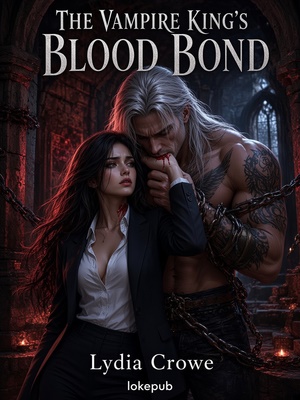
The Vampire King's Blood Bond
1. Bryony
brYONY
My grandmother was dead, and I was arguing about lilies.
Edith hated lilies almost as much as she hated being overcharged. The funeral director had added four arrangements to the bill after I’d approved roses. Charging a dead woman for flowers she despised felt particularly cheeky, so I spent twenty minutes getting them removed.
Sorting out the invoice was easier than missing her. I knew how to deal with bills. I didn’t know how to stop reaching for my phone to ask Edith a question before remembering she wasn’t going to answer.
It rained all the way across Leeds, and my coat was soaked before I reached Hargreaves and Pike. I caught my reflection in the glass doors on the way inside. My black dress was respectable. My long red hair had escaped every pin I’d used and was trying to attach itself to my lipstick.
I fixed what I could and walked up to reception. “Bryony Ellison. I’m here to see Arthur Hargreaves.”
The receptionist recognised my name and switched to the gentle voice everyone had used since the funeral. “Of course. He’s expecting you. Would you like me to take your coat?”
I shrugged it off. “Please. It’s carrying enough rain to qualify as a water feature.”
That earned a real smile. She hung the coat well away from the dry ones and led me down the corridor.
Arthur had handled Edith’s legal work for as long as I could remember. He’d attended every family crisis in the same dark suit, including my parents’ funeral when I was eight, although this was the first time I’d seen him behind his desk. He stood as I entered.
“Bryony, I’m so sorry. Your grandmother was a remarkable woman.”
“She’d be pleased you said remarkable. She’d have objected to anything softer.”
He almost smiled. He offered tea, but I’d already had too much funeral-office tea to risk another cup. I sat opposite him.
A thick file waited on the desk beside a narrow metal box. The box had a combination lock and several scratches across its lid. It looked far more interesting than probate paperwork had any right to.
“You said there was an unusual bequest,” I said. “How unusual are we talking? Edith once gifted my cousin a china dog because he complained about it every Christmas.”
Arthur sat down and rested one hand on the file. “The ordinary gifts are straightforward, and the rest of the estate passes to charity. She left you a separate property with a condition attached. I need to explain both before you decide what to do.”
“That sounds less entertaining than the china dog. Go on.”
He opened the file and turned a copy of the title register towards me. “Harrowmere Hall is still registered to Edith. She owned it until her death, and the will leaves it to you.”
I looked at the name twice. “Shit. That can’t be right. She told me Harrowmere was sold before I was born.”
“I checked the current register myself. There wasn’t any sale or transfer, and nobody had mortgaged it. Your grandmother kept the freehold and paid every expense through a separate property account.”
He sounded certain. I pulled the register closer.
Harrowmere stood in North Yorkshire, outside a village I’d visited once as a child. I remembered an iron gate and a staircase wide enough to race down. I also remembered Edith pulling every curtain before sunset and telling me to stay out of the cellar.
After that trip, she said the house had been sold. I’d believed her because I was eight and more interested in the tin of biscuits she kept above the cooker.
I checked the proprietor entry again. “Who’s been living there?”
“According to the reports, nobody. Contractors have maintained the roof and grounds. They’ve also checked the alarm from the entrance hall, but Edith wouldn’t allow them farther into the house.”
“So she paid people to inspect a building they weren’t allowed to inspect.”
Arthur’s expression suggested he’d already had that argument. “She signed a declaration each year saying she’d checked the interior herself. She wouldn’t tell us how she travelled there or whether anyone went with her.”
I checked the date on the latest report. “This was signed six months ago. Edith needed a walking stick to cross her own sitting room by then. Did you ask how she’d inspected a house that size?”
“Several times. She said her mobility was her concern and the state of Harrowmere was mine. When I pointed out that the state of Harrowmere was difficult to confirm from an entrance hall, she reminded me that she paid the firm to follow instructions rather than improve them.”
I could hear Edith saying it. The memory almost made me smile. Then I pictured her forcing herself through a huge empty house while keeping the trip secret from me, and the humour disappeared.
Secret trips across Yorkshire didn’t fit the woman I’d seen during her final years.
“Did you believe her?” I asked.
Arthur took a second before answering. “I believed she understood the declaration and the consequences of signing it. I also knew that pressing her for details made her less likely to give them.”
That was a diplomatic way of saying Edith could out-stubborn a locked door.
I pointed to the metal box. “I assume that’s the condition.”
“It contains the keys and her instructions. You have to retrieve a case from under Harrowmere before you can sell the house or authorise anyone to clear it. If you refuse the property, the executors still have to find the case before it passes with the rest of the estate.”
I’d already reached the same conclusion. “She made going there the quickest option whether I accept the house or not.”
“Yes. I suspect she knew you’d notice that immediately.”
Edith had probably enjoyed arranging a problem nobody could avoid after she was gone. I wanted to complain to her about it.
I tapped the instruction. “Why make me retrieve it? You’re her executor. She could’ve told you where the case was and asked you to deliver it.”
Arthur leaned back. “I asked the same thing. She said the route would only open for you. I assumed she meant a biometric lock or private code, but she said Harrowmere had been waiting for you longer than either of us understood. She wasn’t joking.”
There was the sort of sentence solicitors avoided unless someone else had said it first. Arthur looked uncomfortable repeating it, which told me Edith had meant every word.
Arthur entered the combination and opened the box. Several modern security keys sat beside an alarm fob. A long key blackened with age lay on top of a cream envelope with my name written across the front.
He passed me a single typed page. “The estate office is near the back of the house. Your grandmother says the old key will open a route to the case, although she didn’t explain where that route begins. She also insisted that only you take possession of the key.”
I lifted it by the stem. The bow showed a raven with its wings spread around a narrow crown. The metal was colder than the room.
“Did Edith ever explain this symbol?”
“She wouldn’t discuss it. Nobody from the firm has been inside Harrowmere since her death, and the maintenance company only has keys for the front entrance and outbuildings.”
I set the old key beside the title plan. “Send me the maintenance reports and the names of everyone who knew she still owned the house. I want the alarm records as well.”
Arthur gave me a tired look. “You’re on bereavement leave, Bryony.”
I investigated compliance failures for a Leeds insurer, which meant I spent most days reading records and looking for the part someone hoped I would miss.
“Which means my employer has kindly provided more time for me to investigate the secret mansion my grandmother pretended she didn’t own.”
“I was going to suggest that you rest.”
“You’ve met me before, so that feels optimistic.”
A brief laugh escaped him before he became serious again. “I’ll send everything this afternoon. Please don’t enter the house alone until you know why Edith restricted access.”
The warning was sensible. It wasn’t enough to make me leave the questions alone.
I reached for the envelope. “Did she write this here?”
“She brought it already sealed. I haven’t read the personal letter, and she was very clear that nobody else should.”
Arthur offered to leave. I thanked him, and he shut the office door behind him.
Edith had squeezed my name across the envelope in letters that were too large for it. She always ran out of space near the edge. Seeing her handwriting hurt more than the funeral bill had.
I slid my finger under the flap and caught my skin on the paper. A bright spot of blood appeared beside my nail.
The old key clicked against the desk.
I froze. The building was quiet, and nothing had touched it. I moved my hand away. The key turned a fraction towards the blood.
“Absolutely fucking not,” I muttered.
It stayed still when I used a tissue to cover the cut. I told myself the desk wasn’t level, although the pen beside it hadn’t moved. Then I opened Edith’s letter because arguing with a key wasn’t going to improve my afternoon.
Bryony,
I’m sorry I left you with this. You deserved the truth while I was alive, but telling you would have put you in danger sooner.
You must go to Harrowmere. Take the case from under the house and keep it with you. Trust the documents inside before you trust anyone who claims to have known me.
The house is yours because the responsibility attached to it was always going to find you. I tried to change that. I failed.
Don’t sign anything Adrian Rook gives you.
Don’t let him take you under the house.
Above all, never let Adrian Rook place a crown on your head.
Edith
I read it twice. A hidden house and secret case were bad enough. Adrian and the crown frightened me more because Edith’s warning was painfully clear.
I photographed every page and sent the images to my private work account. The old key stayed where I could see it while I packed the rest of the contents into my handbag.
Arthur returned when I opened the door. He looked from the box to my face. “Have you decided what you’re going to do?”
“I’m going to Harrowmere after I’ve checked the records. I also need you to tell me who Adrian Rook is.”
His shoulders went rigid. The reaction lasted less than a second, but I’d spent years watching people pretend an unexpected clause didn’t worry them.
“I don’t know anyone by that name,” he said.
“You recognised it.”
Arthur glanced at the envelope. “I recognised that your grandmother frightened you, and I’m concerned about what she expected you to do. Let me make some enquiries before you travel.”
It was a polished answer. He hadn’t denied reacting to the name, and he’d avoided repeating it.
I slipped the old key into my handbag. It warmed against my palm through the leather.
Edith’s final warning sat on top of the other papers, impossible to dismiss now that Arthur had lied about recognising the man she feared.
Never let Adrian Rook place a crown on your head.