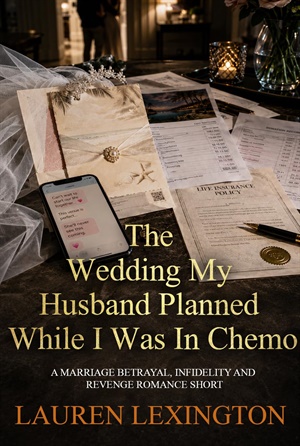
The Wedding My Husband Planned While I Was In Chemo (Proof of Betrayal #15)
Chapter One
Deborah Mercet was trying not to throw up when the email arrived.
That was the shape of her life now. Not grand bravery.
Not cinematic courage. Just small, grim negotiations with her own body.
If she sat still enough, if she breathed through her nose, if she kept one hand pressed to the hollow beneath her ribs, maybe the nausea would stay where it was.
Maybe the metallic taste in her mouth would fade or the ache in her bones would decide she had suffered enough for one afternoon and let her sleep.
The house was quiet around her. Too quiet, really, for a house that had once been full of grocery bags, school uniforms, invoices from the homewares shop she had sold last year, Ava’s music spilling from upstairs, and Paul calling from another room to ask where something was, because Paul could manage seven-figure retirement portfolios but could not find the extra paper towels without Deborah’s help.
Now the house had become a place of folded blankets, pill bottles, sympathy flowers turning brown in vases, and silence that felt padded for an invalid.
Deborah hated that word.
Invalid.
As if illness had made her false.
She lay on the sofa in the living room beneath the knitted blue throw Marissa had brought over during the first round of chemo. It smelled faintly of lavender detergent and the ginger candies Deborah kept eating even though they no longer helped.
Her nausea medication sat on the coffee table beside a half-finished mug of peppermint tea.
A plastic hospital bracelet had left a faint impression on her wrist. Her port still ached beneath the soft neckline of her shirt, a bruised little reminder that her body had become a construction site and every appointment brought new machinery.
Her phone chimed on the cushion beside her.
Deborah closed her eyes.
Another reminder, probably. Another portal notification or message from someone with good intentions and terrible timing, telling her to stay strong, as if strength were a switch she kept forgetting to turn on.
The phone chimed again.
With a slow, careful movement, Deborah reached for it.
Her fingers felt clumsy. Chemo had made them unreliable in small, humiliating ways. Buttons were harder. Clasps were harder. Opening jars had become a betrayal.
She unlocked the screen and saw an email notification.
Your Bridal Styling Appointment Is Confirmed.
For one strange, weightless second, Deborah thought she had misread it.
The words floated above her pain, bright and absurd.
Bridal styling.
She blinked, expecting them to rearrange themselves into something medical. Maybe bloodwork, billing, oncology, pathology, one of the words that had colonized her inbox over the last six months.
They did not.
The sender was Ivory & Grace Bridal.
Deborah stared at the subject line until the nausea shifted into something sharper.
Maybe Marissa had finally decided to get married.
That was Deborah’s first thought, because loyalty was a reflex and her heart, stupid faithful thing that it was, reached for innocence before suspicion.
Marissa Vale, her best friend of twenty years, had joked about never marrying again after her first disaster of a fiancé in her twenties.
She said she preferred being the mysterious aunt figure, the one who brought wine and gossip and never had to ask anyone’s permission before buying expensive shoes.
Maybe she had met someone. Maybe she had kept it quiet because Deborah was sick, because everyone kept quiet around sick people, as if ordinary joy might injure them.
Deborah tapped the notification.
The email opened.
Dear Marissa, your private bridal styling appointment has been confirmed for Thursday at 10:30 a.m. Your consultant, Elise, looks forward to helping you find the perfect gown for your beach ceremony.
Deborah’s gaze moved down.
Bride: Marissa Vale.
Groom: Paul M.
Her mind rejected the letters in order, then all at once.
Paul M.
There were a lot of Pauls. There were a lot of men whose surname began with M. It was probably nothing. It had to be nothing.
Then Deborah saw the private appointment note.
Please pull gowns suitable for a beach ceremony. Sensitive widower timeline. Bride prefers understated elegance, not “first wedding” energy. Groom has requested privacy due to current family circumstances.
The room didn’t spin. Deborah wished it had. Spinning would have given her something physical to hold responsible, some medical explanation for the way the world dropped away beneath her.
Instead, everything became still.
The mug on the coffee table. The blanket over her legs.
The vase of tulips Paul had bought yesterday, already drooping.
The photograph on the bookshelf from Ava’s high school graduation, Deborah’s arm around Paul’s waist, Marissa leaning in from the other side because she had always belonged in the frame.
Sensitive widower timeline.
Deborah was not dead.
She was in her own living room. She was breathing through a mouth that tasted like coins.
Her scalp prickled beneath the soft cap she wore when she got cold.
Her chest still carried the bruise from the port.
Her body was fighting cells that wanted to kill her, and somewhere in town, her best friend had booked a bridal appointment to marry Deborah’s husband on a timeline polite enough for widowers.
She put the phone down because her hand had started to shake.
No.
The word came up so hard and clean that she almost said it aloud.
No.
Paul would not do this.
Paul, who had cried when Dr. Adel Nair first said the word aggressive.
Paul, who had taken notes with a white-knuckled grip.
Faithful Paul, who posted updates for friends and family because Deborah did not have the energy.
Paul, who had shaved his head after her second round, though Deborah had begged him not to turn her hair loss into a performance.
Paul, who had held her hand in infusion rooms and whispered that forever meant forever, even when forever smelled like antiseptic and fear.
Paul, who was due home in twenty minutes with soup and flowers because he liked the nurses to see him carrying both.
Her phone vibrated again.
This time it was a text.
Marissa: How is our girl today?
Deborah stared at the words.
Our girl.
She had seen that phrase a hundred times since the diagnosis. Marissa used it in group chats, on meal-train updates, in comments beneath Paul’s posts.
Our girl is tired today, so texts only.
Our girl could use soup and soft rolls.
Our girl crushed chemo today.
Deborah had once thought it meant love. A circle of care. A net beneath her.
Now the phrase opened in her mind like a small, infected wound.
Our girl.
Not my friend.
Not Deborah.
Our girl, as if she were an object held between them. Managed by them. Scheduled by them. Mourned by them in advance.
Deborah picked up the phone again. She moved slowly, not because she was calm, but because panic made mistakes and she could not afford mistakes yet.
She forwarded the email to the secret account she had used years ago for wholesale suppliers when she ran the shop.
Then she took screenshots. One of the subject line.
One of the bride and groom names. One of the private note.
Her thumb hovered over delete.
A sob rose in her throat with such force that she pressed her fist against her mouth.
She did not want to delete it. She wanted to throw the phone across the room. She wanted to call Marissa and make her say the words. She wanted to call Paul and listen to him lie, because some desperate part of her still wanted the lie to be good enough.
Instead, Deborah deleted the notification from the inbox Paul sometimes checked when he handled appointments.
Her hands shook so badly that she fumbled the phone. It slipped onto the blanket.
The front door opened.
“Deb?” Paul called, his voice warm and tired in the way people admired. “I’m home, sweetheart.”
Sweetheart.
She heard him in the hall, setting down keys, closing the door with his shoulder, making just enough noise to announce the labor of his care. Bags rustled. The familiar smell of chicken soup reached her, though she had not eaten meat in twenty years and the smell now made her stomach heave.
He appeared in the living room doorway holding a paper bag from the café near the clinic and a bunch of pale yellow roses.
He looked handsome. That offended her. The normalcy of him offended her. The clean blue shirt. The silver at his temples. The concerned tilt of his mouth. The wedding ring on his left hand, glinting as he lifted the flowers like a man walking into a hospital advertisement.
“How’s my brave girl?” he asked.
Deborah looked at him and thought of Marissa’s bridal consultant pulling gowns for a beach ceremony.
She thought of sensitive widower timeline.
She thought of Paul standing barefoot on sand beside Marissa, accepting sympathy with one hand and champagne with the other.
“I’m tired,” Deborah said.
The words were true enough to carry the lie.
His face softened. It was a good face. That was the first terrible thing she learned in that moment. A good face meant nothing. A tender voice meant nothing. A man could look at you with tears in his eyes and still be waiting for you to become past tense.
“I know.” Paul crossed to her and kissed her forehead. His lips were dry. “I brought soup. The one you liked last week.”
She had not liked it. She had managed three spoonfuls because he had looked so proud of himself and Marissa had clapped her hands as if Deborah were a toddler.
“That was thoughtful,” Deborah said.
Paul placed the flowers on the coffee table and touched the blanket over her knees. “Marissa texted me. She’s worried you didn’t answer.”
Of course she had.
Deborah’s gaze dropped to his hand on the blanket.
He had long fingers, neat nails, a platinum wedding band she had chosen because he had said gold felt too showy. She remembered standing in the jeweler’s twenty-three years ago while he slid it on and promised there would never be anyone else.
There had been someone else.
Not a stranger.
Not a mistake from a hotel bar.
Marissa.
Marissa, who had sat beside Deborah during chemo and rubbed circles on her back when she vomited.
Marissa, who knew where the spare key was hidden.
Marissa, who had braided Ava’s hair for school concerts and cried at Deborah’s mother’s funeral.
Marissa, who had looked Deborah in the eye after her diagnosis and said, “I’m not going anywhere. ”
No, Deborah thought, watching Paul smooth the blanket.
You were moving in.
“I’ll text her,” Deborah said.
Paul smiled. “Good. She worries.”
Deborah almost laughed. It would have come out wrong, ragged and ugly and edged with blood.
He went to the kitchen to find a vase, humming under his breath.
Deborah listened to the sound of cupboards opening. Her cupboards. Her kitchen and life, still arranged around a man who had already begun clearing space for another woman.
She picked up the phone.
Marissa’s message waited.
How is our girl today?
Deborah typed with fingers that trembled only a little.
Tired. Paul just got home. Thank you for checking.
She did not add a heart.
Marissa replied fast.
Rest, babe. Let him spoil you. You deserve all the love in the world.
Deborah read the words until they blurred.
Then she opened the secret email account and checked that the screenshots had arrived.
They had.
In the kitchen, Paul filled the vase with water.
In the living room, Deborah lay beneath Marissa’s blanket and watched her husband arrange flowers for a woman he had already begun to mourn.
For the first time since her diagnosis, the cancer was not the thing that frightened her most.
The thing that frightened her most was that the people holding her upright might have been measuring the space she would leave behind.
She looked at Marissa’s text again.
Our girl.
The word had never sounded so possessive.