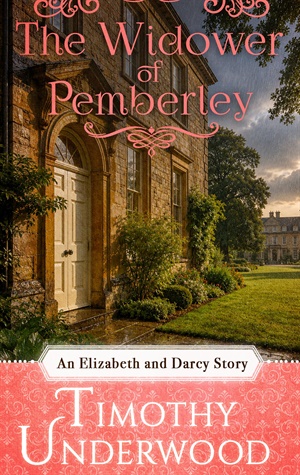
The Widower of Pemberley (Mr. Underwood's Elizabeth & Darcy Stories #25)
Prologue
This was not how Elizabeth Bennet had wished to marry.
She knelt in the Longbourn drawing room next to a man whom she did not love. A man who said that he could not make any woman happy.
It was a grey and cloudy evening, and the last light from the sky quickly faded.
There was no sun, no brightness. Outside were thick grey clouds, and the rain fell in thin cold splashes; a harsh wind bent the bare tree branches, and muddy puddles had gathered deeper than her ankle.
The weather did not offer a propitious omen.
Elizabeth refused to let that blow her banked fears into an open flame. It was her choice to marry Mr. Darcy. She would find hope and contentment in a life with this silent, haughty man.
She knew that he combined great virtues with his defects.
When the parson of Longbourn parish asked Elizabeth to say ‘I will’, she looked for an instant towards where Jane and her father sat.
Jane’s dear face.
Dearer because of the deep pockmarks and white cloudy eyes that were the consequence of smallpox five years before. Jane would now never face a life in which she was not only blind but also poor.
Mr. Darcy had promised.
Elizabeth trusted him. She trusted his promise more than the legal settlement that he had drawn up and that had been signed by her father to ensure her sister would always be cared for.
Half of her father’s face was sunken in, and his palsied arm trembled. He could barely hold himself in place in the winged armchair that the footman had helped him into. His attack of apoplexy had happened just ten days before, and her life had been utterly transformed since.
Elizabeth turned to the parson. She glanced at Mr. Darcy’s stern, cold, and undeniably handsome face from the corner of her eye as she said firmly, “I will.”
She did not love him, not yet, but she would strive to love him. He had promised to protect her sisters and mother if she became his wife, and she would do everything in her power to make sure that he never regretted marrying her.
But he needed an heir to his estates, and whether she ever had a son was not a decision in her power.