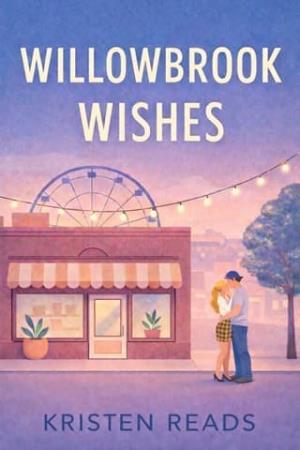
Willowbrook Wishes
Chapter 1
Lily
“Okay, Lily,” I told the empty car, swallowing the prickle of nerves that always showed up before a big assignment. “Small town. Big idea. The Willowbrook County Fair doesn’t know it yet, but it’s about to get a makeover.”
The Mustang hummed as the road stretched out ahead of me. My Discman rode shotgun, jacked into the tape deck with a clunky adapter.
Music was the one constant that came with me and made an empty home or highway feel like mine. I didn’t really have a hometown. A dozen places blurred together. But the music? That went with me everywhere.
A weathered sign, WILLOWbrOOK – 20 MILES, flashed by as the state route funneled me to a blink-and-you-miss-it gas station: two pumps, a Coke machine, and a screen door that had seen better days.
I’d been on the road since six, high on ambition and coffee, but even ambition needs Twizzlers sometimes. And a map. The directions Mrs. Smith had faxed me were now a wrinkled, coffee-stained treasure map.
I bumped over the lip of the lot and parked crooked at the pump.
“I love a dramatic entrance,” I said under my breath as I checked myself in the visor mirror: platinum blonde pulled high, oversized tortoiseshell sunglasses, high-gloss nude lipstick that worked in a boardroom or a cocktail lounge.
Cobalt silk scarf knotting my ponytail. Vogue power spread meets road-warrior strategist. Good. I needed the armor.
My Nokia buzzed against the console. I checked the bars: one. I answered anyway.
“Hello? Mia?” I said, shouldering the phone as I popped the gas cap. “You can’t even believe where I am right now.”
Mia had been my point person at North Shore Creative Group, the Chicago branding agency that had me living out of hotel rooms more than my apartment.
As a Creative Director, I lived in pitch rooms and project briefs more than anywhere real.
At twenty-six, I already had a portfolio most people twice my age would kill for but still no place that felt like home.
Mia and I weren’t close-close, but she was one of the few people who understood the grind without expecting anything personal in return.
“How country is it?” she deadpanned through Chicago static.
I eyed a hand-lettered window sign, LIVE BAIT, and a Beavis and Butt-Head sticker peeling beside it. “The fashion vibe is less Prada, more overalls.”
“You’ve got this,” she said, softer. “You always do. You once made a museum opening feel like the Met Gala with a $300 budget and a banner you hand-lettered on a bed sheet.”
“Technically two sheets.” I fed the nozzle into the tank. “Board presentation’s tomorrow. If they greenlight the rebrand, it’s a strong line on my portfolio. They want eighty grand in revenue. Ambitious, but doable.”
“And after that,” Mia said, “we’ve got you on the short list for the Rock and Roll Hall of Fame Induction Ceremony. Creative Director. The big one.”
I swallowed. A bigger paycheck. A bigger stage. Not a bigger life, but still. Mia meant well, even if she didn’t know how lonely the chase had gotten.
“Do the job, get the check, move on,” Mia said. She knew the drill. “Call me after. Crush it. Make them—”
“Mia? Hello?” Static swallowed her. “Of course,” I muttered, and hung up.
I capped the tank and headed inside. The screen door squealed, and a wave of AC slapped my cheeks. A cassette rack leaned against a display of disposable cameras.
The clerk barely glanced up from his newspaper. “What can I do for ya?”
“Just grabbing provisions,” I said, scooping Combos, a king-size pack of Twizzlers, a Kiwi Strawberry Snapple, and a county map from a spinner labeled FREE.
“Where ya headed?” he asked, as if assessing whether to offer directions or condolences.
“Willowbrook,” I said. “Mulberry Street.”
“Take the state route past the old Cunnington barn,” he said.
I waited.
He added, helpfully, “It used to be red.”
“Perfect,” I said brightly. “I’ll just follow the aura of where red once was.”
He blinked. I grinned and paid.
Back in the lot, I loaded snacks onto the passenger seat and tugged my ponytail tighter. The Mustang’s reverse lights flickered as I turned the key.
Crunch.
Metal kissed metal — small, but decisive. Crap.
Like a glass knocked off a foster home table, sharp enough to summon a scolding or worse. My stomach twisted, that old dread of being in too much trouble.
As the memory of being reprimanded in a past foster home flashed through my mind, I swallowed hard.
I could almost hear the voice of a foster mom reminding me not to touch, not to break anything, not to be a burden.
It was a weight I’d carried too long, one that made the idea of forming true connections feel like a risk I wasn’t sure I could take.
I froze, foot on the brake. In the rearview, a ’70s Ford pickup—teal and white, hood gleaming like a prized relic—nudged my bumper.
I shifted into park and stepped out, heart pounding, already slipping into the practiced charm I’d perfected in foster care.
Talking my way out of trouble had once been survival; now it was instinct.
The gas station door banged open.
He strode out—tall, broad-shouldered, light brown hair curling just beneath his cap, flannel sleeves frayed at the cuffs, Levi’s worn pale.
Work-built muscles filled the shirt in a way that said he'd earned them, not sculpted them in a gym.
A ball cap cast his eyes in shadow, but I could feel their stormy heat across the lot—hazel that shifted and sharpened when the light finally caught them.
He moved with the confident calm of a man who owned this place, and damn, he was unfairly beautiful.
My pulse spiked—not just from guilt, but something sharper, hotter, at the sight of him.
“I’m so sorry,” I started, holding up both palms. “I looked. Twice. Three times. The angle was weird and my—”
“My dad’s truck,” he said, voice low, a blade wrapped in velvet. His hand settled on the hood, gentle, like soothing a wound.
“It’s just a scratch,” I said, flashing the professional smile that had softened boardrooms and VIP lounges alike. “I’ll cover whatever it costs.”
He crouched, measuring the chrome with precise, careful eyes that made my pulse stall. When he rose, he finally looked at me. I felt his gaze sweep me from head to toe, taking in my ponytail, glossed lips, crop top, and plaid mini—every sign of city slicker. Heat crept under my skin.
His jaw was stubbled and square, lips set in a line that didn’t so much smile as threaten to. I swallowed. “I said I’m sorry,” I tried again, slower this time. “I’ll pay for whatever. And… I’m new. Not at driving. Just… here.”
He cocked one eyebrow, lips quivering in a half-smile. “Figured.” His voice dropped an octave. “You don’t exactly look like you belong around here.”
The words shouldn’t have stung, but they did—sharp and precise, landing right in that old, hollow place foster homes had carved into me. Belonging was always conditional, always earned. I hated that a stranger could spot the fracture so quickly.
I squared my shoulders. “Good. I’m definitely not trying to.”
His gaze sharpened, dangerous and… intrigued? “Then maybe stop treating the rest of us like background props in your big-city travelogue.”
I let out a short, humorless laugh. “Background props? Please. I tapped your bumper, not your ego.”
He took a step closer, so close I caught the scent of cedar and sweat, which sent my pulse racing again. “People like you roll through, break things, and think money can fix it.”
“People like me?” The challenge in his voice made my chest flutter. His words hit me deeper than any foster mom’s dismissal.
He shook his head, stepping back just enough to keep respect between us. “Forget it. Just… try not to tear up the rest of the county while you’re at it.”
My smile was pure armor. “Don’t worry. I have no plans to stick around.”
He nodded once, curt. “Good.”
I climbed into the Mustang, fingers long on the wheel, fighting the urge to glance back at him. If I did, I’d say something sharp, and sultry, enough to leave a mark.
I turned the key, engine purring. “Let’s find Willowbrook,” I muttered to my reflection, voice low and rough.
Then, almost a prayer: “And may I never see him again.”
***
The sign for Willowbrook tilted slightly on its post—hand-painted letters that had weathered at least a decade of Midwest seasons proudly declared it was the MOST LIVABLE COMMUNITY IN OHIO.
“Population… small,” I said, easing past a roadside farm stand where nobody stood guard—just brown eggs in recycled cartons, tomatoes still dusted with garden soil, three jars of jam with gingham cloth tops, and a rusted coffee can with a slit cut in the plastic lid.
Main Street unfolded like a Norman Rockwell painting come to life.
The barbershop still had a striped pole that actually turned.
The hardware store window displayed fishing tackle alongside seed packets, and a faded "We'll Be Back At:" sign with movable hands.
Women in floral aprons arranged quilts on folding tables outside the white-steepled church, their laughter carrying across the town square where an actual gazebo stood.
Not a decorative one—a real, honest-to-God gazebo where I could picture teenagers awkwardly slow-dancing on summer nights.
"It's like I’m driving through a time capsule," I murmured, tapping my brakes for an elderly man crossing with his mail tucked under one arm, who tipped his hat at my car.
A few minutes later, Mulberry Street revealed houses with names and histories—the kind where families stayed for generations.
American flags hung from proper poles, not seasonal garden banners.
A plastic tricycle lay abandoned mid-driveway, its owner clearly not worried about theft.
A sprinkler tick-tick-ticked on one lawn, rainbow prisms dancing in its spray.
It was quiet. Almost too quiet. The constant hum of city life had been replaced by birdsong and the whisper of a breeze.
My rental was a simple yellow house with white trim, the kind with a wide front porch and two rocking chairs that looked perfectly at home there, weathered by years of sun and slow mornings. A ceramic frog with chipped paint guarded the steps.
I parked, cut the engine, and stared at the steps.
New town, new assignment, same strategy.
The familiar weight of being the outsider pressed down just long enough to count five heartbeats against the steering wheel.
Then I straightened, pasted on my best smile, and reminded myself: never let them smell fear. Perfume is fine. Fear? Not so much.
"Showtime."
I was just getting out of my Mustang when the screen door of the house next door creaked open. A woman stepped onto the porch, straight-backed in pressed slacks and a crisp blouse, her white curls shining in the late morning light. Arms crossed, smile warm.
“You must be the new tenant,” she called over. “I’m Carol, your new next-door neighbor.”
“Lily.” I brushed my hands down my skirt and gave her my best city-girl grin. “Sorry for the spectacle.”
Her eyes flicked to the Mustang, then to me. “Lynn mentioned a ringer was coming in for the fair. Said I’d know you when I saw you.”
“Because of the boxes?”
Carol let out a short laugh and looked me up and down. “Sweetheart, you’re wearing more fashion in your driveway than I’ve seen all year.”
I laughed. “Touché.”
“Well, you’ve certainly livened up the place. Not every day we get someone pulling in with a car like that.”
“Guess I’m here to make an entrance,” I said lightly.
Carol’s smile deepened, easy and welcoming.
“If you need anything, holler. I’ve taught half this town and raised the other half, so I usually know who to call.
” She tilted her head, thoughtful. “I’ll be making cookies later—I’ll bring some by.
And if you’re up for it, a few of us walk most evenings.
Good way to stretch your legs and hear the real news. ”
“Free cookies and insider gossip? How could I say no?”
“Good answer,” she said with a small, approving nod. “See you soon, Lily.”
***
I hauled the first box through the front door, nudging it open with my hip.
The place was what the rental listing promised: two bedrooms, one bath, hardwood floors that had seen better days, and wallpaper that probably hadn’t been touched since the Reagan administration.
It smelled faintly of stale air and someone else’s history.
I set the box down and did a slow circle. Plain, but serviceable. The kind of house you could forget as soon as you gave the keys back.
Back outside, I popped the trunk and tugged out my garment bag.
Armani, Prada, Calvin Klein—my fashion security blanket.
I might live like a nomad, but I traveled with style.
Slingback heels in their dust bags, silk blouses that still held a trace of department-store perfume, suits that had walked boardrooms and banquet halls.
I carried them in carefully and hung them in the narrow closet, their sharp shoulders crowding out the smell of mothballs.
By the second trip, my shoes were lined up by the wall—black Manolos, nude pumps, one pair of sneakers so white they practically glowed. They looked absurd against the scuffed baseboards, but at least they looked like me.
I stacked the last box by the wall, pulled my new stereo system from its foam padding, and wired it up on the counter. A No Doubt CD clunked in; bright guitar spilled into the empty rooms, bouncing off bare walls.
The house wasn’t home. It never was. But for the next few months, it was all I had.
If Willowbrook wanted a miracle, I’d deliver one. And maybe, just maybe, prove I wasn’t as forgettable as the places I left behind.