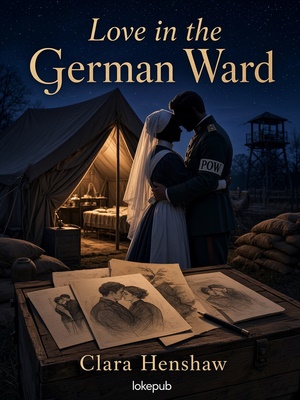
Love in the German Ward
Oxford, England 1937
The letter remains unopened.
It was on the floor when I came home from night shift.
Just the one, and I was disappointed, because I liked to read the post over toast and coffee after I’d washed the smells of the ward from my skin and hair.
I liked to take my time, knowing that others, in other houses, would be rushing to get on with their day just as mine was slowing.
I picked it up and saw my name and address, and something about the handwriting made me pause.
Something about the handwriting made my breath catch and my heart race.
Our bodies remember things even as our minds choose to forget.
I put the envelope on the sideboard without turning it over to confirm who had sent it.
I took off my coat and hung it on a hook by the door. I took off my hat and hung it on another. I turned back to the sideboard and rested my hand on the envelope and let my tears fall freely. I had never seen my name in his hand.
I climbed the stairs and went to the old armoire in the spare bedroom.
The box I was looking for was buried beneath things I’d once worn and no longer did.
Things I’d grown out of or grown tired of.
Things I no longer had an occasion for – a dress that was once considered too short and is now considered too long; an emerald-green waistcoat; a hat I only wore in Paris; wide ties and a pair of trousers – once shocking, then fashionable, now neither.
A pair of silk pyjamas with stains on the knees.
Memories I would leave to others to discard.
I pushed them aside and looked at the box.
The red cross was still bright, though the edges of the box were worn. I remembered emptying it of its dressings and salves and filling it with other things from that time.
I carried it to the kitchen and put it on the table. I left it unopened, like the letter, while I made toast I had no appetite for and coffee I would not drink and I wondered why he had written. Why now? It had been twenty years.
Find me, I’d wanted to say.
The toast and the coffee are cold.
Remember the details, I tell myself as I reach for the Red Cross box and pull it close.
For twenty years I have tried to forget most of it and I am afraid that the things I want to remember have become fictions.
I am afraid of what the box might contain, what it will contradict or confirm.
When I go to open it my hand refuses to comply.
It rests on the lid as if it were the lid of a coffin.
‘Bloody hell,’ I say. ‘When did you become such a coward?’
I open the box and see one of Iso’s drawings.
I sit back in relief. It is a snug fit and hides everything else beneath it.
A day at the beach, a daub of light. She’s drawn a soldier with his trousers rolled up, his feet sunk in the wash at the shoreline.
He is relaxed, hands in his pockets, and he is looking out to sea – towards England, I remember thinking.
Yellow pastel hints at sand and the water is blues and greens.
White pastel has been used for wash and wave and the glint of sun on the water.
Iso drew a cloudless day (is that how I remember it?) and it is easy to imagine it was warm.
These are details I am happy to recall – Iso and a day at the beach.
We were unlikely friends, but that place brought people together who would ordinarily never meet.
I put on my glasses and peer at the bottom-right corner of the drawing: St Cécile Plage, April 1916. Iso Rae.
Right in the middle of it all.
Up close I can see a scar on the soldier’s calf. Iso has drawn it as a thin pink line but I remember it as thick, purple and ragged. It was the reason he was there. The reason we all were.