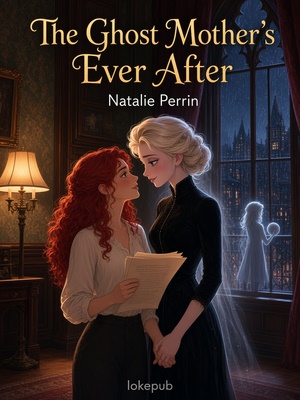
The Ghost Mother's Ever After
Chapter 1
CHAPTER ONE
“It’s just not hooking me right from the start.”
Frannie fidgets in the stiff, high-backed wooden chair, hands between her thighs to keep from attempting to flip the massive maple dining table. “I thought having her discover a dead body right on page one—”
“I don’t know why I should care that she’s found a dead body,” Henry says. He’s staring at her incredulously, sharp blue eyes wide and imploring, like she’s the one being ridiculous right now. “You haven’t given me a reason to care about Prudence yet. Or London. Or the dead body.”
Frannie forces herself to nod. Forces herself not to make a quip about how Henry’s long, sprawling literary novels are full of delayed payoffs, and could just as easily be critiqued for their overly slow, plodding starts.
Instead, she gives him a tight smile. “Right, okay. So, you need more buy-in?”
“I need to know why you need to write this book. Why this story? Why this protagonist? Why London in the 1890s?”
Maybe if he’d bothered to read more than the first page of her manuscript, then—
“This reads like what you think you should write, not what you want to write. It doesn’t read like you.”
Frannie’s about thirty seconds away from screaming.
Of course it doesn’t read like her. That’s the whole point!
No one wants to read about the exploits of Frannie Goldstein, three-year assistant to the great Henry L.
Olsen, with absolutely nothing to show for it.
She’s writing to escape her current existence, not wallow in it.
“Speaking of things that do read like you, I liked your draft for the back cover copy for the Jaundice paperback, but I thought we should break up that last paragraph.”
Frannie blinks. He asked her to come down to talk about her pages. To talk about the third manuscript she’s written in as many years for him to pass on to his literary agent, because he keeps promising he’ll pass her on to his agent.
She sat through a ten-minute diatribe about how her first page—not even the first chapter—isn’t good enough to consider. Pedestrian, and too fast, and lacking in substance. Again.
She’s squinting in the sunlight filtering through his massive windows overlooking Central Park, smiling through the disappointment for a third time now, and he wants to talk about the back cover copy for his latest paperback?
They’re supposed to be talking about her!
“Right, ah, let me just—” Frannie grabs the second page of her book, which he hasn’t yet bothered to read, and flips it over, scribbling his note onto the blank back of the page.
“And change ‘herringbone’ to ‘striped.’ I think it’s less clunky.”
“Right,” Frannie says, internally screaming at herself.
She could tell him no. She could tell him that they need to keep discussing her pages. She could tell him that it’s ridiculous to force her to undergo a critique at nine in the morning and then give up on it halfway through to go over notes for his book …
But, of course, she won’t.
Because this is her job, and yelling at Henry won’t get her anywhere. He’ll just keep looking harmless, with his graying floppy hair and humble flannel shirt. In his ridiculous Dakota Building three-bedroom apartment. With his goddamn literary trophies everywhere.
She’s never had the guts to talk back. Even though it’s slowly killing her.
Henry’s cellphone beeps. Frannie watches with a heavy heart as he pushes her terrible first chapter out of the way, pulls out his phone, and hunkers in to check his email.
She sits there for a minute, staring down at the opening page of her edgy, propulsive Victorian thriller.
Now it’s just another in a long line of defunct manuscripts dismissed and covered in judgmental red ink by Henry L.
Olsen. She looks back at her boss, but he’s totally gone.
He’ll be in email mode for the next hour.
“I’ll just go input these changes, then?” Frannie hears herself ask.
“Right, yeah,” Henry mumbles.
Frannie jiggles her leg and runs her hand through her frizzy red curls, that painful shard of hope still there in her chest. If she waits one more minute, maybe—
But Henry just keeps scrolling on his phone.
So, slowly, Frannie stands up, gathering the unread pages of her first chapter. She walks numbly through the dining room and down the narrow galley kitchen (the only bad part of Henry’s expansive apartment), and into the grand hallway. Henry’s door closes behind her with a definitive thud.
“Not good enough,” she mumbles.
The words bounce off the heavy dark wood paneling, ricocheting off the metal sconces and falling to the floor, disappearing into the worn carpet beneath Frannie’s feet.
She listens to the smack of her scuffed boots against the broad marble stairs as she goes up to the ninth floor, trying to drown them out.
But they continue to ring around her: “Not good enough. Not good enough. Not good enough.”
She passes the tenant elevator and ducks into the ninth-floor hallway, narrower and dimmer and less prestigious, just like her writing. She fumbles in her pocket for the key, her hard-worked pages crinkling in her other hand, smearing still-wet red ink on her fingertips.
The lock gives way and she shoulders the aging wooden door open.
She stands blinking in the dim light from the two bare bulbs hanging from the slanted ceiling in the storage closet Henry calls her office.
No heat, no air conditioning, no windows.
Just piles of books and boxes, dusty bookcases, and various small furniture pieces gathered between where the ceiling meets the floor and a hodgepodge of fraying rugs.
She turns to the one corner of the room actually designated as her workspace and slams her pages down.
Her office: a clunky, 1980s black-lacquered desk pressed against the front wall next to two sets of enormous black filing cabinets that contain every single word Henry L.
Olsen has ever written, all scrawled on white legal pads, meticulously filed away for archiving someday in the Smithsonian.
Frannie wishes it weren’t as likely as it is. Because Henry is a jerk. A jackass. A snob. Pretentious, and pedantic, and frustratingly, furiously good. Every book is a bestseller, a critical darling, an award-winning treatise on modern American culture.
She stares down at her own first chapter—a paltry fifteen opening pages that were supposed to prove that this time, she has something worthy of Henry’s literary agent, Maribel. Something worthy of being submitted to publishers. Something worthy of getting her out of this job.
But they don’t have the mythical it Henry’s always talking about. Again.
He’s supposed to be teaching her what it is. Somewhere in between typing up his chicken scratch, organizing his appointments, doing his grocery shopping, and packing his suitcases, he’s supposed to be mentoring her.
That’s why he plucked her from a lineup of interns at the Empire City Writers Conference and gave her the “job of a lifetime” right out of grad school. Henry told her she was bright, and promising. That he could mold her into the next Great American Literary Voice and then get her published.
But that was three years, six failed roommate experiments, and two cracked cell phones ago. She has nothing to show for her efforts except a pair of electric fingerless gloves her mother sent to help her keep warm in this freezer box of an office.
Her life and literary career have dead-ended at twenty-seven, on the ninth floor of the Dakota Building, and she wants to scream. But no one would hear her anyway.
Instead, Frannie plops down onto the only nice thing in the whole damn office—a well-worn Aeron chair that cost more than twice her monthly rent.
Sinking into its comfortable mesh back, Frannie eyes the latest white legal pad that was waiting for her when she got in this morning.
It’s crinkled and full of tightly written words—at least twenty pages’ worth of transcription.
But Henry wanted to talk about her writing first thing, to “get it out of the way so they could focus.”
Frannie has half a mind to shove his notepad into the $1000 shredder (exactly her monthly rent, actually) and listen to it scrunch and rip and tear. She wants to laugh as she destroys his work, just like he did to hers.
Except he’s her boss, and she needs her salary, and the writing is probably fantastic, and she’ll enjoy reading it while she types it up. Which just sucks.
Shit, she needs to get out of this room.
Frannie launches herself up and out of the storage closet.
Her “office” corridor runs the width of the famous building in one long, low-ceilinged expanse.
They’re not filming Rosemary’s Baby up here.
No one’s bringing in Architectural Digest. The ninth floor is just for the staff and millionaires humble enough to know their studios were once servant apartments.
The only thing it has going for it is rumors of paranormal activity.
Maybe if she’s desperate enough, she could make friends with one of the ghosts that supposedly haunt the building. Have a little company. She’s currently in purgatory; might as well have a friend.
Ugh. She’s really done for if she’s hoping for ghosts, of all things.
Instead, there’s just the dim lights and the dull brown carpet to bear witness to her silent tantrum.
She stomps down the hall, hanging the sharp right along the length of the building.
This part of the hallway dips in and around the larger gable and picture windows that look out on Seventy-Third Street.
Frannie hates it here.
Then she passes Leonard Bernstein’s old storage closet—the one Henry pointed out when he gave her a tour of the floor. Trying to impress her, he insisted Bernstein and Stephen Sondheim huddled there to write West Side Story. He was off by almost two decades, but still.
Frannie loves it here.