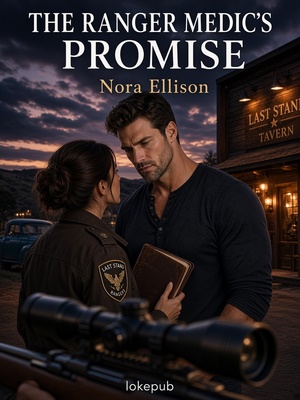
The Ranger Medic's Promise
Chapter 1
Mara
The last box in my mother’s bedroom has been waiting for me for three weeks.
But I haven’t touched the cedar chest at the foot of her bed.
It belonged to my grandmother first. Then my mother. As a child, I believed it held priceless treasure because Mom always kept it locked. When I was twelve, I tried picking the lock with one of her sewing needles and received the only spanking she ever gave me.
After my brother died, the chest moved from the hallway into her bedroom.
Mom never opened it again.
At least, not when I was around.
I sit on the edge of the mattress and stare at the scratched wooden lid.
The house is too quiet without her. No television playing old game shows in the living room.
No kettle screaming from the kitchen because she put water on the stove and forgot about it.
No voice reminding me that being a deputy is dangerous work for a woman living alone.
She never stopped worrying about losing me after we lost Grant.
I run my thumb over the small brass key I found taped beneath her dresser drawer.
“Okay, Mom,” I whisper. “Let’s see what you didn’t want me to find.”
The lock sticks. I have to turn the key twice before the mechanism gives with a sharp click.
The sound seems unnaturally loud.
I lift the lid.
The scent of cedar and old fabric rises from inside. A folded quilt covers the contents. Beneath it are my grandmother’s wedding dress, a stack of family photographs tied with a blue ribbon, and the baby blanket Mom brought me home from the hospital in.
Nothing dangerous.
Nothing worth hiding.
Then I see the Army-green canvas bag at the bottom.
My heart stops.
I know that bag.
Grant carried it everywhere the summer before he enlisted. He kept climbing ropes in it, extra socks, protein bars, and the small notebook he used to record his running times.
Mom told me the Army had returned his dress uniform and a sealed box of personal belongings after he died. She let me see the uniform once, then packed it away because she couldn’t bear to look at it.
She never mentioned this bag.
I lift it out and set it on the bed. The canvas is faded, and one of the straps has been repaired with black tape. Grant’s last name is written across the side in permanent marker.
ELLIS.
My fingers shake as I unfasten the metal clasp.
I’m twenty-nine years old. I carry a gun for a living. I’ve walked into domestic disputes without backup and chased an armed robbery suspect through three acres of woods.
But opening my dead brother’s bag scares me more than any of those things.
There are two T-shirts inside, a worn paperback, a deck of cards, and a photograph of six soldiers standing in front of a battered military vehicle.
Grant stands in the middle, grinning at the camera.
He was twenty-seven when he died. Eleven years older than me and convinced his only purpose in life was to annoy, embarrass, and protect his little sister.
I touch his face.
Fifteen years have passed, but I remember the day two uniformed officers came to our door. I remember Mom collapsing in the entryway. I remember Dad standing so still he looked carved from stone.
Most of all, I remember waiting for someone to tell us there had been a mistake.
Grant couldn’t be dead. Grant was stronger than anyone I knew. He was an Army Ranger. He had promised he would come home and teach me to drive his truck.
He never broke his promises.
Until that one.
I study the other men in the photograph.
I know some of those faces too.
Wolf. Trigger. Blaze.
I saw them at Grant’s funeral.
Back then, they were simply some of the Rangers who had come to say goodbye to my brother. Men with grief in their eyes who stood together as though holding one another upright was the only thing keeping them on their feet.
Years later, I would see some of those same men again when they made Eagle River their home.
But they never talked about Grant.
Not to me.
I turn the photograph over.
Five names are written on the back.
Blaze. Wolf. Trigger. Grant. Doc.
The sixth man isn’t identified.
My gaze returns to the photograph.
This isn’t a group of soldiers who happened to know one another.
Look at them.
Grant has one arm slung over Wolf’s shoulder. Trigger is laughing at something Blaze said. The man I assume is Doc stands close to Grant on the other side.
They were friends.
Maybe more than friends.
They were Rangers.
Brothers.
A chill moves down my spine.
Why didn’t any of them ever tell me?
I remove the remaining clothes from the bag and find a leather journal tucked beneath a false bottom. The cover is cracked and darkened around the edges. Grant’s initials are pressed into the leather.
G.E.
I open it carefully.
The first pages contain dates, locations, lists of supplies, and notes about men identified mostly by nicknames. The writing is so small and hurried that I have to hold the journal closer to read it.
Doc says Miller will make it. Don’t know how. Man has steadier hands under fire than he does eating breakfast.
A broken laugh escapes me.
Grant told stories about the medic who patched everyone up, but I don’t remember him ever using the man’s real name.
He always called him Doc.
I turn another page.
Kane is going to get us all court-martialed if he doesn’t stop running his mouth. Wolf nearly punched him tonight. Trigger took bets.
My smile disappears.
They were together.
Not men who occasionally crossed paths during Grant’s time in the Army.
They served together.
Fought together.
Grant wrote about them like family.
I turn another page. Then another.
Wolf.
Trigger.
Blaze.
Doc.
Their names are everywhere.
These men have seen me in town. Wolf has poured coffee for me at the Last Stand Tavern. Trigger has sat beside me at Sheriff Tate’s office while we discussed security for the Fourth of July celebration.
They knew exactly who I was.
And they never once told me stories about Grant.
Never told me they had stood beside him in Afghanistan.
Never told me they knew the brother I lost better than almost anyone alive.
Why?
I force myself to keep reading. The early entries sound like Grant—sarcastic, confident, worried about everyone except himself.
Then the tone changes.
Four days before his death, the handwriting becomes cramped and uneven.
Someone altered the route.
I read the sentence twice.
The entry beneath it is longer.
Orders came through the correct channel, but they weren’t the orders command sent. Doc thinks I’m seeing ghosts. Mace believes me. We were directed into that valley for a reason. Someone knew there wouldn’t be air support.
My stomach tightens.
The next page has been torn out.
So have the three after it.
I flip through the journal, searching for the final entry.
It was written the night before Grant died.
I know who changed the coordinates.
My heart pounds so hard the words blur.
I blink and look again.
I was right. We were sold out. I copied everything before he realized what I found. If we make it back, I’m taking it to?—
The sentence ends there.
Someone has cut away the bottom half of the page.
“What did you find, Grant?”
The floorboard creaks in the hallway.
My hand goes automatically to the gun at my hip before I remember I’m not wearing it. I came here on my day off, dressed in jeans and an old Eagle River Sheriff’s Department sweatshirt. My service weapon is locked inside the small safe beneath the driver’s seat of my SUV.
I close the journal and rise slowly.
“Hello?”
No answer.
The bedroom door stands open. From where I’m standing, I can see part of the hallway and the top of the staircase.
The house settles around me.
That’s all it is.
An old house reacting to the afternoon heat.
I walk into the hallway anyway.
“Sheriff’s department,” I call. “If someone is inside this house, identify yourself.”
Silence.
I check the spare bedroom, bathroom, and hall closet before moving downstairs. The front door remains locked, but the curtain beside it moves slightly.
The window is open.
I know I closed it.
I cross the living room and look outside. Mom’s yard stretches toward a line of cottonwood trees. Beyond them lies the narrow creek separating her property from the old McKinley pasture.
Nothing moves.
I shut and lock the window.
My phone rings, making me jump.
Sheriff Tate’s name appears on the screen.
I answer with more irritation than necessary. “Please tell me you’re calling because Eagle River has been invaded and you need me to come to work.”
“That depends. Would you prefer an invasion to cleaning out your mother’s house?”
“Today? Maybe.”
His voice softens. “How are you doing?”
“I’m fine.”
“You always say that when you aren’t.”
“Then stop asking.”
He sighs.
Sheriff Tate has been sheriff in Eagle River for as long as I can remember. He has the exhausted patience of a man who has spent decades supervising stubborn deputies—and knowing half the town since they were in diapers.
“I need you to stop by the office when you’re finished,” he says. “Something came for you.”
“What kind of something?”
“An envelope. No return address.”
“Open it.”
“I already did.”
The hesitation in his voice makes the hair rise on the back of my neck.
“What’s inside?”
“A photograph.”
I glance toward the staircase.
Grant’s journal is still lying on the bed upstairs.
“A photograph of what?”
“You.”
Every muscle in my body goes rigid.
“When was it taken?”
“Yesterday morning. You’re standing outside the bank talking to Mrs. Grady.”
I remember the conversation. Mrs. Grady wanted to report her neighbor for allowing his maple tree to drop leaves in her yard. It took me twenty minutes to convince her that falling leaves weren’t a criminal offense.
“There’s something else,” Tate says.
“What?”
“The photograph was taken through a rifle scope.”
The room seems to tilt beneath me.
I look out the front window again, searching the pasture, the trees, every place a man could hide.
“Where are you now?” Tate asks.
“At Mom’s house.”
“I’m sending someone.”
“No. I’m leaving.”
“Mara, wait inside until?—”
A flash of sunlight catches my eye near the cottonwoods.
Metal.
A scope.
I drop behind the sofa as the front window explodes.
Glass rains across the room.
The bullet buries itself in the wall exactly where my head was seconds ago.
“Mara!” Tate shouts through the phone.
I crawl toward the kitchen, keeping the sofa between me and the window.
“Shots fired,” I say, fighting to keep my voice steady. “North side of my mother’s property. Shooter near the cottonwoods.”
“I’m on my way. Stay down.”
I reach the kitchen and grab the old shotgun Mom kept above the pantry door. I check the chamber with trembling fingers.
Loaded.
Of course it is.
My mother may have worried about my job, but she was still an Ellis.
I move to the back door and peer through the narrow window. My SUV is parked twenty feet away. Reaching it would give me a radio, my sidearm, and better cover.
It would also put me in the open.
A vehicle engine roars beyond the creek.
I catch a glimpse of a dark truck tearing across the McKinley pasture before it disappears behind the trees.
“He’s running,” I tell Tate.
“Do not follow him.”
“I’m not planning to.”
It’s a lie, and we both know it.
“Mara.”
“I’ll wait for you.”
That’s probably a lie too.
I keep the shotgun raised as I return to the living room. Wind blows through the shattered window, stirring the photographs I left on the coffee table.
One slides onto the floor.
Grant and his Rangers stare up at me from fifteen years ago.
Blaze.
Wolf.
Trigger.
Grant.
Doc.
Men I remember standing at my brother’s funeral.
Men who have carried the truth about those final days for fifteen years.
My brother knew someone had betrayed them.
Now someone knows I found his journal.
And suddenly I need to know why the Rangers who fought beside Grant have spent all these years refusing to talk about the brother I lost.